Connect with us

Interview

Billy Ronca Interview On “Yamekite” And Latin House

Unknown's avatar

Published

on

Billy Ronca standing in a dim indoor setting for his interview on Yamekite, Latin house, and flamenco influence.

Billy Ronca Interview On “Yamekite” And Latin House as he discusses flamenco influence, Puerto Rico, and working with STBAN

Brazilian-born, Europe-raised Billy Ronca is an urban singer and songwriter with a career spanning both continents. After moving to Puerto Rico in 2016 to join Baby Rasta y Gringo’s WolfFlow Music, he solidified his place in the Latin urban scene. As both an artist and behind-the-scenes writer, Billy Ronca has collaborated with stars like Noriel, Ñengo Flow, and Jon Z. From the streets of Spain to the clubs of Switzerland, Billy’s multilingual flow is taking over the Latin urban scene, proving he’s the real deal on and off the mic. Last week he dropped his latest single, a collaboration with FLAMENCA Records’ head honcho STBAN, the sizzling summer heater ‘Yamekite’. Billy’s sun-drenched vocals and fluid rap are a perfect foil for STBAN’s steadily building production. Between them, the pair have created a gorgeous slice of hot Latin electronica perfectly timed for the opening of the European summer season. As the track begins to do its business across dance floors worldwide, we spoke with Billy Ronca to find out more about his life and his work so far.

Hi Billy, welcome to EDM House Network. Where are you in the world right now and what are you doing?

Hi, how are you guys? Thanks for having me here. Right now I’m in Switzerland. I’ve been traveling a lot lately since I’ve spent the last ten years mainly living in Puerto Rico, but at the moment I’m working on many projects from Europe. Spain, for example, has a lot of opportunities right now, especially with summer tours, and I’m currently developing several collaborations with Spanish artists and other exciting projects. For now, I’m in Switzerland organizing different aspects of my career and preparing for everything that’s coming this year.

You’ve just released a new track called “Yamekite” on FLAMENCA Records with STBAN. What does “Yamekite” mean?

“Yamekite” plays with an expression that, if separated in Spanish, would sound like “ya me quité,” which basically means leaving a situation behind or walking away from negative energy. It’s like saying, “I’m done with this” or “I don’t want to deal with this anymore.” We felt that concept perfectly matched the attitude and energy of the track.

The track fuses flamenco house and Latin house with a reggaeton vibe. How do you feel this fusion of sounds worked out on the track?

I love how the fusion came together. Since I grew up for a big part of my life in Europe, I’ve always had a strong connection with electronic music, especially house music and European sounds in general. At the same time, my roots and my career have always kept me very close to Latin and urban music. Being able to combine those two worlds naturally is something I really enjoy, and I think with “Yamekite” we found a very fresh balance between electronic energy and Latin rhythm.

You’re from Brazil but grew up in Europe. How has the European music scene influenced your production and songwriting?

The European influence has been a huge part of my artistic development. Growing up here, I was surrounded mainly by an electronic music scene, and that strongly shaped the way I produce music today. I also started writing at a very young age, even in French when I first began my career, and that helped me a lot because every language expresses emotions differently. Mixing Spanish, French, Portuguese, and English has allowed me to develop a much more versatile writing style, playing with different sounds, melodies, and ways of delivering ideas.

Were you into reggaeton before moving to Puerto Rico?

Yes, absolutely. Since I was a kid, I’ve always been very connected to reggaeton and urban music in general. It’s a genre that inspired me from a very early age and has always been part of my life.

You mention in your bio that moving to Puerto Rico inspired you to fully integrate into the urban music industry. What impact did that have on your creativity and songwriting?

More than inspiring me from the beginning — because I was already actively working in the industry — moving to Puerto Rico helped me focus more and truly understand the seriousness of the business. It was a very important stage for building a stronger and more solid career. It also helped me creatively because songwriting comes from life experiences, and living in the birthplace of reggaeton gave me constant inspiration. Being surrounded by that culture, those artists, and that energy really helped me grow as a writer and as a creator.

You’re very closely associated with Baby Rasta y Gringo and their label WolfFlow Music. Has working with them changed you as an artist?

Of course. I’ve learned a lot from working with them. People have to remember that they are legends of urban music and they’ve been in the game since long before digital platforms even existed. They helped define an entire era of the genre. What’s even more impressive is that besides being pioneers since the 90s, they’re still completely relevant today. They continue touring all year and collaborating with the biggest artists of the moment because they have the respect of the entire industry. Being able to learn from people with that kind of legacy has been incredibly valuable for me, especially seeing how they continue evolving and staying relevant after more than three decades in the business.

It seems like you’re an artist who constantly evolves and takes inspiration from your surroundings. Do you plan to stay in Puerto Rico, or do you think other places might inspire you creatively in the future?

I’m someone who loves change and enjoys experiencing new things. Even though Puerto Rico is still officially my home and those ten years there were extremely important for me, I’m currently spending a lot of time in Europe. I’m seriously considering having a residence here as well or maybe staying for a longer period to explore the European market, which I really love and believe has huge potential. Discovering new cultures, music scenes, and different ways of working always inspires me, so I’ll probably continue moving around and evolving depending on what inspires me in each stage of my life and career.

What’s next for you after “Yamekite”?

There are a lot of new projects coming. I have several singles planned for this year, and right now the main focus is continuing to release music consistently and keep growing within the industry. And who knows… maybe an album next year. But for now, the priority is to keep building step by step and take the career to the next level.

With Yamekite, Billy Ronca and STBAN place Latin house and flamenco influence into a track that connects naturally with Billy’s wider background across Brazil, Europe, and Puerto Rico. The release also arrives at a point where he is spending more time in Europe while still carrying the influence of the Latin urban scene, giving his next chapter a wider international direction.

Looking ahead, Billy Ronca is focused on releasing music consistently, with several singles planned for this year and a possible album next year. After years of working across languages, scenes, and markets, Yamekite points toward a broader run where his urban songwriting background and connection to electronic music can continue meeting in a more intentional way.

Subscribe to our Newsletter

With 13 years in the EDM scene, Preetika has built a strong presence around festivals, club culture, and electronic music. Based in Bangkok, she covers all things EDM in Thailand and beyond, with a focus on both local and international talent. She has attended major festivals including Tomorrowland, Ultra Japan, and Creamfields Hong Kong. Since working as a writer for EDM House Network, she has interviewed artists such as Blasterjaxx, James Hype, W&W, R3HAB, Alok, and many others. Her experience and consistent presence in the scene make her a trusted voice for EDM coverage.

Interview

MEETCH Interview: Reflections, Robots and What’s Next

Unknown's avatar

Published

on

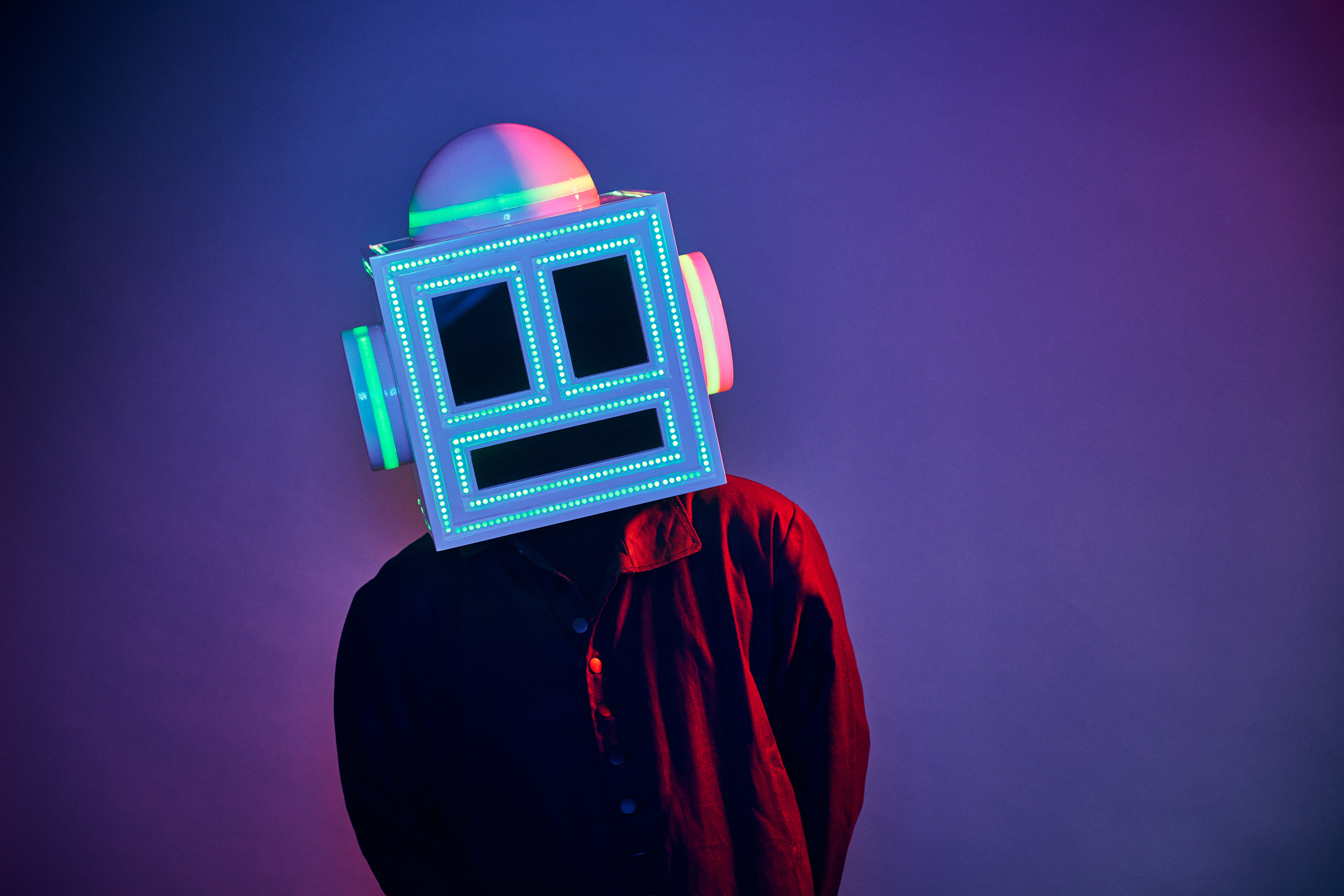
MEETCH wearing his LED-lit robot helmet and a red and black shirt against a purple backdrop

MEETCH interview about his new single ‘Reflections’ with Lacey, his Ørjan Nilsen collaborations and what’s next for the robot-headed producer

After lighting up dance floors the world over with August’s Ørjan Nilsen collaboration ‘Body On Me’, US producer MEETCH keeps the home fires raging as he drops his next release ‘Reflections’ – this time taking full control on production duties.
‘Reflections’ is a timely reminder of why MEETCH is increasingly considered one of the hottest names on the Stateside circuit. His playful energy and trademark robot branding has hit all the right notes on some of the country’s most legendary dance floors, including Pacha, Webster Hall and Avalon Hollywood.
In the studio, his production levels are equally sublime. On ‘Reflections’ flawless synth runs break into industrial saw fx, melting in and out of one another. It’s a gradual, controlled, masterful build-up of energy levels that mirror each other back and forth as the track progresses, Italian vocalist Lacey’s topline sewing a seamless line throughout the entire composition.
MEETCH is clearly an artist firing on all cylinders sonically, displaying a huge run of inspiration that shows no sign of stopping. With more collaborations scheduled with the likes of Hel:sløwed, a second outing with Nilsen and a hotly anticipated Robotic Rumble x Pulse Theory pop-up event at ADE on October 23rd with upcoming track collaborator TLUXX, 2026 is shaping up to be a pivotal year for the American talent. We managed to track the robot-headed producer down for a catch up on where he’s been, what he’s been up to, and what we can expect from him as 2026 rolls into 2027…
Hey MEETCH – it’s been a while! Where’ve you been? 
Hello! Been cracking down on content and new music. Playing shows here and there, but mainly creating new things for peoples eyes. My actual location is Los Angeles, still here grinding hard every day.
You’re back in the studio making fresh music for us – what inspired this latest run of creativity? 
I wanted to try and blend the music that started my journey with styles that are making noise on the big stages. I’m working on getting more creative with vocals and voices that mean something. Give people something they can remember and blast every day. Not just for the sound but for the meaning too.
Your latest solo track, Reflections, is out now. What’s it all about?
Reflections makes me think of the moments and memories I’ve had with everyone over the years. But also makes me think of all of the versions of myself as an artist and a performer. I’ve developed the robot brand starting in 2012 and it’s been an evolution ever since. This song can have many meanings for people, but for me it is the path I’ve taken and the constant do-overs and changes to my brand and image over the years.
You worked with Italian vocalist Lacey – how did the connection come about and what did he deliver to the overall feel and production of the single? 
I’m always searching for someone new to work with and I came across the topline for this and fell in love immediately. I knew that this was the vocal for this song. I felt the meaning and felt the mood immediately without even knowing how the instrumental would pair. But now, I am going as big as I can with this track. Going to really work on blasting it out and getting all ears on it.
Lacey’s not the only artist you’ve been working with – you recently dropped a collab with the legend that is Ørjan Nilsen and rumour has it you’ve got another single coming up with him and also with Hel:sløwed? Can you share any news about those tracks with us?
Working with Ørjan Nilsen is amazing. I played a show in Webster Hall NYC with him in like 2013. I was just some random opener on a side stage at that point. So it’s been amazing to come full circle and be able to work with him now like this. The track with Hel:sløwed has been in progress for a long time. We had to go back and fourth on vocals for a few months but finally landed on a track that combines both the Trance and Tech-House styles we do. It’s very exciting and also we have my friend Salvo on the vocals! So it’s been great to finally have an genre-bending track coming out soon.
What do you love most about working with other producers? 
I think this is a great way to open  up your sound with new fans and people. It also kind of answers those questions for people, “Oh I wonder what these sounds combined could sound like.” So it’s a cool way to not only meet new people, but have new experiences with fellow artiest. And then in the hopes of eventually performing the songs together.
If you could get in the studio with any other producer, who would it be and why? 
I think Dillion Francis is probably the top person I’d want to make music with. His humor really lines up with things I enjoy or find funny. Most people want to right away jump in the studio with Tiesto or Zedd or something, which would be incredible, but I think I have the most possible chance to do something with Dillion. That would be probably my next best goal for a big collaboration. I love making content and recording videos, so I think with my robot brand we could make something pretty ultimate.
How’s the bass and electro scene looking in LA? Are there any movements or parties bubbling under that you’d recommend we get the drop on? 
I don’t go to many bass shows, though we did just go to Dillstradamous which was INCREDIBLE, but the parties in LA have been really geared towards afterhours. I been performing a lot and going to HOLYSH#T. It’s mainly House Music at the afters but sometimes they switch is up and do other genres. But my buddy owns it and it has truly built up and it’s pretty huge now. Always a great time going to the HOLSH#T after hours!
You obviously like to work with other artists from other genres – is there a particular genre of music that you think you couldn’t get behind, and if there is, why? 
I think I am open to all genres. I really want to do a Trap collab. Trap was the first genre I started making along with Dubstep, so I am definitely down for a collab in those genres. It would really have to make sense though. Overall, I’m open to make lots of genres.
Tell us one thing we don’t know about MEETCH…
I take showers with my robot helmet on and shampoo the top to make it smell nice before shows.

Subscribe to our Newsletter

Continue Reading

Interview

Promo Push’s Russell Biles on Promoting Dance Music Today

Unknown's avatar

Published

on

The logo of Promo Push, who offer Dance radio promotion and Spotify playlist promotion, with an orange gradient P icon above white Promo Push lettering on a black background

Promo Push head of promotions Russell Biles explains how the UK company promotes dance music releases across DJ, radio, press and Spotify campaigns

Promoting releases from the likes of MK, Chris Lake, Claptone, Above & Beyond, Tiësto, Diplo, Flashmob, DJ Hype, Axwell, Jamie Jones & Vintage Culture – Promo Push was founded in 2011 & is one of the industry leaders in dance music promotion, based in the UK.

Speaking to Russell Biles, head of promotions at Promo Push - we asked some questions about the company & how they promote a release in today’s dance market.

Since the launch of Promo Push in 2011, how have the range of services you offer evolved? 

We launched with a firm focus on DJ & Club promotion, delivering genre specific & bespoke campaigns – across the electronic music landscape. The next natural progression, was us moving into dance radio promotion & we’ve built an extensive network with international heads of music, playlist managers & mix show hosts. Online Press campaigns then followed & we work with a range of music journalists & editors at dance music publications – closely aligning online coverage & building further awareness around a release. In 2019, we also moved into Spotify promotion – with us pitching to a range of leading 3rd-party playlist curators.

Musically, what dance music genres does your DJ promotion cover? 

Whether it’s a House, Tech House, Deep House or Nu-Disco leaning track, a melodic Techno or Trance record – or Mainstage release, we deliver tastemaker DJ & 1001 Tracklists mix show promotion. With a deep understanding of the industry, each of our DJ / Club campaigns are tailored & finely tuned. Working with both major & independent labels, along with management agencies & directly with artists – from underground clubs to festival main-stages, we get our client’s release to the right DJs at the right time.

Across your radio promotion, what territories do you focus on? 

Our radio promotion is international & reaches in to each key global territory. We target dance music stations & specialist DJ shows worldwide, including across BBC Radio 1, SiriusXM, Radio 538, Kiss FM, One World Radio, Ibiza Bpm Radio, SLAM FM! & stations throughout Europe, USA, Australia & beyond. In addition to FM stations, we also push to an array of specialist digital & online dance stations and use the monitoring tool WARM (World Airplay Radio Monitor) for tracking plays & radio support.

Do your campaigns follow a specific timeline? 

Each Promo Push campaign runs over four weeks & we report to clients weekly, with feedback & scores from DJs / Radio and who’s listened, reviewed and intends to support. Our Press & Spotify campaigns also run over a four timeframe, with weekly reporting too & detailing each Press feature / Spotify placement we’ve secured – with direct links to each. We provide a full & comprehensive summary with the final reporting, ideal for our client’s Press pack and their future release planning.

In terms of your Press service, can you tell us more about how this works?

We offer standalone Press campaigns, or including DJ & Radio promotion – as part of our Prime Tier. From leading online dance publications, to influential niche blogs — our Press network covers a wide spectrum of sites that dance music fans read. Press release curation is included in our service & our weekly reporting is in PDF, providing coverage links – readership estimates & a full overview of online release traction.

With Promo Push delivering over 4,000 campaigns to date & working with the likes of Anjunabeats, Axtone, SIZE, Ministry of Sound, Positiva, Spinnin’ Records & Defected Records – they continue to promote releases from some of dance music’s most established labels & artists, along with the best up & coming talent.

Connect:
www.promopush.com
[email protected]
+44 (0) 20 3633 1721

Subscribe to our Newsletter

Continue Reading

Interview

A.N.I. Interview: Classical Roots, Keytar Moments, and Why She Refuses to Stay in One Lane

Unknown's avatar

Published

on

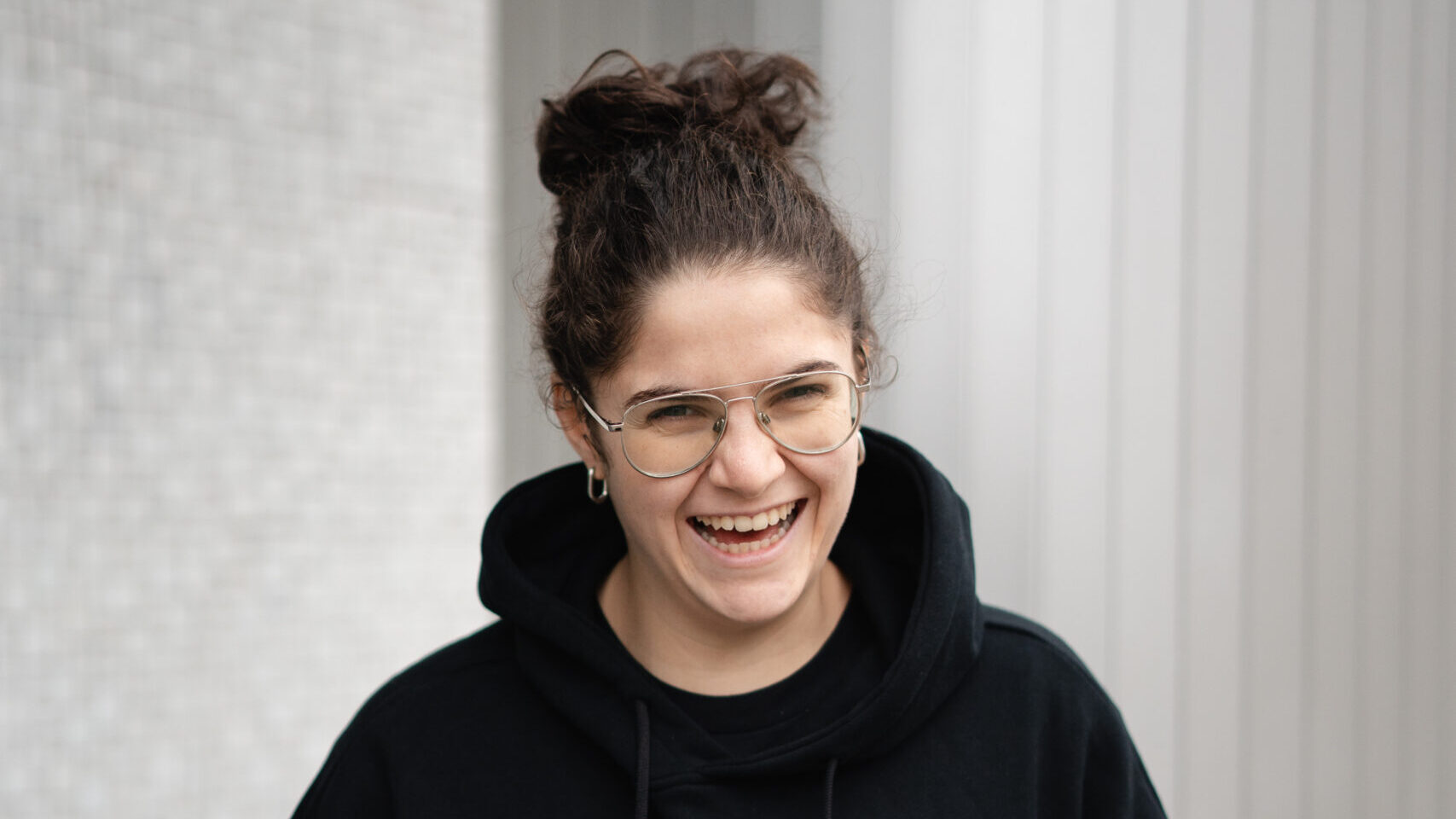
A.N.I. laughing while wearing a black hoodie with a red ace of hearts embroidery, standing against a striped grey backdrop

After a summer through Hive Festival, Tomorrowland and Verknipt Croatia, A.N.I. sits down to talk classical roots and the hard techno craft.

Berlin-born DJ and producer A.N.I. has built one of the more distinctive identities in hard techno and hard trance right now, blending classical piano training, an Audio Engineering degree, and a refusal to stay within any single genre into something that feels genuinely hard to pin down. After a summer that took her through Hive Festival, Tomorrowland, Verknipt Croatia, and her own Sorry Neighbours event at Bootshaus Cologne, she sat down with us to talk about where her classical background meets the dancefloor, the story behind Transition Tuesday, and why the most unexpected track in her bag recently involved Jennifer Lopez and a live Psytrance edit.
Hey A.N.I., great to meet you! How has your summer been? Any highlights?
 
Hey, great to meet you too! Honestly, this summer could not have been better. There were way too many highlights to pick just one. Hive Festival, Tomorrowland, our own Sorry Neighbours event at Bootshaus Cologne, UNREAL at WCD, Verknipt Croatia and so many more.
 
I could probably sit here and list shows for the rest of the interview. It has been one crazy experience after another, and I am incredibly grateful for every single one of them. Definitely a summer I will never forget.

Your sets are all about speed, energy and precision, but you also have a classical piano background. Where do those two worlds collide most naturally for you?
 
I think the connection is mostly in precision, timing and musical structure. Growing up playing classical piano taught me to pay close attention to rhythm, dynamics and how different elements work together. That naturally carries over into the way I DJ today.
 
Even though the sound and energy are completely different, a lot of the fundamentals are actually quite similar. Especially with fast, high-energy sets, timing and precision become extremely important. 
 
Knowing how to build tension, create contrast and structure a set over time is probably where my classical background influences me the most.
 
So for me, those two worlds don’t necessarily collide in the sound itself, but more in the way I understand, approach and perform music.

If your current sound was a physical place, what would it look and feel like?
 
I’d probably compare it to a rollercoaster. It’s fast, intense and constantly moving, with moments where the tension builds before everything suddenly hits again. There are ups and downs, unexpected turns and moments where you barely have time to catch your breath.
 
It might feel a little chaotic while you’re on it, but underneath, everything is actually quite controlled and intentional. I think that combination of speed, tension and release describes mysound pretty well.
 
You’ve built a lot of attention around your “Transition Tuesday” videos. What started as a technical exercise has become part of your identity. Did you ever expect people to become so interested in the craft behind your DJing?
 
Not really, to be honest. I started Transition Tuesday mainly because I wanted to share something that is a big part of what I actually do as a DJ: mixing, experimenting with transitions and constantly trying to improve technically.
 
In the beginning, I did not explain the transitions at all. But people kept asking in the comments what exactly I was doing and how the transitions worked. At some point I decided to add an explanation to one of the videos, and the response was really interesting. From then on, people wanted to understand more and more about what was actually happening behind the decks.That was really exciting for me because I realized that people were not only interested in the final result, but also in the process and the technical details behind it. Usually, you just hear a transition on the dancefloor without necessarily thinking about what goes into it.
 
I never expected that this technical side of my DJing would become something people associate so strongly with me. Seeing that there is such a genuine interest in the craft behind it has made Transition Tuesday even more special to me.

You studied Audio Engineering, so you probably hear music slightly differently from the average DJ. What’s one production or mixing detail that instantly makes you think, “Yep, this is a good track”?
 
For me, it is difficult to point to just one specific detail because a good track is always about how everything works together. But I definitely notice the balance of a mix very quickly. Especially with fast and energetic music, there can be a lot happening at the same time. When every element has its own space and the track still feels powerful, clear and not overcrowded, that immediately catches my attention.
 
I think studying Audio Engineering made me more sensitive to those details. Sometimes I catch myself analyzing why something sounds so good instead of simply listening to it. But in the end, the most important thing is still the feeling. A track can be technically perfect, but it still needs to make me feel something.

Hard techno and hard trance can be incredibly intense. How do you create moments of tension and release without losing that relentless A.N.I. energy?
 
For me, it is difficult to point to just one specific detail because a good track is always about how everything works together. But I definitely notice the balance and clarity of a mix very quickly. Especially with fast and energetic music, there can be a lot happening at the same time. I pay attention to things like the frequency balance, how clean and controlled the low end is, how the kick and bass work together and whether every element has enough space in the mix. I also notice dynamics and transients quite quickly, because they have a huge impact on how powerful and energetic a track feels without everything becoming too compressed or overwhelming. A well balanced stereo image can also make a big difference in creating space while keeping the important elements focused.
 
I think studying Audio Engineering made me much more sensitive to those details. Sometimes I catch myself analyzing why something sounds so good instead of simply listening to it. But in the end, technical perfection alone does not make a good track. It still needs to create a feeling and make me want to play it.

You’ve played everything from intimate club environments to huge festivals. What changes in your approach when you’re standing in front of 500 people compared with 50,000?

The core of what I do does not really change. Whether there are 500 or 50,000 people in front of me, I still want the set to represent my sound and create the same kind of energy. But the way you connect with the crowd definitely feels different.
 
In a smaller club, the connection is much more direct and intimate. You can really see individual reactions and feel very quickly how people respond to certain tracks or transitions. That gives you the freedom to react more spontaneously and sometimes take the set in a direction you did not necessarily plan.
 
With a huge festival crowd, the energy feels completely different. You are looking at one massive crowd rather than individual people, so I tend to think more about the overall flow and bigger moments. Certain tracks, breaks or transitions can have a completely different impact when thousands of people react to them at the same time. But for me, the goal is always the same: reading the crowd, creating a connection and taking people on a journey while still staying true to my own sound.

You’ve opened sets with a keytar and have spoken about bringing more live elements into your music. If you could build your dream A.N.I. live show with absolutely no limitations, what would be happening on stage?
 
If there were absolutely no limitations, I would love to create a show where DJing and live performance really become one. The keytar has already given me a first taste of how exciting it is to bring live elements into my sets, but I think there is so much more that can be explored.
 
With my background in classical piano and Audio Engineering, I am really interested in finding ways to have more control over what is happening musically on stage. There are so many possibilities when you start thinking beyond a traditional DJ setup, whether that means instruments, individual elements of tracks or completely different ways of performing and interacting with the music.
 
I do not want to reveal too much yet, mainly because I am still figuring out for myself what the perfect A.N.I. live show would actually look like. I want it to develop naturally rather than forcing a concept just for the sake of doing something different.
 
But the goal would definitely be to keep the energy people know from my DJ sets while creating something that feels more live, more dynamic and more unique to that specific moment. The keytar is definitely not where that idea ends.

There’s a lot of pressure on artists today to constantly chase the next trend. How do you know when something genuinely belongs in your sound versus when you’re simply reacting to what’s happening around you?
 
I think it is almost impossible not to be influenced by what is happening around you, and I do not necessarily think that is a bad thing. For me, the difference is whether I genuinely connect with something or whether I am only playing it because it is trending.
 
I have never wanted to define my sound by one specific genre. Mixing different genres and having that freedom is a big part of my identity as an artist.Of course, there are tracks that suddenly everyone is playing, and usually there is a reason for that.
 
They are good tracks. I do not avoid them just because they are popular, but I always try to give them an A.N.I. touch. Maybe I change the direction unexpectedly, combine them with something completely different or lead into a drop people would not expect.
 
For me, it is not about avoiding trends. It is about making them fit into my own world.

Your music pulls from hard techno, hard trance, acid, gabber, hardstyle and other rhythmic sounds. Is there a genre you haven’t explored yet that you secretly want to throw into the A.N.I. blender?
 
Honestly, I am open to almost everything. That is kind of the whole point of A.N.I. I do not want to set boundaries around what can or cannot be part of my sound. The one exception so far has probably been drum and bass. I never really connected with it enough to see it as part of my sets. But the more drum and bass fake drops I hear and experiment with, the more I am starting to like it. So who knows, maybe even that will find its way into the A.N.I. blender at some point.

What’s the most unexpected track or musical influence that has found its way into your DJ bag recently?
 
I would say there is at least one unexpected track in almost every one of my sets. Recently, I opened with the original version of Danza Kuduro and mixed it live with a Hard Techno track. I am pretty sure nobody saw that coming.
 
A couple of weeks ago, I also played Let’s Get Loud by Jennifer Lopez and created a Psytrance edit of it live. And sometimes I suddenly throw in a 200 BPM track towards the end that technically has no business being there.
 
I really enjoy those moments because they break expectations. For me, if I can find a way to make something work in the set, then it belongs there.

Berlin is obviously a huge part of your story. What’s something about growing up around Berlin’s electronic music culture that you think people outside the city don’t really understand?
 
I think what people outside Berlin sometimes do not realize is how normal electronic music feels when you grow up around it. It is not just something connected to big events or a certain trend. It is simply part of the culture and has been for a very long time.
 
You are surrounded by so many different sounds, scenes and approaches to electronic music that you naturally learn there is not just one way of doing things. I think that definitely influenced my own approach as an artist and probably also why I never felt the need to stay within one specific genre.
 
For me, that freedom and openness is probably one of the biggest things I took from growing up around Berlin.
 
Your rise has happened alongside a huge explosion in harder, faster techno. Do you think the scene is becoming more diverse musically, or are we simply replacing one dominant sound with another?
 
I think it is a bit of both. Harder and faster sounds have definitely become dominant in recent years, and naturally that means you hear certain styles and trends more often. At the same time, I feel like the scene has become much more open to mixing different influences. You hear Hard Techno combined with Trance, Hardstyle, Acid, Gabber, Psytrance and so many other sounds now. For me, that is actually the exciting part. Trends will always come and go, but I hope what stays is this openness to crossing genres.
 
I personally find it much more interesting when you cannot predict exactly what is coming next.

What’s been the biggest “I can’t believe this is actually happening” moment of your career so far?
 
Definitely the moment I was standing on a table with my keytar in front of thousands of people at Hive Festival. I was absolutely dying inside from nervousness. Before the set, I probably asked myself about 50 times, am I actually doing this? And then there I was, keytar in hand, looking at this massive crowd and thinking, well… four years ago you were standing in your bedroom practicing like crazy, and now apparently we are doing this.
 
It was this weird mix of pure panic and realizing how insane the whole journey had been. Definitely one of those moments where my brain needed a second to catch up with my life.

Imagine you could go back to the very first A.N.I. set and whisper one sentence into your own ear before you started playing. What would you say?
 
“Girl, you practiced 18 hours a day for a whole month just to learn how to DJ, so stop shitting your pants, look up and enjoy all those people in front of you dancing like crazy.”

What’s up next for A.N.I. that you’re excited about and can share with us?
 
One thing I am really excited about is my Sorry Neighbours project. It is something I have been working on that gives me another space to explore the more unexpected and playful side of A.N.I. and take some of my ideas a little further.
 
I do not want to give away too much just yet, but you will definitely be hearing a lot more about Sorry Neighbours soon. And the name probably already gives you a little idea of what to expect.

Finally, if 2027 A.N.I. could send you one message from the future about where this project is heading, what would you hope it says?
 
I would hope she says, “You still have no idea where this is going, and that is exactly why it is working. You kept experimenting, ignored the rules, trusted your crazy ideas and somehow they got even crazier. Also, get ready, because 2027 is going to be wild“

Subscribe to our Newsletter
Continue Reading

Trending