Connect with us

Interview

Chilsta Interview: Afro House Evolution And Fashion-Tech in Shanghai

Unknown's avatar

Published

on

South African producer Chilsta standing confidently in a dark oversized jersey, illuminated by a moody red light, representing his "Enthusiastic" vision for the new year.

South African-born, Shanghai-based DJ and producer Chilsta brings a sound that flows across genres. Inspired by his dad’s house music growing up, he’s played respected venues and shared stages with artists like EDX and Kyle Watson. Now, he’s focused on refining his sound and setting the tone for 2026.

What key lessons or shifts from 2025 are shaping how you’re approaching 2026?

I’m learning how to approach life through balance. It’s been a hectic and stressful year, but I won’t give up. Next year, I’ll be more productive, yet balanced and try not to take myself too seriously. Things don’t go well once I’m too serious. It’s important to have fun too.

When you think about 2026, what excites you most about the projects or ideas you’re planning to explore?

Musically, I’ve been working on tracks that are unique to me. I think I’m forming my own identity and focusing on what makes me unique as an artist and having the confidence to go by how I feel. It’s lovely. Another creative project I’m working on is a venture into the fashion-technology space.

I’m launching the MVP of my Technology startup SuitUp and turning it into a functioning business. It’s been a lot of hard work, but the pieces are finally coming through. Basically, SuitUp, is a mobile-first solution to make tailored suits accessible through your device where a user can upload a body photo of themselves and then we’ll be using AI to create accurate and custom body measurements for tailored clothing.

It’s exciting. I’m in Shanghai, China, the perfect place for this. The supply chain is in the country. There’s a vibrant tech community and E-Commerce is a way of life.

Are there any creative directions or sounds you feel ready to lean into more in the new year?

I think my theme is still Afro House but I’m trying to make sure there’s more energy and melody. I’m crafting tracks that can be integrated into a set for a large audience and festival.

Is there a personal or professional goal you’re setting for 2026 that feels especially important to you right now?

I’d love to have a signing with a reputable Electronic Music label. Personally, I just want to enjoy life and take myself less seriously (I can sometimes be intense haha).

How do you hope your project or brand will evolve over the next year compared to where it stands today?

I hope to get more support from bigger DJs and that my music crosses multiple borders. I want to set the foundation for international bookings as well.

Are there any collaborations, spaces, or industries you’re particularly interested in exploring in 2026?

I’m exploring SuitUp, my fashion technology startup in Shanghai. I see fashion as another expression like music. The industries go hand-in-hand.

What does “growth” look like for you in the year ahead, creatively, culturally, or commercially?

More bookings and music that resonate with people around the world. I’m hoping the world will get a feel of ‘Chilsta’.

Is there something you’ve been holding back on that 2026 feels like the right time to finally pursue?

Curating my own events. I want more control of the vibe.

How do you want audiences to experience your work differently in 2026?

I want my music to heal people and help those who are going through difficult times. After having a great set, I sometimes remind myself that I DJ for people to enjoy themselves and get away from the monotonous problems and responsibilities of life. I hope my productions do the same.

If you could describe your vision for 2026 in one sentence, what would it be?

Enthusiastic.

Looking ahead to 2026, Chilsta is all about evolution, drawing inspiration from diverse styles to create fresh, boundary-pushing music. From Durban to Shanghai, he’s ready to take listeners on a journey of unforgettable beats.

Chilsta Online

Spotify | Instagram | Soundcloud

Subscribe to our Newsletter

Founder, Owner & Manager of EDMHouseNetwork. Instant lover of all things electronic dance music from the moment I heard Fatboy Slim and The Prodigy. After pursuing a career as a DJ, creating EDM content quickly became a love of mine and it has been my mission to keep delivering high quality content ever since.

Interview

Inside MiNT XL: Leeds’ Latest Nightlife Destination

Unknown's avatar

Published

on

Joseph Capriati performing behind Pioneer decks at a packed club night, captured from behind at the booth with one hand on the mixer, a crowded dancefloor of raised hands and phones visible under teal and red club lighting stretching back into the room.

MiNT announces MiNT XL, a new 2,500-capacity Leeds venue opening September 2026, marking the brand’s most ambitious project in its two-decade history.

Yorkshire has long been a hub for electronic music in the North of England. DJs such as Hot Since 82 and Paul Woolford are among the biggest names to emerge from the county, while venues including The Warehouse and The Orbit have shaped generations of ravers.

MiNT belongs in that lineage as well, having grown from a Leeds-based nightclub into one of Yorkshire’s most recognisable electronic music brands over the past two decades. Its story began with MiNT Club in 1998, which hosted renowned names including Ricardo Villalobos, Loco Dice and Luciano.

The brand later expanded with the launch of MiNT Warehouse and MiNT Festival in 2012. Now, building on that legacy, MiNT is writing a new chapter, opening a new venue in September 2026, its most ambitious project to date.

Discover MiNT XL

Located in the heart of Leeds, MiNT XL will transform the former PRYZM nightclub into a reimagined 2,500-capacity venue that will represent an expansion of MiNT’s ambitions as a brand.

Speaking about the new project, marketing manager at MiNT, Mikey McMahon says: “With it being a multi-use space, not just for electronic music, the production capabilities of the building will be on another level. Mint Warehouse is more of a traditional, no-nonsense clubbing experience … but with MiNT XL, as we look to expand beyond electronic music, there’s a certain standard of production we’ll need to reach, so it’ll be a completely different setup in that sense.”

Benefiting from the venue’s three-room layout, MiNT will have the opportunity to explore new musical experiences outside of electronic music for the first time. Although the brand has a strong reputation in Yorkshire’s rave scene, and that will remain at its heart, MiNT XL will deliver new formats, with something for every music fan.

The three-room setup definitely helps, as it allows us to programme something different in each room and give people the option to experience different sounds, atmospheres, and environments throughout the night,” mentions McMahon.

“One thing we’re really excited about is expanding into new genres and live music, which is something we haven’t explored properly before,” he adds, highlighting the wider ambitions behind the new venue.

While the building and its layout will help MiNT explore new sonic territory, taking over a space with as much history as the former PRYZM nightclub presents its own challenge. However, the team behind MiNT XL are confident they can give the venue a new identity through their own programming, unique production, and overall experience.

“We want people to walk into MiNT XL and feel like they’re part of something fresh and forward-thinking,” says Mikey McMahon who also confirmed the venue will feature a Funktion-One Vero sound system.

MiNT XL: The Experience

Despite the new location’s larger capacity, MiNT aims to maintain the atmosphere that has defined the brand throughout its history. The team is determined to preserve its intimate identity while allowing each room to have its own character.

As McMahon explains, a bigger venue does not necessarily mean a more mainstream experience. Instead, MiNT remains focused on keeping the dancefloor moving and delivering the immersive nights its audience has come to expect.


View this post on Instagram


A post shared by Mint XL (@mintxl_leeds)

“I think we’ve built a reputation over the years for putting on great line-ups, but moving forward we’re looking to move away slightly from stacked line-ups and focus more on headline performances and extended sets that go beyond the standard two-hour slot,” he says. “We think our audience would rather see their favourite artists play longer, more immersive sets and really take people on a journey.”

The marketing manager also confirmed that MiNT’s no-phones policy will remain in place for specific electronic music and flagship events, keeping the focus on the music and the connection between people on the dancefloor.

What Success Means For MiNT XL

Although the launch of MiNT XL marks another major step forward for the brand, McMahon says its success will not be essentially measured by aspects like ticket sales alone: “Success for us is about diversity in programming and creating something that goes further than just house and techno … being able to collaborate with different people, host a wide variety of events, and continue evolving creatively is just as important as ticket sales or line-ups.”

As MiNT XL prepares to open its doors in September, the venue promises to bring a new scale of nightlife to Leeds, while staying true to the culture that transformed the brand into a Yorkshire music events icon.

The opening party will set the tone for the new chapter, with a carefully curated line-up featuring Enzo Siragusa, Craig Richards, Fumiya Tanaka and Sonja Moonear taking over the decks throughout the inaugural night.

For some, this expansion may be just another venue, but for Leeds, MiNT XL presents one more sign of the city’s continuing influence on the UK’s electronic music scene.

Subscribe to our Newsletter
Continue Reading

Afro House

Cumbiafrica Interview: Batonga, HUGEL, Decca Records & More

Unknown's avatar

Published

on

Cumbiafrica's two members posed together in a studio portrait against a black background, with Leo on the left wearing a red bandana, round red-tinted sunglasses and a patent leather jacket while holding a bass guitar, and Lina on the right in a black off-shoulder cut-out top and iridescent skirt, both looking relaxed and confident.

Cumbiafrica interview discusses their new Decca Records release Batonga, their collaborations with HUGEL, and the Afro Latin House sound at the heart of their music.

We sit down with Cumbiafrica to celebrate their new release on Universal France’s Decca. We discuss the story behind the music, their collaborations with HUGEL and of course their new release.

How has your year been so far?

We’ve been working very hard with our label, Producciones Alé Kumá. At the beginning of the year, we released the single “Carmelita Adiós” alongside DJ Dean Mickoski, and more recently an EP titled “Sheel Sheel (Drone Song)” in collaboration with Gaza Birds Singing, a children’s singing group from Palestine. This EP is part of a larger album called “Canciones de Resistencia” (Songs of Resistance). During this first semester, we spent a lot of time in the studio because, as summer approaches, we’re intensifying our release schedule. We have planned to drop a new single every three weeks throughout the season. All of these tracks are part of an Afro Latin House album that will be released very soon.

How did you all meet? What’s the story behind Cumbiáfrica?

We met in Colombia. Leo was already a well-known producer there, having worked extensively with major folkloric figures like Martina Camargo. I, Lina, had just finished my degree in acting and dramatic arts, but alongside my acting career, I had been singing since I was a child, accompanying my father who is a pianist, as well as my sisters who are also musicians. Later, thanks to a scholarship, Leo and I traveled together for two months to an artistic residency in the Democratic Republic of Congo, a country with deep cultural connections to Colombia. There we met many artists from the local Afro house scene, and that’s how Cumbiáfrica was born.

What inspired you to take this path sound wise?

At that time, Leo was directing an orchestra in Belgium called De Palenque a Matongé, alongside Congolese guitar legend Dizzy Mandjeku. The orchestra was made up of African and Colombian musicians, and I was part of it as a singer. When the pandemic hit, we had to scale down the format to a DJ set with electronic sounds and vocals. However, we wanted to preserve sounds like the marimba and guitar that evoke both Colombia and Africa, and that first intercultural project.

What have been your biggest influences on your current sound?

Afro-Colombian music and contemporary African music have a constant dialogue of mutual influence that goes beyond their obvious common roots. Soukous, champeta, cumbia, soca, amapiano, classic Afrobeat, and contemporary Afrobeats are all part of our influences. Artists like Ginton and Trinix, with whom we’ve worked, or the Colombian group Bomba Estéreo, have influenced us greatly. But the artist we admire most and who will always be present is Stromae.

What inspired you to reimagine Batonga? What does that mean to you?

“Batonga,” beyond being a classic in Angélique Kidjo’s repertoire, is an anthem — not only of African identity, but of resistance, female strength, and rootedness. We wanted to establish a dialogue between Angélique’s voice and mine, between Fon (the language of Benin) and Spanish. For that, Leo wrote some original verses that highlight this aspect: “Raíces fueron mis pies, mis manos ramas en flor, erguida caminaré como árbol buscando el sol. Ya nada borrará mi voz”(Roots were my feet, my hands branches in bloom, I will walk upright like a tree searching for the sun. Nothing will erase my voice). For us, above all, it is an honor. Angélique is one of the most influential voices in contemporary African music and a five-time Grammy winner. This wouldn’t have been possible without the management of Decca Records.

How did you come to land on Decca as a label?

Leo has been running his producer project, Alé Kumá, for 25 years, founded in Colombia. It has transitioned from ethnic music to contemporary African music, and in recent years, into dance music, especially Afro house. Because of that experience, Decca reached out to him. They wanted to “reimagine” some songs from their more classic catalog. “Batonga” was on that list, and they wanted it to be the starting point of this collaboration. We hope it extends to more African artists from their catalog.

Why did you use your Alé Kumá alias here alongside the Cumbiáfrica titled project?

Leo wanted to give the track a more “Latin house” sound and identity, so he proposed to the label that, in addition to Angélique’s original sample, we should record verses, chops, and hooks in Spanish. So he decided to involve me as the singer of Cumbiáfrica, a project that many critics have considered an “instigator” of the Latin house movement, especially because of our collaborations with DJ HUGEL.

Tell us about your work with HUGEL? How did that relationship come to be?

We met during the pandemic. He reached out because he knew Alé Kumá’s work as a composer and producer for Martina Camargo. We had recorded a version of “Morenita” in the Democratic Republic of Congo in 2018, and Leo suggested that HUGEL “reimagine” a new version. We never imagined that this song would become the “post-pandemic” anthem of Latin house. After that, we met in person during the filming of the “El Sueño” music video, and later came “Águila.” Leo also collaborated with HUGEL by helping him manage the licenses for “La Verdolaga” with Colombian singer Totó la Momposina.

What has been your most memorable gig this year and why?

The most important show this year was at the Carnaval de Vinaròs, in Valencia, Spain. We played in front of 10,000 people, and it was broadcast by the Valencian public television network. What was most moving was that we learned there that recent generations frequently choose Cumbiáfrica’s songs for their parades and comparsas. So many carnival attendees know our repertoire by heart, even our lesser-known tracks. When we got on stage to sing, the audience became a massive choir accompanying our songs. It was incredibly emotional, and we’ll be uploading the full concert to our YouTube channel very soon.

What is your studio set up like? Any rare equipment you like to use?

Today we have a very well-equipped studio in our new home, with excellent acoustic conditioning. But for many years, we recorded in a technically limited home studio. Sometimes we feel nostalgic for that home studio because we recorded many of our emblematic songs there. Our first microphone was a The t.bone RB 500 ribbon mic. Today we have much more sophisticated microphones, but we still use our old ribbon mic as a complement to capture Cumbiáfrica’s vocals.

What advice would you give to young up and coming producers?

Our advice is always: “listen to musicians.” And by musicians, we don’t mean conservatory academics. There are traditional musicians who can’t read sheet music but play guitar or drums by ear. These people know many secrets of music that many producers are unaware of. Ideally, producers should also learn about music, or simply learn to play an instrument or sing. But if you don’t have the time, surely you have a musician friend who can help you listen to your tracks and advise you on how to achieve a better musical result.

What more can your fans expect from Cumbiáfrica this year?

In addition to the releases on our own label, we want to expand our collaboration with Decca Records because they have a wonderful catalog. Many of their ethnic, jazz, and world music artists are reference points for their communities and for musicians around the world. We are working on two new releases for Decca Records and hope that later these and other pieces can be compiled into an album of collaborations with African musicians. That is the very essence of Cumbiáfrica.

Stream their latest single below and purchase here.

Follow:

Subscribe to our Newsletter

Continue Reading

Interview

Festival Energy, Studio Chemistry: Darude & Mashd N Kutcher on the making of ‘HYPE’

Unknown's avatar

Published

on

Darude and Mashd N Kutcher interview discuss HYPE, their new collaborative single on Vibing Out, and how it became the anthem of the Storm 25 World Tour.

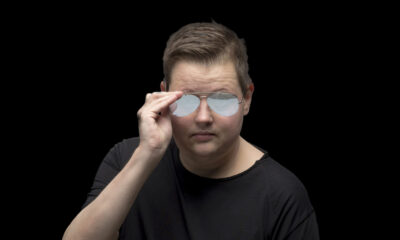
Darude and Mashd N Kutcher have joined forces for ‘HYPE’, a high energy collaboration that brings together two artists known for creating unforgettable dancefloor moments. Blending Darude’s iconic high energy sound with Mashd N Kutcher’s fresh production style, the track quickly became a standout crowd favourite during Darude’s Storm 25 anniversary live tour, calling for an official release.

In this exclusive back to back interview, both artists discuss how ‘HYPE’ came together, the creative process behind the collaboration, their live shows, and what the future holds as they head into the second half of 2026.

Darude, welcome! ‘HYPE’ became the closing moment of your STORM 25 World Tour. At what point did you realise this was not just another track, but something fans emotionally tied to the live experience?

“Well, with the name ‘HYPE’ and the chanty rap vocals that I can’t help but mumble along with every time, it very early on the tour just naturally became the track that I once more in the set hyped the crowd with and went to meet them on the dancefloor.

That shared experience and synchronised movement definitely made me feel things, and I hope the crowd did, too.

It wasn’t exactly meticulously planned like that before the tour, but as it was the last track of the set and we decided to release ‘HYPE’ as the next single, it also became the natural bridge between the remembrance of the anniversary year and tour and the next phase.”

Mashd N Kutcher come from a very different musical background and energy. What surprised or inspired you most about the way they approached your original stems?

“I sent Matt a set of stems of a track as a collaboration suggestion, and he came back to me with such deliciously mangled sounds of mine, plus critically good additions and changes. It was almost unrecognisable, but also in the very same vein, purposely nodding back and being a timeless dancefloor mover. I dug it on the first listen.

Matt has a very straightforward way of thinking and doing, and what I liked a lot was this no frills production that just worked and took over with undeniable energy! There was still enough space for me to add some melodic stuff and tweak a thing or two and then we were done!”

Tell us more about the HYPE Tour! After last year’s live show run, you’re back behind the decks. How does it feel?

“I LOVED circling back to my beginnings with the Storm 25 live tour last year, for which I remixed 25 tracks of mine and performed them live from an Ableton Live stem and live tracks project. I started my performance career with hardware sequencer, sampler, synth and effect unit back in the day, did that for a few years and then started being booked as a DJ also, which turned into over 20 years of DJ sets all over the place.

After a year of Storm 25 live sets with bespoke visuals and certain unique and programmed aspects of it each night, jumping back to DJing feels nice and fresh again! Both are great and both have their benefits. An artist live show the way I did it needs to be more planned and as such is sort of more limited for the performer. You can’t go left and right at any given moment like you can when you’re DJing and have all the tracks in the world to choose from, not just your own.

When DJing there’s a bit more freedom to read the crowd and course correct if need be, whereas playing an artist set is more like “This is what I’m presenting you, like it or not.” Though I had planned my live set as best as I could to work like my DJ set style and flow wise, I definitely didn’t have multiple options as far as track selection goes.

I don’t have a superlative marketing phrase to give you here, as HYPE Tour will not be reinventing the wheel, but it’ll be more of me playing great music. I’ll be present and interactive as I always am, and the dancing crowds will leave the joint sweaty and smiling!”

An exciting date in the diary for you is 29th August, when the second edition of the Sandstorm Run will take place in your home city of Helsinki, Finland. We’d love to know more about what this entails.

“The concept of the Sandstorm Run is a 7K fun run in Helsinki through some of the most memorable Sandstorm music video locations. You can run as fast as you can, or take it as chilled as you want, and you’re encouraged to dress up in the style of the music video, or anything else fun and comfortable. Anything goes really!

Building on last year’s debut run event, for 2026 we now have an outdoor park concert afterwards as well. Think about it as ‘Darude & Friends’, and in this context it means all the runners and their undoubtedly amazing costumes AND a few of my great DJ friends who are helping me not let the adrenaline and dopamine release end quite so early!”

You have one of the most instantly recognisable catalogues in dance music history. Which up and coming producers are you looking to now, and seeing great potential for future stars of the scene?

“Oh boy, that’s always the valid million dollar question, right?

I always want to plug my Finnish brothers and sisters like Orion, Rony Rex, Yotto, SØNIN, Kajis, Junkkataxi, Detmex, DJ Hapan Korppu, LUMI and Tempo Giusto. Some of them have already had great success, some are quite new.

I usually first and foremost listen to a track and automatically think if it’s something I’ll play or not. Sometimes you hear one track by someone and never anything more, so you can have a tried and tested dancefloor destroyer, but not even know who’s behind it. That’s the beauty of especially dance music, but the other side is that I really appreciate people who have longevity, be it planned and business driven, or passionate artistic stuff that eventually has to break out to the mainstream ears, too.

And hey, my Aussie brothers MNK are not newbies anymore, but I can only see them taking off higher and higher!”

Over to you Matt, from Mashd N Kutcher. Darude is one of the defining names of global dance music. What was your honest first reaction when he sent over the stems for ‘HYPE’?

“I was super excited to jump in. With this collab I didn’t find myself making creative decisions in real time or on the spot, I let the music guide me and took more of the role of the operator as such. For me, when I open a blank project and start a song from scratch these days, I’m asking myself a million questions on the fly, should it be this, could it be that, should I do this etc. With a collab like this he’d sent me over a sketch, if you will, which is a collection of ideas and sounds, so I took a bit more of a backseat and more so facilitated the songwriting itself, if that makes sense, and let my personality and lived experiences collide with his to get what you hear now as the final track.”

The rap topline that you introduced adds a very different personality to the record. Did you approach it more like writing for a club anthem or a live crowd interaction moment?

“To be honest, the vocal came last. I approached the collab from the start as only being an instrumental record. I think mostly because I’ve always personally admired that attribute about Sandstorm from Darude. Such a powerful record, and one that has resonated with people for many decades, and for it to not have a vocal or a lyric is really special. It’s solely reliant on the music to connect with people, which it does. So from the start I’d had that in mind as a goal with the record, to see if it was possible to create something awesome together as an instrumental. That being said, once the idea had taken shape, it was actually just getting me “HYPE” haha! It was as simple as that. Whilst I was working on things and the track was looping, I just found myself saying “HYPE” every two bars, and as most writers will attest to, if something is happening in your head when you’re writing a song for long enough, you end up putting it in the track. So I recorded the vocal with voice notes, pitched it down for some Method Man flavour, and here we are.”

The track is clearly engineered for festival finales and big crowd moments. When you are producing, do you literally visualise how people will react in real time?

“Honestly no, it’s a very in the moment process for me where I’m solely thinking about the song itself and making the best piece of music that I can at the time. What crowds or environments or people do with it after that is totally a different story. I guess I just trust the process and hope they like it!”

Australia has produced a huge number of globally successful dance acts in recent years. Why do you think that scene keeps creating artists with crossover appeal?

“There’s probably a mixed bag of reasons for this. I think part of it comes down to Aussies, culturally and personality wise, brewing a bit of a perfect storm for an electronic artist these days. We’re fun, loose, loud people who experience a taste of different cultures from other countries in our daily lives through people, music, movies etc here in Australia, and the curious amongst us seek out more of that as we explore the wider world. I guess the top percentage of creatives in electronic music who really grind it out to make it to the top from here exhibit all those features, and it stands out amongst the crowd when we’re overseas? I don’t know, it’s a theory.”

What are you most excited for in the second half of 2026?

“More music, more shows, more collaborating and enjoying the ride. Bring it on.”

Darude x Mashd N Kutcher ‘HYPE’ is out now on Vibing Out. Listen here.

Subscribe to our Newsletter

Continue Reading

Trending