Connect with us

Armin van Buuren News

Chilsta on Afro House, Durban Roots & Global Ambitions

Unknown's avatar

Published

on

Chilsta

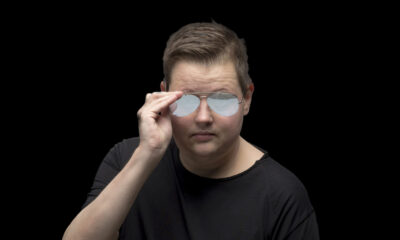
Chilsta, Durban-Born DJ & Producer, spoke with EDM House Network about pushing Afro House to the global stage.

Chilsta, a Producer and DJ, channels layered intention into his craft, bringing a confident determination to his place within the Electronic Music landscape. Born and raised in Durban, South Africa, his early immersion in House music sparked not only a deep personal connection to the genre but also a commitment to shaping his own artistic path within it. Drawing on the rich heritage of his African roots, Chilsta has worked to refine a sonic identity that feels both authentic and forward-facing, weaving his rich tapestry of influences to create a sound distinctly his own.

We caught up with Chilsta to unpack the moments that shaped him, the inspirations that continue to drive him, and his vision for his journey moving forward. 

Hi Chilsta! How are you? Thanks for joining us.  

Hi there. I’m doing very well. Thanks for having me! 

Let’s start at the beginning – what first sparked your interest in Electronic Music, and how did your journey as an artist begin to take shape? 

As a kid, my father was a massive House head, and at the time, South Africa was going through its very own House renaissance period. My father would play a lot of House music on road trips, including a lot of mix compilations from record labels like Soul Candi. So, House music was pretty much the norm of my childhood. 

Was there a specific track, moment, or live set that you look back on as the turning point — the thing that made you realise this was the path you wanted to follow? 

At 12 years old (in 2010), my best friend and I would listen to Deadmau5 and Kaskade. It was the track, ‘I Remember,’ which got me hooked onto Electronic Music and its culture. That was when I knew I wanted to be a DJ. I became obsessed with the sound synthesis from Electronic Music, and I’d always be looking at other music Producers at the time. I would introduce my other classmates to this music. At the time, a lot of it was the early Dubstep producers, think of guys like Modestep, Master P, Benga and Skrillex.

How would you define your sound? 

High energy, melodic and unapologetically African with raw textures from Techno. 

What was the process behind developing your sonic identity — was it something intentional, drawing from specific influences, or did it evolve more organically over time?

I was in a DJ duo with my best friend as a teenager, where we would play Progressive House, Bigroom and sometimes Trance. I was an obsessive listener of Trance and the A State of Trance radio show from Armin Van Buuren. Then I started exploring other genres, like Techno, where I was inspired by the groove of DJs like Nicole Moudaber, watching her 2012 Tomorrowland set, which made me explore other parts of underground Electronic Music.  

I then moved to Shanghai as a student, where I was studying International Economics and Trade. I compared the club scene and infrastructure from back home to the city and realized that it was possible to live my Electronic Music dream. Then, I doubled down and produced music that was inspiring me in the scene, from Techno and House, but I wanted to merge it with my own roots from back home. I guess I was missing home and wanted to connect with my own South African heritage. South Africa has always had its own distinct sounds of Electronic Dance Music. 

Are there any artists — whether from Electronic Music or beyond — who’ve had a lasting influence on your sound or creative mindset? 

Armin Van Buuren, Black Coffee, Kaskade, Deadmau5, Carl Cox and Sasha. 

Do you remember the first time you performed your music in front of a crowd? What impact did that moment have on you? 

It felt amazing to watch the crowd react to my music. Music was something I did for fun, but I was obsessed with it, and it took me a long time to have professional, clean-sounding records. So, it really shaped my perception of what’s possible if you work hard and show your love to the music. 

Tell us about your local scene growing up — how did that environment influence your style and development as a Producer or DJ? 

Growing up as a DJ, I think that my city, Durban, South Africa, had a healthy Electronic Music scene, but the scale of nightlife was not as large as other cities like maybe Johannesburg and Cape Town. That was not a disadvantage though. I think the city produced many world-class acts, because we had to put in the hours in the studio more than we were DJing. So, it kept me very focused on music production to try and reach more opportunities. 

How has your relationship with music changed over the years — not just in how you make it, but in how you listen to and connect with it personally? 

I still try to take a beginner’s approach to music. That is, to understand that there are no rules to music, just the feeling of it. Therefore, I trust my taste because I love different types of music, and I understand the history behind it because I am first a music fan and lover, then a DJ/Producer. 

Looking ahead, what are you hoping to explore or achieve over the next five years in your musical journey?  

I’d like to be playing large-scale nightclubs, venues and festivals around the world, where I push the Afro House sound for bigger stages in my own way, drawing in influences from other scenes, with a strong focus on unique and energetic, pulsating, sound design elements. 

As Chilsta continues to carve out his space within the evolving Electronic Music landscape, his passion for both his craft and the global scene remains evident. By honouring his roots while embracing new influences that drive his sound forward, he is building a sonic world that captures his vision and hints at the promising path ahead. So, an Artist in motion, be sure to take note of Chilsta and follow him across social media for the latest updates and news.

Chilsta Online

Spotify | Instagram | Soundcloud 

Subscribe to our Newsletter

Founder, Owner & Manager of EDMHouseNetwork. Instant lover of all things electronic dance music from the moment I heard Fatboy Slim and The Prodigy. After pursuing a career as a DJ, creating EDM content quickly became a love of mine and it has been my mission to keep delivering high quality content ever since.

Armin van Buuren News

ASOT Returns To London For Its Third UK Edition

Unknown's avatar

Published

on

A massive indoor crowd at an A State of Trance event, with thousands of fans facing the main stage where Armin van Buuren's name is displayed on large white LED screens spanning the full width of an industrial warehouse venue, with haze and white lighting filling the space above the crowd.

A State of Trance returns to London on November 14th 2026 at Drumsheds, marking the brand’s first indoor UK festival edition and 25th anniversary.

Following two successful outdoor editions at Silverworks Island, A State of Trance will return to London in 2026, this time moving indoors to Drumsheds. Taking place on 14 November 2026, the event will be part of ASOT’s 25th anniversary celebrations, marking the brand’s first indoor festival edition in the UK.

Set at one of London’s premier rave venues, ASOT London will bring a festival-sized production, delivering the ASOT experience at full scale. While the full line-up is yet to be announced, the brand’s icon, Armin van Buuren has been confirmed as the first name to join the celebration.

The Drumsheds edition will also mark another major UK appearance for Armin in 2026, following his recent show at Barking Park and a performance in Bristol.

Looking back at ASOT’s two previous instalments in the British capital, the event has welcomed some of the biggest names in trance, including Ben Hemsley, Nifra, Gareth Emery and Cosmic Gate.

The move to Drumsheds will allow organisers to take the event to the next level. Given the brand’s famous large-scale indoor shows at its home in Rotterdam, the venue feels like a natural fit for a more immersive visual and stage design experience.

Following an almost sold-out debut in 2023 and a second show that welcomed up to 20,000 ravers in 2025, demand is high for the Drumsheds edition. Pre-sale access goes live at 10am on Tuesday 9 June. Fans can sign up for the ticket sales via the official ASOT London website.

Subscribe to our Newsletter

Continue Reading

Afrojack News

Ultra Europe 2026 Drops Phase 2 Lineup

Unknown's avatar

Published

on

Crowd and fireworks at Ultra Europe in Split Croatia during the festival’s nighttime mainstage show for the 2026 Phase 2 lineup announcement.

Ultra Europe 2026 Drops Phase 2 Lineup with Armin van Buuren, Hardwell, DJ Snake and more confirmed for Split this July

Ultra Europe 2026 has dropped its Phase 2 lineup, adding more names to its return to Split, Croatia from July 10 to 12, 2026 at Park Mladeži. Now heading into its 12th edition, the festival’s latest announcement brings in Armin van Buuren, Hardwell, DJ Snake, AFROJACK, and Subtronics, joining a Phase 1 lineup that already included Calvin Harris, Martin Garrix, FISHER, John Summit, and Amelie Lens. The update gives the 2026 edition a much fuller look across the Ultra Main Stage and RESISTANCE, while keeping more names saved for the next announcement.


View this post on Instagram


A post shared by Ultra Europe (@ultraeurope)

Phase 2 Adds Trance, Big-Room, Bass, Techno and House to Ultra Europe 2026

The Ultra Europe 2026 Phase 2 lineup strengthens both sides of the festival. The new additions bring more mainstage names into the July weekend, while RESISTANCE also gets a heavier presence through techno and house bookings. With Phase 1 already led by names such as Calvin Harris, Martin Garrix, FISHER, John Summit, and Amelie Lens, this second announcement gives the 2026 edition a fuller lineup across its main festival stages.

Phase 2 additions:

  • Adam Beyer
  • AFROJACK
  • Armin van Buuren
  • CamelPhat
  • DJ Snake
  • Hardwell
  • Jamie Jones
  • Nico Moreno
  • Oliver Heldens
  • Subtronics
  • HALO
  • Maddix

Subtronics Stands Out Among Returning Ultra Europe Regulars

While several Phase 2 additions are familiar names for Ultra Europe, Subtronics still gives the 2026 announcement one of its more interesting talking points. He played Ultra Europe 2024, appearing on the same day as AFROJACK and DJ Snake, so his 2026 booking is not a debut. What makes it worth noting is the context around the booking. Ultra Europe has long been associated with mainstage EDM, house, techno, and its RESISTANCE programming, while large-scale bass bookings have not been as constant in the festival’s Croatia lineup. Bringing Subtronics back after 2024 keeps that part of the lineup visible and gives the July weekend a different pull next to the festival’s more established returning names.

For many of the other additions, Ultra Europe 2026 reads as a return to artists with a longer history in Split. Armin van Buuren, Hardwell, AFROJACK, and DJ Snake have all appeared at past editions, while Adam Beyer, CamelPhat, Jamie Jones, and Oliver Heldens have also been part of previous Ultra Europe lineups in recent years. That matters because Phase 2 is not relying only on newness. It brings back names already tied to the festival’s mainstage and RESISTANCE identity, then places Subtronics inside that structure as one of the less typical bookings for the Croatia edition. For a lineup that already had Calvin Harris, Martin Garrix, FISHER, John Summit, and Amelie Lens in Phase 1, this second announcement makes the 2026 edition feel more complete without giving away the full final lineup yet.

Ultra Europe 2026 Still Has More Names To Come Before July

With Phase 2 now out, Ultra Europe 2026 has a much clearer outline, but the lineup is still not complete. The festival has already confirmed a strong mix of mainstage names, RESISTANCE artists, and newer additions across the first two announcements, while the poster also confirms that Phase 3 is still on the way. That next update will likely help fill out the remaining stage programming, daily structure, and support acts as the festival moves closer to its July return to Split.

For now, the 2026 edition already has enough confirmed names to show how Ultra Europe is building its 12th edition. Calvin Harris, Martin Garrix, Armin van Buuren, Hardwell, DJ Snake, Amelie Lens, Sara Landry, Adam Beyer, FISHER, John Summit, and Subtronics give the lineup both familiar Ultra names and bookings that widen the festival’s appeal. More artists are still expected to be announced before Ultra Europe 2026 takes over Park Mladeži from July 10 to 12, with tickets and updates available through the festival’s official channels.

Subscribe to our Newsletter

Continue Reading

Armin van Buuren News

Why Armin van Buuren Nearly Quit Music in 2011

Unknown's avatar

Published

on

Armin Van Buuren performing in an A State Of Trance studio setting with headphones on, DJ equipment in front of him, and the ASOT logo displayed on a screen behind him.

Why Armin Van Buuren Nearly Quit Music in 2011 Despite Reaching a Peak in Trance

At the Winter Music Conference 2026 in Miami on March 25, Armin Van Buuren joined Stephen Campbell and Tim Sweeney for a keynote discussion on the future of electronic dance music. During that conversation, he opened up about a period in his career that did not match how things looked from the outside, explaining that 2011 was the year he came close to walking away from music altogether. That detail gives more weight to the story because 2011 was not a low point in public terms. By then, Armin Van Buuren was already operating at a high level across trance, radio, and international touring, which makes the idea of nearly stepping away during that period far more striking.

Why Armin Van Buuren Considered Walking Away at His Peak

When Armin Van Buuren reflected on that period, the reasoning was not tied to visibility or output. He stated, “I almost quit music in 2011,” referring to a point where the connection to the music no longer felt as direct as it had before. That distinction matters because the surrounding context was stable. His presence in trance was already established through years of releases, radio broadcasts, and festival performances, and his role within the genre had been reinforced repeatedly through that consistency. The uncertainty came from within the process itself, where repetition and structure began to change how the music was felt rather than how it was received.

The conditions around that period also show how a fixed routine can begin to limit creative space at that level. Touring cycles, radio commitments, and production schedules continued without interruption, which left little room to step back and engage with music outside of expectation. At the same time, trance was moving through a phase where its position in the wider electronic scene was being questioned, which added another layer to how the genre was being experienced from within. He addressed that directly when he said, “Trance isn’t a dirty word anymore,” pointing to a shift in how the genre was perceived and discussed. That combination of internal disconnect and external pressure created a point where continuing was no longer assumed, even at a stage where everything externally remained intact.

What Brought Armin Van Buuren Back to Music

What brought him back was not a change in schedule or a reduction in expectations. It came from recognising what had shifted in his relationship with the music. He explained, “I felt like I lost the connection with the music,” which clarifies that the issue was not fatigue alone, but distance from the core reason he started. That moment reframes the entire situation, because it places the turning point inside the music itself, not in the surrounding structure. Reconnecting with that feeling allowed him to continue, not as a response to external demand, but as a decision grounded in whether the music still held meaning.

That return is closely tied to trance as a genre and to the role it has played across his career. A State Of Trance continued to expand beyond a radio format into large-scale events and stages, maintaining its position as a central platform for trance globally. His sets across festivals and ASOT-branded shows remained consistent, but what changed was the basis on which that consistency was maintained. Instead of operating through routine, the continuation came from restoring a direct connection to the sound, structure, and progression that define trance. That shift explains why the period did not result in withdrawal, but in a continuation that carried more clarity, where the music itself remained the point of reference rather than the system around it.


View this post on Instagram


A post shared by EDM House Network (@edmhousenetwork)

Why This Moment Still Matters in Electronic Music

The significance of that period is not limited to one artist. It highlights how continuation in electronic music is not determined solely by visibility, output, or position within a genre. Even at a stage where everything appears stable, the decision to continue can shift if the connection to the music changes. In Armin Van Buuren’s case, the moment came after years of sustained involvement in trance, which makes it a reflection of how long-term careers develop rather than a reaction to short-term conditions. The question was not whether he could continue, but whether continuing still held the same meaning.

Looking at what followed, his ongoing presence across global festivals, releases, and A State Of Trance shows how that connection translated into continuity over time. The period in 2011 did not interrupt his trajectory, but it did redefine the basis on which it continued. That is what gives the moment weight. It shows that staying active in electronic music is not only about maintaining a position, but about maintaining a relationship with the music that remains consistent across different stages of a career.

Subscribe to our Newsletter

Continue Reading

Trending