Connect with us

David Guetta News

David Guetta to Receive Hollywood Walk of Fame Star

Unknown's avatar

Published

on

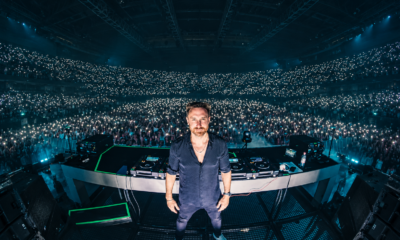
David Guetta performing in front of the towering illuminated Monolith structure during his large-scale live show.

David Guetta to receive Hollywood Walk of Fame star following decades of dance music impact and the growth of his Monolith shows

The Hollywood Chamber of Commerce has selected David Guetta to receive a star on the Hollywood Walk of Fame as part of its Class of 2027. The recognition follows a career that has played a major role in dance music’s global growth. From early club releases to worldwide hits such as When Love Takes Over and Titanium, David Guetta helped bring electronic production into mainstream pop on a scale few DJs had achieved before him. More than two decades later, his releases, festival appearances and Monolith shows continue to reach audiences around the world. The honour offers an opportunity to look back at his influence and the different stages of his career.

What the Hollywood Walk of Fame Honour Recognises

The Hollywood Walk of Fame named David Guetta in the Recording category alongside Karol G, Sia, Lil Wayne, Linkin Park, The Ramones, Smashing Pumpkins, Grandmaster Flash, Marc Shaiman and the late Waylon Jennings. The list spans several generations and genres, placing electronic music alongside pop, hip-hop, rock and musical composition. It also places David Guetta among artists whose work has influenced how their respective genres are represented across the wider music industry.

For dance music, his inclusion has particular significance when considering how the industry presented DJs before David Guetta’s commercial rise. Producers often remained in the credits, while vocalists became the names most listeners associated with a track. David Guetta changed that relationship through collaborations where his name received equal prominence alongside globally recognised singers. This made the producer part of each release’s public identity and helped establish the DJ as a recording artist in his own right.

David Guetta’s Impact and Influence on Dance Music

David Guetta’s influence began long before electronic music became a regular presence on pop radio. His early career developed through the Paris club scene during the rise of house music in France. After establishing himself as a DJ, he focused more closely on production and released Just a Little More Love in 2002. His international profile increased throughout the decade before One Love marked a major turning point in 2009. When Love Takes Over with Kelly Rowland and Sexy Bitch with Akon paired house production with vocalists already known to mainstream audiences. Those releases also placed David Guetta’s name at the front of songs heard far beyond dance music.

That crossover reached a larger scale through Nothing but the Beat, which featured Sia, Usher, Nicki Minaj, Flo Rida and Taio Cruz. Tracks including Titanium, Without You and Turn Me On succeeded across clubs, radio and international charts. They kept the producer central to each release instead of pushing him behind the featured vocalist. As EDM expanded during the early 2010s, more DJs received top billing and worked with major pop and hip-hop artists. David Guetta did not create that change alone, but the reach of his releases gave the model global visibility. His work showed that a producer could become one of the most recognisable names attached to a song.

His career continued to develop after that period through projects connected to different parts of electronic music. Jack Back gave David Guetta a separate outlet for house and club releases. His work with MORTEN introduced Future Rave, adding a darker direction to their festival music. More than a decade after his first crossover success, I’m Good (Blue) with Bebe Rexha returned him to the top of charts around the world. The track earned a Grammy Award nomination and later passed two billion streams on Spotify. Its success showed that David Guetta could still lead one of the world’s biggest dance-pop records years after the early-2010s EDM boom.


View this post on Instagram


A post shared by DAVID GUETTA (@davidguetta)

The Growth of David Guetta’s Monolith Shows

The growth of David Guetta’s Monolith shows has carried that longevity into his live career. What began as a production concept for club settings later expanded into large stadium events centred on his catalogue. In June 2026, David Guetta played three consecutive sold-out Ultimate Monolith Show dates at the Stade de France. The run sold approximately 240,000 tickets across the three nights.

The production featured a 32-metre monolith structure and a 60-metre curved screen. This gave the show a scale far beyond his regular festival and Ibiza appearances. Early club records, global pop collaborations and newer releases all appeared across the stadium run, connecting the different phases of his career within one performance. For an artist who began in Paris clubs, selling out one of France’s largest venues for three nights showed how far his live career had progressed.


View this post on Instagram


A post shared by MORTEN (@mortenofficial)

What the Hollywood Walk of Fame Star Means for David Guetta

The Hollywood Walk of Fame star recognises more than the commercial success of individual releases. David Guetta’s career also contributed to a wider change in how the music industry views DJs and producers. By placing his name alongside major vocalists and sustaining success across clubs, festivals, radio and international charts, he helped establish a career path that became increasingly common as dance music entered popular culture.

The recognition follows a period in which David Guetta has continued to expand both his musical output and live shows. His journey from Paris clubs to global collaborations, Jack Back, Future Rave and the stadium scale of Monolith shows why the honour comes at a fitting point in his career. The star will acknowledge his own history while also recognising the larger place dance music now holds within the recording industry.

Subscribe to our Newsletter

With 13 years in the EDM scene, Preetika has built a strong presence around festivals, club culture, and electronic music. Based in Bangkok, she covers all things EDM in Thailand and beyond, with a focus on both local and international talent. She has attended major festivals including Tomorrowland, Ultra Japan, and Creamfields Hong Kong. Since working as a writer for EDM House Network, she has interviewed artists such as Blasterjaxx, James Hype, W&W, R3HAB, Alok, and many others. Her experience and consistent presence in the scene make her a trusted voice for EDM coverage.