Connect with us

Interview

Telling The UNTOLD: The Founder’s Story Of Magic And Dedication

Unknown's avatar

Published

on

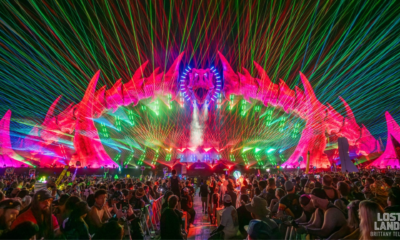
UNTOLD celebrated 10 years of existence in August 2025, bringing together their boldest edition so far. Spanning across 235,000 square meters, this is the world’s third best festival and this year featured: 200+ global and local artists from top live acts such as Post Malone and Metro Boomin to superstar DJs with unique tailored shows like Martin Garrix, Armin van Buuren, Alok, Don Diablo, Dom Dolla, Steve Angello, and more , eight stages, multiple music spots, over 50 brand activations, 63 food vendors, and unique experiences.

Besides this, its mainstage, situated inside Cluj Arena, featured 1020 square meters of screens, 1130 light fixtures and an impressive 25-tonne centrepiece. It is the most ambitious stage design ever created by the UNTOLD team.

However, the festival has come a long way since its first edition, now welcoming over 470,000 ravers from over 150 countries. Bogdan Buta, the festival’s founder, spoke with EDM House Network about his journey organising events, as well as UNTOLD’s history, challenges and future.

Bogdan Buta: From student parties to sold-out festivals

What is now one of the biggest and best festivals in the world, was once just a dream to Buta. He started organising student parties in his university years, going from events with 1,000 people to outdoor celebrations that welcomed 5-10,000 party-goers.

“It was quite a journey … but we’ve managed to bring together the right team in order to achieve this,” says Bogdan Buta who in 2025 had 470,000 people from over 150 countries travel to Cluj-Napoca for UNTOLD.

The experience gained from organising various student parties, paid off for the founder of UNTOLD after the first edition, which brought 150 artists, including Avicii and premieres for Romania, and attracted 240,000 festival goers worldwide. The first UNTOLD ever was crowned Best Major Festival at the 2015 European Festival Awards, a premiere for a festival to receive this recognition after only one edition.

Speaking about what made winning the prestigious award possible, Buta says: “I was looking up to all these amazing festivals that were happening out there, like Tomorrowland or Coachella or EDC or Ultra.

He states he was also thinking of all young people who would probably never experience those festivals. He wanted to offer them the chance to live unforgettable moments with UNTOLD.

What started as an ambition for Buta and his team, turned into years of experience, blending magnificent ideas into some of the best festival productions.

“I think we’ve proven it year after year, that we can make the impossible possible,” reflects the founder of UNTOLD on what have been ten outstanding editions so far.

With a feeling of gratitude and pride, Buta reflects on what keeps the strive for more alive, saying: “The best recognition is when you see the energy of the people, you see it in their eyes. Artists that play all over the world on the biggest stages and they are so impressed of what’s happening here. It’s very heart-warming and inspiring and gives us energy to go further.”

What is UNTOLD’s x factor?

Among its unique feelings, special shows from artists, massive production, great food and unmatched brand activations, UNTOLD excels when it comes to safety. It is one of the few festivals where people of all ages can attend, whether alone, with friends, or with family. It provides a secure environment for everyone to enjoy life to the fullest.

UNTOLD’s commitment to safety is remarkable, as it remains at the core of the organisation while production grows bigger every year. This is one way the UNTOLD team proves its professionalism with every edition.

“It’s like when you try to create a dish, you go, you select the best ingredients, but then it becomes also this talent of how you blend them together in order to create a special flavour … I think we’ve managed to identify some key success factors and we’ve managed to build them together in a pretty unique way that brought a lot of people together from the very first edition,” highlights Bogdan Buta regarding how UNTOLD balances scale, creativity, and a welcoming atmosphere.

UNTOLD’s biggest challenge

Looking back on a dark global period, founder Bogdan Buta says the pandemic was UNTOLD’s greatest challenge.

“We were completely shut down and yeah, it was very hard, but going back to how we are, we didn’t give up,” recalls the founder.

As a result of their resilience and ambition, UNTOLD returned in 2021, becoming one of the only festivals to take place during the pandemic. The crew worked tirelessly to prove they could run the event safely, demonstrating their commitment to delivering the best experience for all Untolders.

What’s next for UNTOLD

With ten years of experience, countless memories created and a notorious reputation, the festival is ready to raise the bar even higher. If UNTOLD X was mind-blowing, then UNTOLD 2026 promises to surpass any expectation.

Founder Bogdan Buta explains the edition will cherry pick all good things from past years, polishing the future of UNTOLD. Titled “UNTOLD ONE,” it will offer fans the opportunity to be part of a new journey: “People became loyal fans, but they started coming from the 5th or 7th edition. They were so grateful for the experience, but there was this regret that they were not part of the first edition … this [UNTOLD ONE] is more of a conceptual opportunity.”

Buta calls it their next big challenge, uniting everyone in an even more impressive way. He wants to give attendees the sense of levelling up to a new chapter.

Considering UNTOLD’s history, one thing is certain: it never disappoint. Expect breathtaking production and surprises beyond imagination. Passes for UNTOLD ONE are now available on the official website. Follow this link, to secure your chance of being in the 2026 crowd at the lowest price.


View this post on Instagram


A post shared by UNTOLD (@untoldfestival)

Subscribe to our Newsletter
Spotify and Partnerships manager at EDMHouseNetwork. Occasionally chiming in with some new music and news. You can find me in the front row at a Martin Garrix or Tiesto show.

Interview

Björn Grimm Talks Nibirii Festival’s 6th Edition & More

Unknown's avatar

Published

on

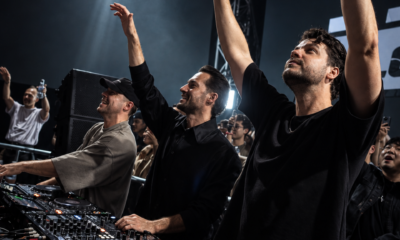
Björn Grimm, co-founder of Nibirii Festival, standing at the DJ booth wearing sunglasses and a black turtleneck top with festival crowds in the background

Ahead of Nibirii Festival’s sixth edition, co-founder Björn Grimm discusses the festival’s origins, its growth, and this year’s lineup.

Recently we got to chat with Björn Grimm, co-founder of Nibirii Festival, in the lead up to the festival’s 6th edition. We discussed the story behind Nibirii, how it’s grown, and what everyone can expect from it this year.

First off take us back to the beginning. Where did the idea for Nibirii Festival come from and how did it all come together?

I was listening to a Vini Vici track by coincidence at the time and it had me thinking of a concept for bringing sounds together at Bootshaus Cologne, which were underrepresented at that time. It became a successful event series pretty quickly and someone offered us a nice place (Dürener Badesee) so we thought about bringing this to the next level – and so we did!

Since that first edition Nibirii has come a long way. How has it been for you to watch it grow from a single day event to a multistage, full weekend festival?

To be honest, it is really hard for me to see it growing because it was huge for me right from the beginning and I am not the person counting and comparing numbers. I think you can compare it with being a parent and you see your child growing and so time is passing and someday you say “wow when did you become a grown adult.” I think it is similar because I was raising this event and was so close to it.

– This year you’ve pulled together an incredible lineup with the likes of Dimension, Hannah Laing, I Hate Models, and Vini Vici to just name a few. What’s the process like in pulling together such a lineup and deciding who you want on those stages?

I think booking is a really difficult task nowadays. Music is changing fast, artists are getting a lot of attention within a few days. Trying to look into the future is nearly impossible. I think the good thing is that we have a great relationship to the artists and we know what we want, and our booker is maybe one of the best in Germany. Shoutout to Paul.

– Nibirii has grown rapidly year on year. What can festivalgoers expect this year that’s maybe developed since 2025?

If we look back at last year, the Unreal stage might have been the biggest thing, and it will be for the Techno genre in 2026. But the other stages have also had a new facelift.

– Planning a festival is a huge challenge to take on. You’ve already had 5 very successful editions, but what are the emotions like for you in the buildup? Do you get nervous or is it all just excitement?

I think this is part of the deal. You will not do this with your heart if you are not getting nervous and excited, sad and happy, frustrated and the full emotional rollercoaster ride.

– How important is it to you to have each stage feel unique in both style and sound?

Stages should be great, 100%. The experience is not only created by the artists playing. It is the surrounding, the friends and people around you, the sound… everything is important. You can have the best stage in front of you but if you can’t share this with someone this stage is worthless.

– What would you say makes Nibirii different to other festivals and has kept on bringing more and more people back?

It is the vibe, the location, the local hosts we bring to the festival.

– What is your favourite thing about Nibirii?

It is the people I am seeing there. Seeing them smiling makes me happy and reminds me why I’m doing this.

– If you had to describe Nibirii in 3 words to someone who hasn’t been before what words you choose?

MUSIC, BEACH, FRIENDS

Subscribe to our Newsletter

Continue Reading

Interview

Inside MiNT XL: Leeds’ Latest Nightlife Destination

Unknown's avatar

Published

on

Joseph Capriati performing behind Pioneer decks at a packed club night, captured from behind at the booth with one hand on the mixer, a crowded dancefloor of raised hands and phones visible under teal and red club lighting stretching back into the room.

MiNT announces MiNT XL, a new 2,500-capacity Leeds venue opening September 2026, marking the brand’s most ambitious project in its two-decade history.

Yorkshire has long been a hub for electronic music in the North of England. DJs such as Hot Since 82 and Paul Woolford are among the biggest names to emerge from the county, while venues including The Warehouse and The Orbit have shaped generations of ravers.

MiNT belongs in that lineage as well, having grown from a Leeds-based nightclub into one of Yorkshire’s most recognisable electronic music brands over the past two decades. Its story began with MiNT Club in 1998, which hosted renowned names including Ricardo Villalobos, Loco Dice and Luciano.

The brand later expanded with the launch of MiNT Warehouse and MiNT Festival in 2012. Now, building on that legacy, MiNT is writing a new chapter, opening a new venue in September 2026, its most ambitious project to date.

Discover MiNT XL

Located in the heart of Leeds, MiNT XL will transform the former PRYZM nightclub into a reimagined 2,500-capacity venue that will represent an expansion of MiNT’s ambitions as a brand.

Speaking about the new project, marketing manager at MiNT, Mikey McMahon says: “With it being a multi-use space, not just for electronic music, the production capabilities of the building will be on another level. Mint Warehouse is more of a traditional, no-nonsense clubbing experience … but with MiNT XL, as we look to expand beyond electronic music, there’s a certain standard of production we’ll need to reach, so it’ll be a completely different setup in that sense.”

Benefiting from the venue’s three-room layout, MiNT will have the opportunity to explore new musical experiences outside of electronic music for the first time. Although the brand has a strong reputation in Yorkshire’s rave scene, and that will remain at its heart, MiNT XL will deliver new formats, with something for every music fan.

The three-room setup definitely helps, as it allows us to programme something different in each room and give people the option to experience different sounds, atmospheres, and environments throughout the night,” mentions McMahon.

“One thing we’re really excited about is expanding into new genres and live music, which is something we haven’t explored properly before,” he adds, highlighting the wider ambitions behind the new venue.

While the building and its layout will help MiNT explore new sonic territory, taking over a space with as much history as the former PRYZM nightclub presents its own challenge. However, the team behind MiNT XL are confident they can give the venue a new identity through their own programming, unique production, and overall experience.

“We want people to walk into MiNT XL and feel like they’re part of something fresh and forward-thinking,” says Mikey McMahon who also confirmed the venue will feature a Funktion-One Vero sound system.

MiNT XL: The Experience

Despite the new location’s larger capacity, MiNT aims to maintain the atmosphere that has defined the brand throughout its history. The team is determined to preserve its intimate identity while allowing each room to have its own character.

As McMahon explains, a bigger venue does not necessarily mean a more mainstream experience. Instead, MiNT remains focused on keeping the dancefloor moving and delivering the immersive nights its audience has come to expect.


View this post on Instagram


A post shared by Mint XL (@mintxl_leeds)

“I think we’ve built a reputation over the years for putting on great line-ups, but moving forward we’re looking to move away slightly from stacked line-ups and focus more on headline performances and extended sets that go beyond the standard two-hour slot,” he says. “We think our audience would rather see their favourite artists play longer, more immersive sets and really take people on a journey.”

The marketing manager also confirmed that MiNT’s no-phones policy will remain in place for specific electronic music and flagship events, keeping the focus on the music and the connection between people on the dancefloor.

What Success Means For MiNT XL

Although the launch of MiNT XL marks another major step forward for the brand, McMahon says its success will not be essentially measured by aspects like ticket sales alone: “Success for us is about diversity in programming and creating something that goes further than just house and techno … being able to collaborate with different people, host a wide variety of events, and continue evolving creatively is just as important as ticket sales or line-ups.”

As MiNT XL prepares to open its doors in September, the venue promises to bring a new scale of nightlife to Leeds, while staying true to the culture that transformed the brand into a Yorkshire music events icon.

The opening party will set the tone for the new chapter, with a carefully curated line-up featuring Enzo Siragusa, Craig Richards, Fumiya Tanaka and Sonja Moonear taking over the decks throughout the inaugural night.

For some, this expansion may be just another venue, but for Leeds, MiNT XL presents one more sign of the city’s continuing influence on the UK’s electronic music scene.

Subscribe to our Newsletter

Continue Reading

Afro House

Cumbiafrica Interview: Batonga, HUGEL, Decca Records & More

Unknown's avatar

Published

on

Cumbiafrica's two members posed together in a studio portrait against a black background, with Leo on the left wearing a red bandana, round red-tinted sunglasses and a patent leather jacket while holding a bass guitar, and Lina on the right in a black off-shoulder cut-out top and iridescent skirt, both looking relaxed and confident.

Cumbiafrica interview discusses their new Decca Records release Batonga, their collaborations with HUGEL, and the Afro Latin House sound at the heart of their music.

We sit down with Cumbiafrica to celebrate their new release on Universal France’s Decca. We discuss the story behind the music, their collaborations with HUGEL and of course their new release.

How has your year been so far?

We’ve been working very hard with our label, Producciones Alé Kumá. At the beginning of the year, we released the single “Carmelita Adiós” alongside DJ Dean Mickoski, and more recently an EP titled “Sheel Sheel (Drone Song)” in collaboration with Gaza Birds Singing, a children’s singing group from Palestine. This EP is part of a larger album called “Canciones de Resistencia” (Songs of Resistance). During this first semester, we spent a lot of time in the studio because, as summer approaches, we’re intensifying our release schedule. We have planned to drop a new single every three weeks throughout the season. All of these tracks are part of an Afro Latin House album that will be released very soon.

How did you all meet? What’s the story behind Cumbiáfrica?

We met in Colombia. Leo was already a well-known producer there, having worked extensively with major folkloric figures like Martina Camargo. I, Lina, had just finished my degree in acting and dramatic arts, but alongside my acting career, I had been singing since I was a child, accompanying my father who is a pianist, as well as my sisters who are also musicians. Later, thanks to a scholarship, Leo and I traveled together for two months to an artistic residency in the Democratic Republic of Congo, a country with deep cultural connections to Colombia. There we met many artists from the local Afro house scene, and that’s how Cumbiáfrica was born.

What inspired you to take this path sound wise?

At that time, Leo was directing an orchestra in Belgium called De Palenque a Matongé, alongside Congolese guitar legend Dizzy Mandjeku. The orchestra was made up of African and Colombian musicians, and I was part of it as a singer. When the pandemic hit, we had to scale down the format to a DJ set with electronic sounds and vocals. However, we wanted to preserve sounds like the marimba and guitar that evoke both Colombia and Africa, and that first intercultural project.

What have been your biggest influences on your current sound?

Afro-Colombian music and contemporary African music have a constant dialogue of mutual influence that goes beyond their obvious common roots. Soukous, champeta, cumbia, soca, amapiano, classic Afrobeat, and contemporary Afrobeats are all part of our influences. Artists like Ginton and Trinix, with whom we’ve worked, or the Colombian group Bomba Estéreo, have influenced us greatly. But the artist we admire most and who will always be present is Stromae.

What inspired you to reimagine Batonga? What does that mean to you?

“Batonga,” beyond being a classic in Angélique Kidjo’s repertoire, is an anthem — not only of African identity, but of resistance, female strength, and rootedness. We wanted to establish a dialogue between Angélique’s voice and mine, between Fon (the language of Benin) and Spanish. For that, Leo wrote some original verses that highlight this aspect: “Raíces fueron mis pies, mis manos ramas en flor, erguida caminaré como árbol buscando el sol. Ya nada borrará mi voz”(Roots were my feet, my hands branches in bloom, I will walk upright like a tree searching for the sun. Nothing will erase my voice). For us, above all, it is an honor. Angélique is one of the most influential voices in contemporary African music and a five-time Grammy winner. This wouldn’t have been possible without the management of Decca Records.

How did you come to land on Decca as a label?

Leo has been running his producer project, Alé Kumá, for 25 years, founded in Colombia. It has transitioned from ethnic music to contemporary African music, and in recent years, into dance music, especially Afro house. Because of that experience, Decca reached out to him. They wanted to “reimagine” some songs from their more classic catalog. “Batonga” was on that list, and they wanted it to be the starting point of this collaboration. We hope it extends to more African artists from their catalog.

Why did you use your Alé Kumá alias here alongside the Cumbiáfrica titled project?

Leo wanted to give the track a more “Latin house” sound and identity, so he proposed to the label that, in addition to Angélique’s original sample, we should record verses, chops, and hooks in Spanish. So he decided to involve me as the singer of Cumbiáfrica, a project that many critics have considered an “instigator” of the Latin house movement, especially because of our collaborations with DJ HUGEL.

Tell us about your work with HUGEL? How did that relationship come to be?

We met during the pandemic. He reached out because he knew Alé Kumá’s work as a composer and producer for Martina Camargo. We had recorded a version of “Morenita” in the Democratic Republic of Congo in 2018, and Leo suggested that HUGEL “reimagine” a new version. We never imagined that this song would become the “post-pandemic” anthem of Latin house. After that, we met in person during the filming of the “El Sueño” music video, and later came “Águila.” Leo also collaborated with HUGEL by helping him manage the licenses for “La Verdolaga” with Colombian singer Totó la Momposina.

What has been your most memorable gig this year and why?

The most important show this year was at the Carnaval de Vinaròs, in Valencia, Spain. We played in front of 10,000 people, and it was broadcast by the Valencian public television network. What was most moving was that we learned there that recent generations frequently choose Cumbiáfrica’s songs for their parades and comparsas. So many carnival attendees know our repertoire by heart, even our lesser-known tracks. When we got on stage to sing, the audience became a massive choir accompanying our songs. It was incredibly emotional, and we’ll be uploading the full concert to our YouTube channel very soon.

What is your studio set up like? Any rare equipment you like to use?

Today we have a very well-equipped studio in our new home, with excellent acoustic conditioning. But for many years, we recorded in a technically limited home studio. Sometimes we feel nostalgic for that home studio because we recorded many of our emblematic songs there. Our first microphone was a The t.bone RB 500 ribbon mic. Today we have much more sophisticated microphones, but we still use our old ribbon mic as a complement to capture Cumbiáfrica’s vocals.

What advice would you give to young up and coming producers?

Our advice is always: “listen to musicians.” And by musicians, we don’t mean conservatory academics. There are traditional musicians who can’t read sheet music but play guitar or drums by ear. These people know many secrets of music that many producers are unaware of. Ideally, producers should also learn about music, or simply learn to play an instrument or sing. But if you don’t have the time, surely you have a musician friend who can help you listen to your tracks and advise you on how to achieve a better musical result.

What more can your fans expect from Cumbiáfrica this year?

In addition to the releases on our own label, we want to expand our collaboration with Decca Records because they have a wonderful catalog. Many of their ethnic, jazz, and world music artists are reference points for their communities and for musicians around the world. We are working on two new releases for Decca Records and hope that later these and other pieces can be compiled into an album of collaborations with African musicians. That is the very essence of Cumbiáfrica.

Stream their latest single below and purchase here.

Follow:

Subscribe to our Newsletter

Continue Reading

Trending