
Interview
Canguru Talks New Single, Blending Genres, Emotions, and Inspirations


Canguru, a Producer working to make waves within the Electronic Music space, recently delivered his album, ‘Pick It Up,’ marking a significant milestone in his creative journey as he brought his signature sound to listeners, blending musical influences with personal reflections. In this interview, Canguru joins us to offer a deeper look into the album’s creation, from the inspirations behind its title to his process of combining genres like Trap, Techno, and Alt-Dance. As an artist known for balancing electronic and live elements, Canguru reflects on his techniques, lyrical process, and the journey that brought his vision for ‘Pick It Up’ to life.
Hi Canguru, how’s it going?
I’m fine thanks.
To begin, what inspired the title of the album, ‘Pick It Up’, and how would you say it reflects the overall themes of the album?
The overall lyrical theme of the album was based on a socio-political commentary of my state of mind during the coronavirus pandemic lockdown period. I thought that it would be appropriate to entitle the album with a positive note and since “Pick it up” is one of the strongest singles of the album, I thought it would be fitting to use this for the album’s name.
How would you say your background in Classical Music influenced the production process for this album?
Indirectly speaking, yes, I guess it did influence my process. Classical Music will always be a big part of my upbringing, and I feel very much attuned to Classical orchestral sounds/timbres. Thinking about it now, one can definitely hear some Classical influences here and there. I would say that it can be heard mainly in my choice of samples and arrangements. A lot of the samples I used were orchestral or piano samples and I also recorded some string parts in places.
The album features a mix of genres, including Trap, Techno, and Alt-Dance. How do you approach blending such varied influences into a cohesive sound?
Well, it was very much a trial-and-error process, constantly trying ideas out. I often get my influences from a lot of different types of music and I’m always keen to experiment on trying new ideas. I wanted this album to sound unique and different. I always strive to find my own signature sound, it’s important for me to find my own identity as an artist. Trap was a genre of music I was listening to a lot while I was writing the album as well as Techno and Dance music.
Can you walk us through the creative process behind the title track, ‘Pick It Up’? Was there a particular moment or experience that sparked the idea for this song?
Well, I remember that before I wrote the track, I got into some Emo Rap tracks from the American artist Lil Peep. I liked the dark alternative vibe of his music and wanted to write a darkish tune with a memorable guitar hook part in a similar style. I had been experimenting with an idea of a song for a while, but I was struggling to get this song finished. At some point, I played the song to my friend Eric, and he came up with the perfect guitar riff almost instantly for the track. That guitar riff was really the missing part that glued the whole track together.
Several tracks on the album, like ‘Awake,’ have a vocal-heavy sound. Can you share how you approach crafting vocal melodies?
I tend to play around a lot with ideas, jamming vocal parts along to the track and recording my ideas on my phone as I go along. Usually, if the idea sounds good enough the next day, it will “make the cut” and I will record it for the song. With “Awake”, I wanted to write a memorable chilled opening vocal chorus part in my baritone lower register.
The album has a blend of electronic and live elements, such as guitar and vocals. How do you find a balance between these in your music? Do have any go-to techniques to ensure a cohesive sound?
It is really most of the time a trial-and-error process by which I jam along to the track and check how it fits in. Sometimes I might start recording an idea with the guitar or keyboards and use that as a grounding to start building on. The whole process is never the same but I would say that most of the time I will first program/ record a structure for a song and then later try ideas to fit in my vocal parts. The structure of the song will often be altered to fit the lyrics. By jamming along to the track, I can test ideas out and record them on my phone to use as a reference. I tend to catalog and log all my rough recordings on my phone so I can easily A/B test the different takes and choose the best one.
Your lyrics often draw from personal experiences. Can you tell us more about your process for composing lyrics?
When I write lyrics, it is always a very free-flowing process by which I just write anything that comes to my mind without overthinking it. I let go of any of my inhibitions and just write anything that comes to my mind. After that initial process, I will then play around with the structure of the lyrics alongside the track and tweak them here and there for it to make more sense. I often work alongside an online dictionary/synonyms app to play around with new words and rhymes. I get really excited about learning new words and using them in my lyrics.
‘West Goes The Sun,’ ‘Nobody,’ and ‘Pick It Up,’ were released as singles ahead of the album. How did you choose those tracks to represent the project before its full release?
I like to get a second opinion usually when it comes to deciding which singles to choose from. In this case, I got some feedback from my daughter, some friends and the PR company I work with.
I also like getting feedback if I can from younger “Gen Z” group of people as they usually know what new sounds are cool out there.
Which track on the album is your favourite and why?
That’s a tough question to answer. I think all the tracks are great on the album, but I guess, depending on my mood, I would say: “Up &Down” for the sexy vibe/ groove, “Elevated” or “Awake” for the more chilled vibe and “Pick it up” for the strong message and its cool dark alternative vibe.
With ‘Pick It Up’ now out in the world, what do you hope the album achieves, and where do you see your music going from here?
Well, I hope that it will attract the attention of new listeners and that it can inspire people for positive change.
I am busy working on a lot of new music at the moment. I’ve got a new Alt-Hip-Hop album and an Electronica album in the pipeline. I am also writing new Electro-Pop music with my friend Eric. Other than that, I am also doing remixes of songs by other artists that I like.
As ‘Pick It Up’ continues to garner attention, Canguru remains focused on pushing his creative boundaries and connecting with listeners on a deeper level. With plans for new music, collaborations, and remixes already underway, his journey as an artist is far from over, so be sure to take note and stay connected with his latest projects and releases by following Canguru via social media. As we conclude our interview, we thank Canguru for his time and look forward to hearing what he brings his listeners next.
Listen and Buy ‘Pick It Up’ Now:
Canguru Online
Subscribe to our Newsletter










MEETCH interview about his new single ‘Reflections’ with Lacey, his Ørjan Nilsen collaborations and what’s next for the robot-headed producer
Subscribe to our Newsletter

Promo Push head of promotions Russell Biles explains how the UK company promotes dance music releases across DJ, radio, press and Spotify campaigns
Promoting releases from the likes of MK, Chris Lake, Claptone, Above & Beyond, Tiësto, Diplo, Flashmob, DJ Hype, Axwell, Jamie Jones & Vintage Culture – Promo Push was founded in 2011 & is one of the industry leaders in dance music promotion, based in the UK.
Speaking to Russell Biles, head of promotions at Promo Push - we asked some questions about the company & how they promote a release in today’s dance market.
Since the launch of Promo Push in 2011, how have the range of services you offer evolved?
We launched with a firm focus on DJ & Club promotion, delivering genre specific & bespoke campaigns – across the electronic music landscape. The next natural progression, was us moving into dance radio promotion & we’ve built an extensive network with international heads of music, playlist managers & mix show hosts. Online Press campaigns then followed & we work with a range of music journalists & editors at dance music publications – closely aligning online coverage & building further awareness around a release. In 2019, we also moved into Spotify promotion – with us pitching to a range of leading 3rd-party playlist curators.
Musically, what dance music genres does your DJ promotion cover?
Whether it’s a House, Tech House, Deep House or Nu-Disco leaning track, a melodic Techno or Trance record – or Mainstage release, we deliver tastemaker DJ & 1001 Tracklists mix show promotion. With a deep understanding of the industry, each of our DJ / Club campaigns are tailored & finely tuned. Working with both major & independent labels, along with management agencies & directly with artists – from underground clubs to festival main-stages, we get our client’s release to the right DJs at the right time.
Across your radio promotion, what territories do you focus on?
Our radio promotion is international & reaches in to each key global territory. We target dance music stations & specialist DJ shows worldwide, including across BBC Radio 1, SiriusXM, Radio 538, Kiss FM, One World Radio, Ibiza Bpm Radio, SLAM FM! & stations throughout Europe, USA, Australia & beyond. In addition to FM stations, we also push to an array of specialist digital & online dance stations and use the monitoring tool WARM (World Airplay Radio Monitor) for tracking plays & radio support.
Do your campaigns follow a specific timeline?
Each Promo Push campaign runs over four weeks & we report to clients weekly, with feedback & scores from DJs / Radio and who’s listened, reviewed and intends to support. Our Press & Spotify campaigns also run over a four timeframe, with weekly reporting too & detailing each Press feature / Spotify placement we’ve secured – with direct links to each. We provide a full & comprehensive summary with the final reporting, ideal for our client’s Press pack and their future release planning.
In terms of your Press service, can you tell us more about how this works?
We offer standalone Press campaigns, or including DJ & Radio promotion – as part of our Prime Tier. From leading online dance publications, to influential niche blogs — our Press network covers a wide spectrum of sites that dance music fans read. Press release curation is included in our service & our weekly reporting is in PDF, providing coverage links – readership estimates & a full overview of online release traction.
With Promo Push delivering over 4,000 campaigns to date & working with the likes of Anjunabeats, Axtone, SIZE, Ministry of Sound, Positiva, Spinnin’ Records & Defected Records – they continue to promote releases from some of dance music’s most established labels & artists, along with the best up & coming talent.
Connect:
www.promopush.com
[email protected]
+44 (0) 20 3633 1721
Subscribe to our Newsletter
Interview
A.N.I. Interview: Classical Roots, Keytar Moments, and Why She Refuses to Stay in One Lane
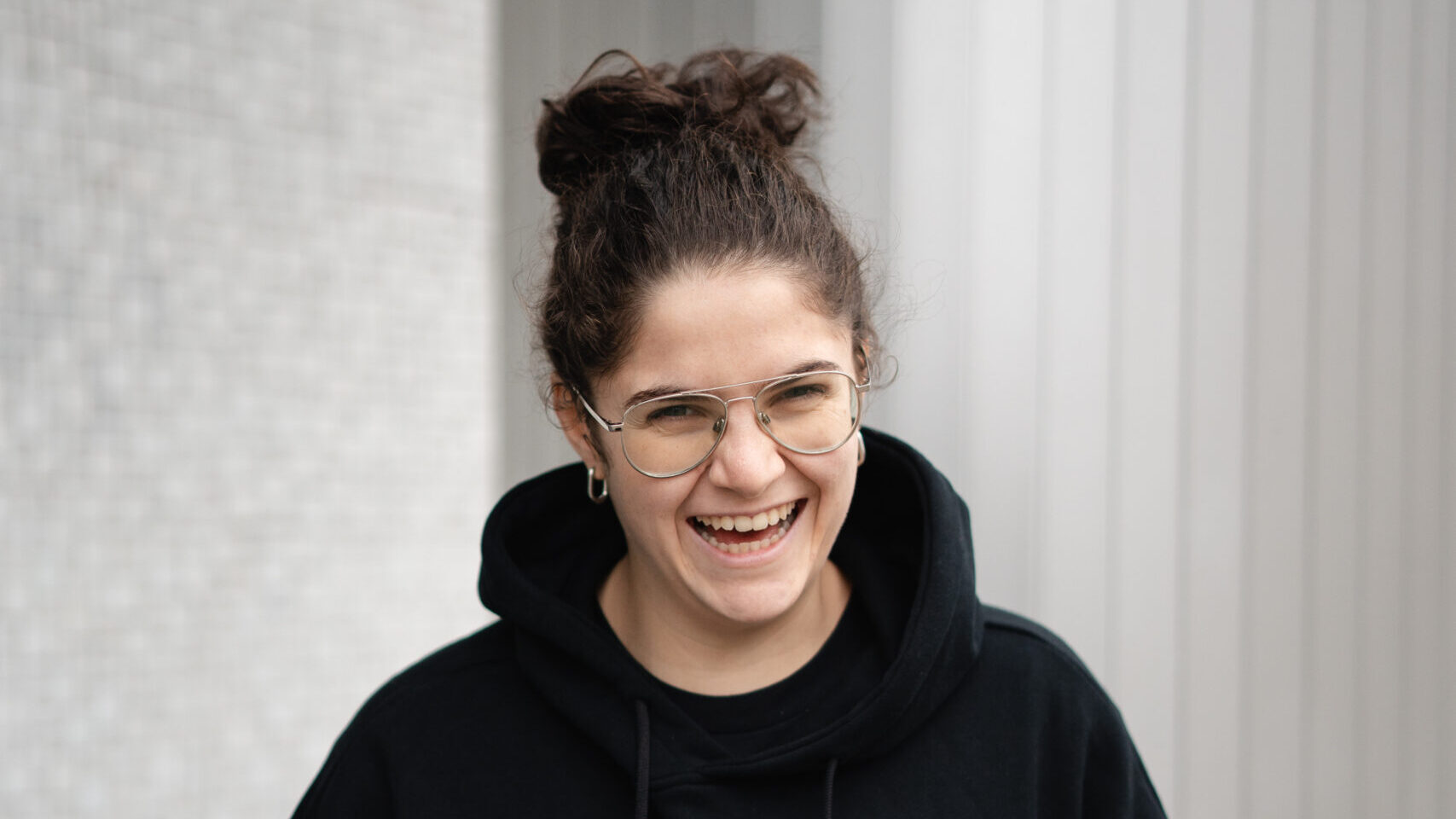
After a summer through Hive Festival, Tomorrowland and Verknipt Croatia, A.N.I. sits down to talk classical roots and the hard techno craft.
Subscribe to our Newsletter
-
 EDM Music3 days ago
New EDM Friday Oct 9: David Guetta, Armin van Buuren & More
-
 Amsterdam Dance Event News6 days ago
ADE Announces Full 30th Anniversary Program
-
 EDM Music3 weeks ago
New EDM Friday Sep 18: HALŌ, HUGEL, Sara Landry & More
-
 EDM Festival News4 weeks ago
Lost Lands Announces Full Set Times and Streaming Details
-
 EDM Festival News4 weeks ago
Tomorrowland Winter 2027 Dates and Ticket Sales Announced
-
 EDM Music2 weeks ago
New EDM Friday Sep 25: Charlotte de Witte, Armin van Buuren & More
-
 EDM Music1 week ago
New EDM Friday Oct 2: Martin Garrix, Dom Dolla & More
-
 Amsterdam Music Festival News3 weeks ago
EDM Festivals October 2026: Festivals We Can’t Miss
