
David Guetta News
David Guetta Does It Again: “I’m Good (Blue)” Surpasses 2 Billion Streams on Spotify


It seems like David Guetta has done it again. If there’s one thing the French DJ and producer knows how to do, it’s creating massive, era-defining dance anthems, and this time, he has hit another career milestone. “I’m Good (Blue),” his 2022 collaboration with Bebe Rexha, has officially surpassed 2 billion streams on Spotify, making it one of the most-streamed electronic tracks of all time.
For Guetta, this isn’t just another hit. It is proof that his ability to tap into global dance culture and reshape nostalgia into something fresh is unmatched.
From Club Icon to Streaming Giant
Guetta has spent the last two decades shaping mainstream dance music, from his early 2000s house roots to his dominance in the 2010s, where he helped bridge the gap between electronic beats and pop superstars. From “Titanium” with Sia to “When Love Takes Over” with Kelly Rowland, his formula for making festival-ready anthems has not just worked. It has set the blueprint for an entire generation of producers.
But in an industry where streaming numbers now define a track’s legacy, hitting 2 billion on Spotify is a rare feat, and “I’m Good (Blue)” now sits among the most-played songs on the platform.
Why “I’m Good (Blue)” Took Over the World
So what made this track explode? Part of the magic is the perfect blend of nostalgia and modern production. The song revives Eiffel 65’s 1998 hit “Blue (Da Ba Dee),” flipping its iconic melody into a euphoric, festival-ready anthem. It thrives on feel-good energy, which is exactly what people needed in a post-pandemic world.
But it wasn’t just nostalgia fueling the song’s rise. “I’m Good (Blue)” had TikTok in a chokehold before it even dropped, with snippets of the track circulating for years before its official release.
@beberexha I’m Good (Blue) Music Video with @davidguetta ♬ original sound – Bebe Rexha
When it finally hit streaming platforms in August 2022, the demand was already there. It immediately went number one in over 20 countries, topped the UK Singles Chart, and cracked the Top 10 of the Billboard Hot 100. It also earned David Guetta and Bebe Rexha a Grammy nomination for Best Dance/Electronic Recording.
Guetta’s First 2-Billion-Stream Song, But Not His First Game-Changer
Despite a career packed with chart-topping singles, “I’m Good (Blue)” is the first track from Guetta and Rexha to cross the 2-billion mark on Spotify. That is saying something, considering his influence on dance music.
Guetta has always had an instinct for crafting tracks that do not just perform well on the charts but become cultural moments. His shift toward the future rave sound alongside MORTEN has been influencing electronic music’s new wave, while his ability to reinvent old hits for new audiences has solidified his staying power.
Even now in 2025, “I’m Good (Blue)” isn’t just a past hit. It is still a setlist favorite at festivals and clubs worldwide. As streaming continues to shape the music landscape, this milestone cements David Guetta’s status as not just a DJ but a legacy artist in dance music history.
What’s Next for Guetta and Rexha?
Guetta, as always, isn’t slowing down. He is constantly evolving, whether through his high-energy festival performances, his underground-influenced future rave sound, or his collaborations with global pop stars. As for Bebe Rexha, this track reinforced her place in the electronic space, and given her genre-hopping versatility, it would not be surprising to see another dance hit from her soon.
For now, with 2 billion streams and counting, “I’m Good (Blue)” stands as one of the biggest dance records of the streaming era. It is proof that a good melody, the right timing, and a producer like David Guetta can still shake up the industry.
It is official. Guetta still has it.
Subscribe to our Newsletter

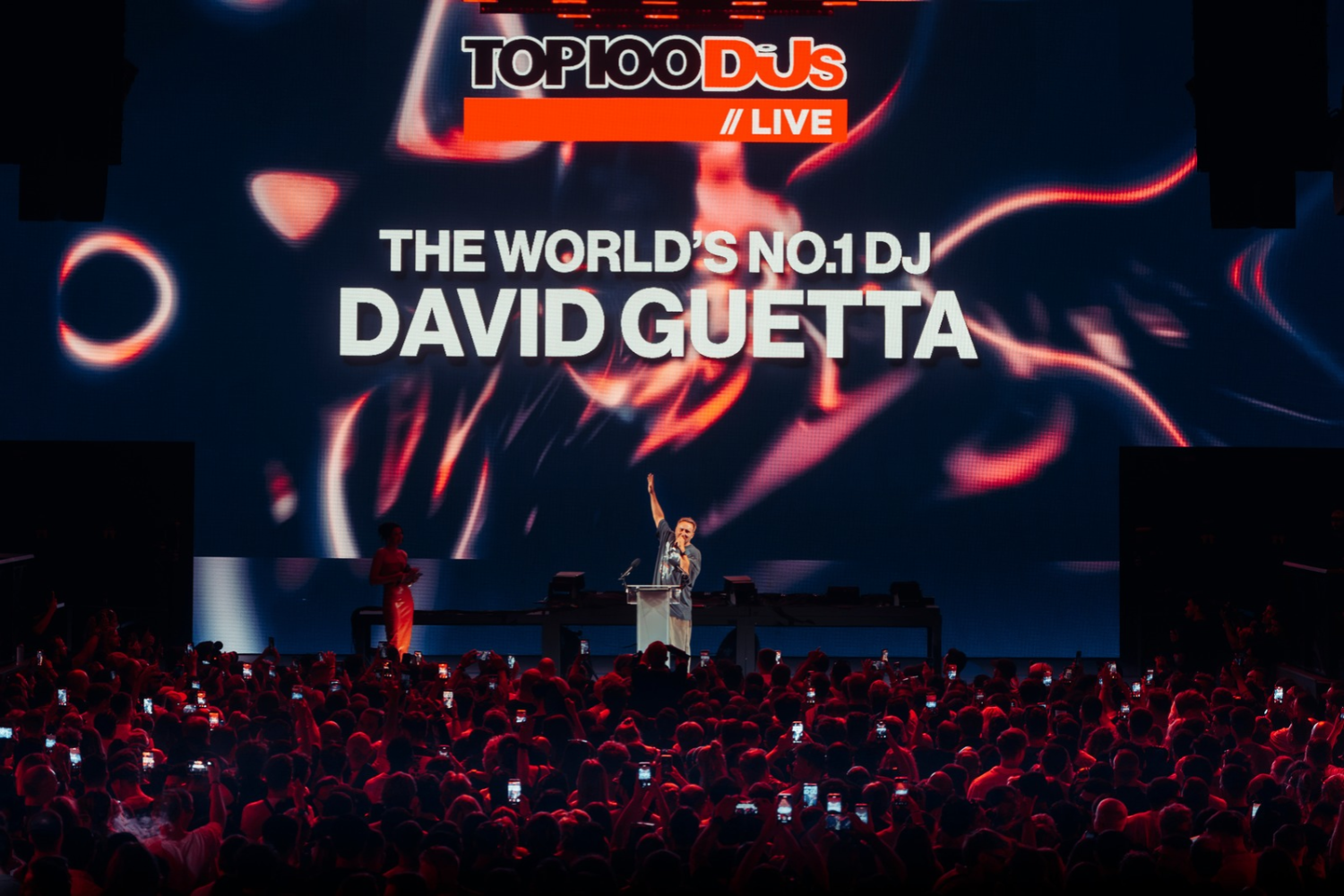
David Guetta crowned World’s No. 1 DJ in DJ Mag Top 100 DJs 2026 for a record sixth time
The DJ Mag Top 100 DJs Awards 2026 returned to [UNVRS] Ibiza on October 6, bringing the annual public vote back to the island for its live reveal. After taking the No. 1 position in 2025, David Guetta has done it again, earning the title of World’s No. 1 DJ for a record sixth time. This year also saw a record number of verified votes cast from 234 territories worldwide.
David Guetta Sets A New Top 100 DJs Record
That sixth title places David Guetta ahead of every other artist in the history of the DJ Mag Top 100 DJs poll. His first win came in 2011, followed by further victories in 2020, 2021, 2023 and 2025. Last year brought him level with Martin Garrix and Armin van Buuren on five wins each, while the 2026 result now gives him the record outright.

Speaking about the win, David Guetta reflected on how much electronic dance music has grown, particularly with DJs now playing stadium shows that were once associated mainly with major pop and rock artists. He also pointed to the new generation of DJs coming through and said seeing people dancing, having fun and enjoying clubs again has made this period especially exciting for him.
His own year has reflected that growth. David Guetta’s music added another five billion streams, while he became the first artist to reach 22 No. 1s on the US Dance Airplay chart. He also remains the most-streamed DJ on Spotify and regularly ranks among the platform’s ten most-listened-to artists across all genres.
View this post on Instagram
David Guetta’s Huge Year On Tour
That success has also carried into some of the biggest shows of David Guetta’s career. His three sold-out dates at Stade de France in Paris shifted more than 240,000 tickets, with guests including Armin van Buuren, Afrojack, Black Coffee, Jennifer Lopez, Akon, Bebe Rexha and Black Eyed Peas.
His MONOLITH show also continued through major venues and festivals, including Red Rocks and Coachella, while Ibiza remained a major part of his summer. F* Me I’m Famous!** returned to Ushuaïa Ibiza, while Galactic Circus continued at [UNVRS], giving him two separate residencies on the island alongside his wider touring schedule.
More Highlights From The DJ Mag Top 100 DJs 2026
There was plenty of movement across the rest of the 2026 ranking too, with 13 new entries and three re-entries in the Top 100. Anyma climbed seven places to No. 3, Charlotte de Witte rose to No. 6, and Fred again.. jumped 17 places to No. 16.
Further down the list, John Summit, Mau P and Chris Stussy each climbed 22 places, becoming the first three artists to share the Highest Climber award. Indira Paganotto rose ten places into the Top 30 and became the first winner of the World’s No. 1 Psy DJ award, while Josh Baker entered at No. 40 as this year’s Highest New Entry.
Other awards went to Charlotte de Witte as World’s No. 1 Techno DJ, Armin van Buuren as World’s No. 1 Trance DJ, FISHER as World’s No. 1 House DJ and Sara Landry as World’s No. 1 Hard DJ. Dimitri Vegas & Like Mike were named World’s No. 1 DJ Group, while Luciano received Outstanding Contribution and ANASTAZJA was named Future Star.
Top 100 DJs LIVE At [UNVRS] Ibiza
The live awards night brought together David Guetta, Anyma, Charlotte de Witte, Vintage Culture, GORDO, Korolova and ANASTAZJA for performances throughout the ceremony, alongside the ranking and award reveals. [UNVRS] hosted the event for a second consecutive year after becoming the home of the Top 100 DJs ceremony in 2025.
The event also continued DJ Mag’s partnership with Bridges for Music for a second year. By the time the results were announced, the campaign had raised £120,000, enough to fund the education of 120 students at the Bridges for Music Academy in Langa, South Africa. DJ Mag had launched the fundraiser in September with an opening donation from David Guetta.
For David Guetta, becoming the first DJ to reach six wins gives the 2026 result a very different significance from last year’s tie. Fifteen years after his first No. 1, he now holds the record on his own, during a year that has also seen him reach some of the biggest audiences of his career.
Subscribe to our Newsletter
![David Guetta performing at Galactic Circus at [UNVRS] Ibiza with both arms raised as orange visuals fill the stage behind him.](https://edmhousenetwork.com/wp-content/uploads/2026/08/Untitled-design-6-1.png)
David Guetta adds final [UNVRS] Ibiza performance during 2026 Closing Weekend with new visual production and surprise guest
David Guetta will return to [UNVRS] Ibiza on Friday, October 9 for one final performance of the 2026 season, one week after his Galactic Circus residency closes on October 2. The additional date forms part of the club’s Closing Weekend and gives David Guetta another night in the Main Room before [UNVRS] ends its second summer in Ibiza. For the show, the club has confirmed a completely new visual production created specifically for October 9, alongside a special surprise guest who will be announced closer to the date. The night begins at 11:30 PM and follows a full summer of Friday performances from David Guetta at the venue.
David Guetta Returns After The Galactic Circus Closing
The October 9 date follows another full season of Galactic Circus, which returned to [UNVRS] in 2026 after debuting during the club’s opening year. David Guetta has played Fridays at the venue throughout the summer, joined across the season by artists including James Hype, MEDUZA, MK, Miss Monique, Alesso, MORTEN and Tchami B2B Malaa.
The residency closes on October 2 with James Hype and Liva K, before David Guetta comes back the following Friday for the Closing Weekend show. That final date shifts away from the weekly Galactic Circus concept and introduces a production created specifically for the occasion, giving October 9 its own identity within the closing programme.
New Visual Production For The Closing Weekend Show
For the final performance, [UNVRS] has confirmed a completely new visual production designed specifically for the Closing Weekend event. The change gives David Guetta a fresh setup for his last appearance of the year after spending the summer performing within the visual concept used for Galactic Circus.
The announcement also points towards music from several periods of David Guetta’s career, referencing tracks including Titanium, Memories, When Love Takes Over and I’m Good. Those releases span more than a decade of his catalogue, giving the October 9 set room to move between the crossover records closely associated with his career and the club music that has remained part of his recent Ibiza performances.
Subscribe to our Newsletter

Subscribe to our Newsletter
-

 EDM Music4 days ago
New EDM Friday Oct 9: David Guetta, Armin van Buuren & More
-

 Amsterdam Dance Event News6 days ago
ADE Announces Full 30th Anniversary Program
-
 EDM Music4 weeks ago
New EDM Friday Sep 18: HALŌ, HUGEL, Sara Landry & More
-

 EDM Festival News4 weeks ago
Lost Lands Announces Full Set Times and Streaming Details
-
 EDM Festival News4 weeks ago
Tomorrowland Winter 2027 Dates and Ticket Sales Announced
-

 EDM Music3 weeks ago
New EDM Friday Sep 25: Charlotte de Witte, Armin van Buuren & More
-

 EDM Music2 weeks ago
New EDM Friday Oct 2: Martin Garrix, Dom Dolla & More
-

 Amsterdam Music Festival News3 weeks ago
EDM Festivals October 2026: Festivals We Can’t Miss
