Connect with us

Armin van Buuren News

From Chart Topper To Underground Raver: The Techno Turn Of Oliver Heldens

Unknown's avatar

Published

on

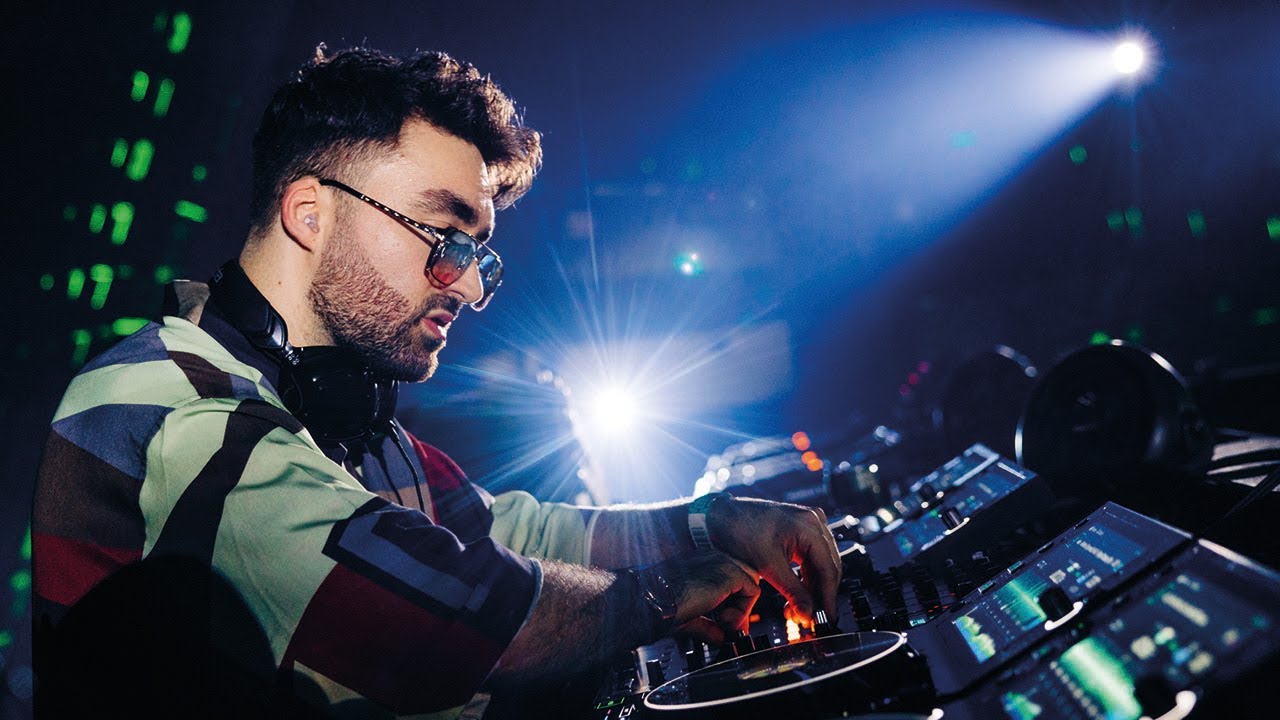
On Saturday Oliver Heldens played on the mainstage at EDC Las Vegas under his other alias HI LO doing a B2B set with Eli Brown to a packed mainstage crowd. Oliver Heldens has never struggled to pull a crowd, but this was a huge moment in his career with it being his first ever mainstage show under his HI LO alias. This is a moment he has been building up to for over 10 years as he has been slowly growing this alias and developing his skills in making techno. He has had a big shift in the type of music that he makes over this time that has taken him from dominating the charts to now being a huge name in the techno scene.

Back in 2014, Oliver Heldens had a hugely successful year releasing two of his biggest songs ‘Gecko (Overdrive)’ and ‘Koala (Last All Night)’ which would launch him into the charts in the UK even achieving a number 1 hit with ‘Gecko ‘(Overdrive).’ These songs would establish his signature future house sound that he would continue to use to create plenty more massive hits. But even this early on in his career he was showing flashes of his techno potential on his collaboration with Sander Van Doorn, ‘This.’ The thundering kick and thick bass mixed with his future house bounce were just a taste of what was to come, already showing his capability to add his own twist to techno.

In 2015 the anonymous alias HI LO would make its first appearance with the release of ‘Crank It Up’ which gained a lot of attention from artists and fans alike. Only a few weeks after the release of ‘Crank It Up’, Oliver Heldens would reveal that he was the face behind the HI LO alias and would also reveal that he was launching his own record label Heldeep Records. The first release on Heldeep Records would be a HI LO track called ‘Renegade Mastah’ that was massively successful going on to receive over 28 million streams on Spotify. Though not straying too far from his usual sound, in an interview with UKF in 2015 he said, “The music I make as HI-LO is more bassline driven and ‘underground’. The typical Oliver Heldens sound is way more melodic.” He kept on releasing more big tracks as HI LO and started to incorporate them into his live shows laying the foundations for a hugely successful alias.

Over the next few years, the HI LO tracks kept coming though remained very much a side project in comparison to the music being released under Oliver Heldens. But eventually there began to be a bit of a shift when 2020 came around and all of a sudden, the HI LO name started to creep into centre stage. Usually during his live shows, Oliver Heldens would only sprinkle in a couple of his HI LO tracks but on April 25th 2020 he put up a DJ set on his YouTube channel where he did a full half hour of HI LO music alongside some techno tracks from other artists. This was well received by fans and would become quite common on the various livestreams that he would do over lockdown. He was diving deeper into the world of techno and taking his sound to a darker place with songs like ‘Zeus’ and ‘Kronos’ which really set the tone for his subsequent HI LO releases and starter taking him further into the underground scene.

To help take his tracks to the next level he decided to collaborate with Reinier Zonneveld who was already a well-established name in the underground techno scene. Oliver Heldens had been following his work and had become a big fan of his style and his record label Filth on Acid which led to their first collaboration ‘Saw of Olympus’ in 2021. This track was Oliver Heldens fully embracing his techno side with a heavy, echoing kick and plenty of bass that shook the dancefloors. Working with Reinier Zonneveld allowed him to learn a lot and he would continue to learn more and more about techno as he collaborated with more giants of techno like Will Clarke, T78 and Eli Brown over his coming songs.

With this new catalogue of heavy HI LO techno bangers, it was finally time for the next step which was doing live sets under the HI LO alias. Once lockdown had ended in 2021, the HI LO name could finally start hitting the stage with shows at the likes of 013 Poppodium and Seismic Dance Event where he could unleash his new sound. The thundering techno of HI LO was certainly a big jump from the usual music of Oliver Heldens, but it was a huge success which lead to more and more shows under the alias at the likes of Ultra Europe and Tomorrowland. As the love for HI LO from the fans grew, more of the alias’s tracks started to appear in Oliver Heldens’ live shows with a mashup of his track ‘Flying Octopus’ and the acappella from ‘Lovely’ by Billie Eilish and Khalid being a highlight of his shows that was adored by the fans.

After all those years the HI LO name has gone from a small side project to being one of the biggest names in techno. Under this alias, Oliver Heldens has now collaborated with the likes of Armin Van Buuren, Alan Fitzpatrick, Danny Avila, Space 92, and performed at some of the biggest festivals in the world. In only the past few years HI LO has launched from being solely underground to now being on the mainstage at EDC which is an incredible achievement. Oliver Heldens has managed to take this alias to heights beyond what anyone would have thought 9 years ago, and he certainly isn’t slowing down anytime soon.

Subscribe to our Newsletter

Hi I'm Mackenzie and rather unsurprisingly, I love electronic music. After over 10 years of blasting my ears with everything from Martin Garrix to San Holo, I've found myself forever digging deeper into this world. If I were to name my top 5 favourite artists I'd say Martin Garrix, Oliver Heldens, The Prodigy, Hardwell, and Avicii make up that list. Alongside writing I'm also a producer who makes whatever comes to mind. Big room house, drum & bass, hardstyle, it's all fun to dig into. See you out in the fields people :)

Armin van Buuren News

ASOT Returns To London For Its Third UK Edition

Unknown's avatar

Published

on

A massive indoor crowd at an A State of Trance event, with thousands of fans facing the main stage where Armin van Buuren's name is displayed on large white LED screens spanning the full width of an industrial warehouse venue, with haze and white lighting filling the space above the crowd.

A State of Trance returns to London on November 14th 2026 at Drumsheds, marking the brand’s first indoor UK festival edition and 25th anniversary.

Following two successful outdoor editions at Silverworks Island, A State of Trance will return to London in 2026, this time moving indoors to Drumsheds. Taking place on 14 November 2026, the event will be part of ASOT’s 25th anniversary celebrations, marking the brand’s first indoor festival edition in the UK.

Set at one of London’s premier rave venues, ASOT London will bring a festival-sized production, delivering the ASOT experience at full scale. While the full line-up is yet to be announced, the brand’s icon, Armin van Buuren has been confirmed as the first name to join the celebration.

The Drumsheds edition will also mark another major UK appearance for Armin in 2026, following his recent show at Barking Park and a performance in Bristol.

Looking back at ASOT’s two previous instalments in the British capital, the event has welcomed some of the biggest names in trance, including Ben Hemsley, Nifra, Gareth Emery and Cosmic Gate.

The move to Drumsheds will allow organisers to take the event to the next level. Given the brand’s famous large-scale indoor shows at its home in Rotterdam, the venue feels like a natural fit for a more immersive visual and stage design experience.

Following an almost sold-out debut in 2023 and a second show that welcomed up to 20,000 ravers in 2025, demand is high for the Drumsheds edition. Pre-sale access goes live at 10am on Tuesday 9 June. Fans can sign up for the ticket sales via the official ASOT London website.

Subscribe to our Newsletter

Continue Reading

Afrojack News

Ultra Europe 2026 Drops Phase 2 Lineup

Unknown's avatar

Published

on

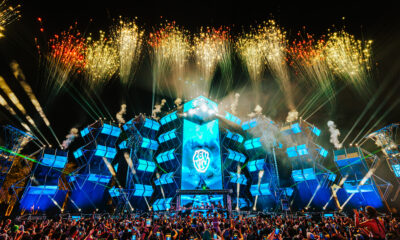
Crowd and fireworks at Ultra Europe in Split Croatia during the festival’s nighttime mainstage show for the 2026 Phase 2 lineup announcement.

Ultra Europe 2026 Drops Phase 2 Lineup with Armin van Buuren, Hardwell, DJ Snake and more confirmed for Split this July

Ultra Europe 2026 has dropped its Phase 2 lineup, adding more names to its return to Split, Croatia from July 10 to 12, 2026 at Park Mladeži. Now heading into its 12th edition, the festival’s latest announcement brings in Armin van Buuren, Hardwell, DJ Snake, AFROJACK, and Subtronics, joining a Phase 1 lineup that already included Calvin Harris, Martin Garrix, FISHER, John Summit, and Amelie Lens. The update gives the 2026 edition a much fuller look across the Ultra Main Stage and RESISTANCE, while keeping more names saved for the next announcement.


View this post on Instagram


A post shared by Ultra Europe (@ultraeurope)

Phase 2 Adds Trance, Big-Room, Bass, Techno and House to Ultra Europe 2026

The Ultra Europe 2026 Phase 2 lineup strengthens both sides of the festival. The new additions bring more mainstage names into the July weekend, while RESISTANCE also gets a heavier presence through techno and house bookings. With Phase 1 already led by names such as Calvin Harris, Martin Garrix, FISHER, John Summit, and Amelie Lens, this second announcement gives the 2026 edition a fuller lineup across its main festival stages.

Phase 2 additions:

  • Adam Beyer
  • AFROJACK
  • Armin van Buuren
  • CamelPhat
  • DJ Snake
  • Hardwell
  • Jamie Jones
  • Nico Moreno
  • Oliver Heldens
  • Subtronics
  • HALO
  • Maddix

Subtronics Stands Out Among Returning Ultra Europe Regulars

While several Phase 2 additions are familiar names for Ultra Europe, Subtronics still gives the 2026 announcement one of its more interesting talking points. He played Ultra Europe 2024, appearing on the same day as AFROJACK and DJ Snake, so his 2026 booking is not a debut. What makes it worth noting is the context around the booking. Ultra Europe has long been associated with mainstage EDM, house, techno, and its RESISTANCE programming, while large-scale bass bookings have not been as constant in the festival’s Croatia lineup. Bringing Subtronics back after 2024 keeps that part of the lineup visible and gives the July weekend a different pull next to the festival’s more established returning names.

For many of the other additions, Ultra Europe 2026 reads as a return to artists with a longer history in Split. Armin van Buuren, Hardwell, AFROJACK, and DJ Snake have all appeared at past editions, while Adam Beyer, CamelPhat, Jamie Jones, and Oliver Heldens have also been part of previous Ultra Europe lineups in recent years. That matters because Phase 2 is not relying only on newness. It brings back names already tied to the festival’s mainstage and RESISTANCE identity, then places Subtronics inside that structure as one of the less typical bookings for the Croatia edition. For a lineup that already had Calvin Harris, Martin Garrix, FISHER, John Summit, and Amelie Lens in Phase 1, this second announcement makes the 2026 edition feel more complete without giving away the full final lineup yet.

Ultra Europe 2026 Still Has More Names To Come Before July

With Phase 2 now out, Ultra Europe 2026 has a much clearer outline, but the lineup is still not complete. The festival has already confirmed a strong mix of mainstage names, RESISTANCE artists, and newer additions across the first two announcements, while the poster also confirms that Phase 3 is still on the way. That next update will likely help fill out the remaining stage programming, daily structure, and support acts as the festival moves closer to its July return to Split.

For now, the 2026 edition already has enough confirmed names to show how Ultra Europe is building its 12th edition. Calvin Harris, Martin Garrix, Armin van Buuren, Hardwell, DJ Snake, Amelie Lens, Sara Landry, Adam Beyer, FISHER, John Summit, and Subtronics give the lineup both familiar Ultra names and bookings that widen the festival’s appeal. More artists are still expected to be announced before Ultra Europe 2026 takes over Park Mladeži from July 10 to 12, with tickets and updates available through the festival’s official channels.

Subscribe to our Newsletter

Continue Reading

Armin van Buuren News

Why Armin van Buuren Nearly Quit Music in 2011

Unknown's avatar

Published

on

Armin Van Buuren performing in an A State Of Trance studio setting with headphones on, DJ equipment in front of him, and the ASOT logo displayed on a screen behind him.

Why Armin Van Buuren Nearly Quit Music in 2011 Despite Reaching a Peak in Trance

At the Winter Music Conference 2026 in Miami on March 25, Armin Van Buuren joined Stephen Campbell and Tim Sweeney for a keynote discussion on the future of electronic dance music. During that conversation, he opened up about a period in his career that did not match how things looked from the outside, explaining that 2011 was the year he came close to walking away from music altogether. That detail gives more weight to the story because 2011 was not a low point in public terms. By then, Armin Van Buuren was already operating at a high level across trance, radio, and international touring, which makes the idea of nearly stepping away during that period far more striking.

Why Armin Van Buuren Considered Walking Away at His Peak

When Armin Van Buuren reflected on that period, the reasoning was not tied to visibility or output. He stated, “I almost quit music in 2011,” referring to a point where the connection to the music no longer felt as direct as it had before. That distinction matters because the surrounding context was stable. His presence in trance was already established through years of releases, radio broadcasts, and festival performances, and his role within the genre had been reinforced repeatedly through that consistency. The uncertainty came from within the process itself, where repetition and structure began to change how the music was felt rather than how it was received.

The conditions around that period also show how a fixed routine can begin to limit creative space at that level. Touring cycles, radio commitments, and production schedules continued without interruption, which left little room to step back and engage with music outside of expectation. At the same time, trance was moving through a phase where its position in the wider electronic scene was being questioned, which added another layer to how the genre was being experienced from within. He addressed that directly when he said, “Trance isn’t a dirty word anymore,” pointing to a shift in how the genre was perceived and discussed. That combination of internal disconnect and external pressure created a point where continuing was no longer assumed, even at a stage where everything externally remained intact.

What Brought Armin Van Buuren Back to Music

What brought him back was not a change in schedule or a reduction in expectations. It came from recognising what had shifted in his relationship with the music. He explained, “I felt like I lost the connection with the music,” which clarifies that the issue was not fatigue alone, but distance from the core reason he started. That moment reframes the entire situation, because it places the turning point inside the music itself, not in the surrounding structure. Reconnecting with that feeling allowed him to continue, not as a response to external demand, but as a decision grounded in whether the music still held meaning.

That return is closely tied to trance as a genre and to the role it has played across his career. A State Of Trance continued to expand beyond a radio format into large-scale events and stages, maintaining its position as a central platform for trance globally. His sets across festivals and ASOT-branded shows remained consistent, but what changed was the basis on which that consistency was maintained. Instead of operating through routine, the continuation came from restoring a direct connection to the sound, structure, and progression that define trance. That shift explains why the period did not result in withdrawal, but in a continuation that carried more clarity, where the music itself remained the point of reference rather than the system around it.


View this post on Instagram


A post shared by EDM House Network (@edmhousenetwork)

Why This Moment Still Matters in Electronic Music

The significance of that period is not limited to one artist. It highlights how continuation in electronic music is not determined solely by visibility, output, or position within a genre. Even at a stage where everything appears stable, the decision to continue can shift if the connection to the music changes. In Armin Van Buuren’s case, the moment came after years of sustained involvement in trance, which makes it a reflection of how long-term careers develop rather than a reaction to short-term conditions. The question was not whether he could continue, but whether continuing still held the same meaning.

Looking at what followed, his ongoing presence across global festivals, releases, and A State Of Trance shows how that connection translated into continuity over time. The period in 2011 did not interrupt his trajectory, but it did redefine the basis on which it continued. That is what gives the moment weight. It shows that staying active in electronic music is not only about maintaining a position, but about maintaining a relationship with the music that remains consistent across different stages of a career.

Subscribe to our Newsletter

Continue Reading

Trending