Connect with us

Interview

Gelida Talks About His Tips & Opinions For Music Production & More!

Unknown's avatar

Published

on

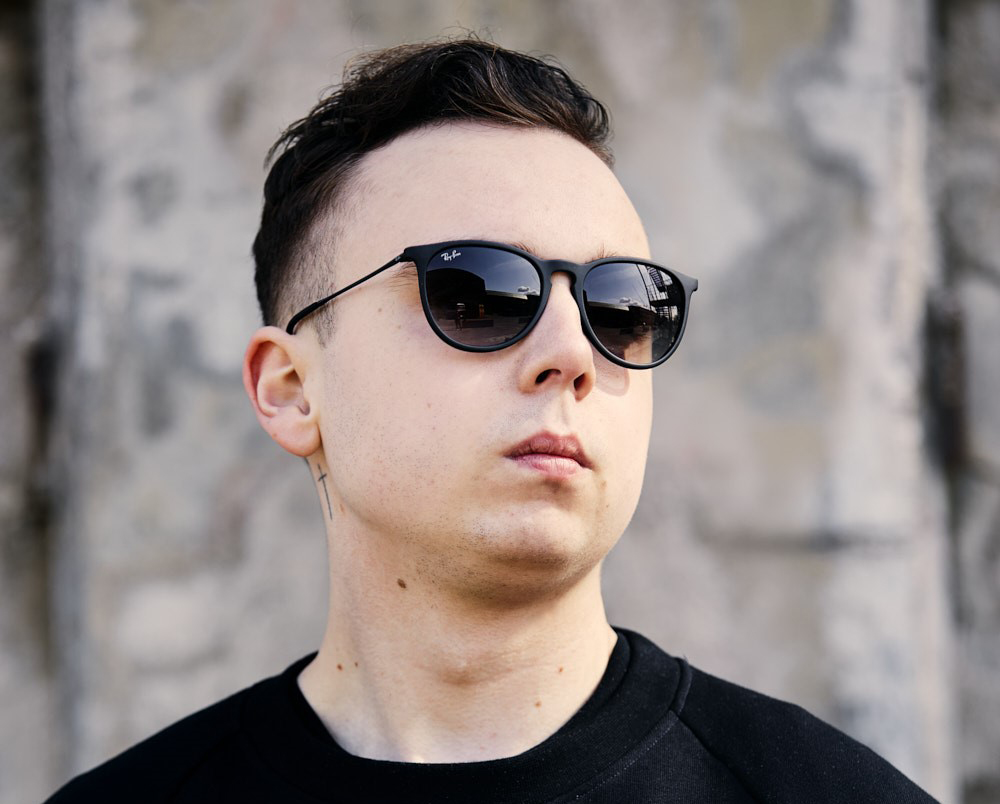
Danish DJ and music producer Gelida is a name to follow closely. His impressive style and powerful sound has already caught the eye and received praise of industry VIP names like Nicky Romero, Pink Panda, and labels like Spinnin’ Records and Protocol Recordings just to name a few. His limitless talent and clear aim have helped him get far, although this is just the beginning of his bountiful career. As a gifted music producer and label boss, we wanted to ask him a few questions regarding music production, here he shares his very own tips, tricks and advice when it comes to music making.

Hey Gelida, how are you doing?
Hello! I am very good thank you and thanks for having me! A lot is going on at the moment, which keeps me busy!

What set of gear is a good recommendation for setting up a home studio?
I would suggest buying a pair of studio monitors, a proper working PC and an interface (for instance Focusrite Scarlett)! That is what I did in the beginning, which worked perfectly for me!

Which part of a track would you say is best to start with?
For me, I always start out with the drop. The reason is that the drop is the climax, and if I can come up with a drop I like, it motivates me to finish the track. I have tried to make a pretty cool break, but couldn’t come up with a good fitting drop, which made me delete it again.

What’s your take on samples? How can someone make the most out of a sample?
Today, you can buy very high-quality samples that barely need any processing! However, I would try to use the samples you want in the beginning of the track, and choose wisely! A bad choice of a sample can ruin your track and mix!

Which plugins and effects are your favorites?
To choose one plugin would be very difficult! I mostly use the same 3 plugins for sounds, which are Sylenth1, Serum and Nexus! But if I have to choose, I might choose Serum. About effects, I have a lot of effects I really like, but distortion or reverb might be my favorite, it can really do something to a mix, and there isn’t a track I don’t use both of them!

How do you know when a track is finished?
That’s actually a good question. The way I do it is, when I feel I can’t do so much more or I can’t come up with awesome new ideas, I’ll leave it for a couple of days or a week, and see if I would come up with something or would like to change something! If not, I’ll master it, and listen on different sound systems to see if there should be any uncomfortable sounds in the mix and if I feel it’s ready to be published!

What, in your opinion, is the most important thing to keep in mind when producing music?
There are a lot of different things that have their own importance in music production, but there is a sentence that keeps coming to my mind, every time I start a new project! The sentence is: “Everything should have its own space in the mix”. Since the day I read that, I have always thought about it!

Are there any YouTube videos, books, courses or blogs you’d recommend to someone starting out their music production journey?
There is no need to buy all these books, courses or anything. Everything you need answers to or want to learn is on YouTube, and YouTube is free! I haven’t bought anything, but tried to find all the answers to my questions on Google and watch a bunch of tutorials on YouTube! YouTube is the right way for beginners but also for experienced producers!

Do you have any special advice for music production beginners?
No matter what, keep focusing on yourself, and don’t be affected by others! Enjoy your journey and keep pushing yourself, cause no one else will do it for you!

How do you keep yourself inspired?
I listen to so much new music! Sometimes I just listen to drops for 1 hour, just to be inspired by all that music that comes out every week! If I listen to a good track in the gym, car or any other place, it can make me so inspired, that I can make half a track during a studio session!

Follow Gelida:
Instagram / Soundcloud / Beatport

Founder, Owner & Manager of EDMHouseNetwork. Instant lover of all things electronic dance music from the moment I heard Fatboy Slim and The Prodigy. After pursuing a career as a DJ, creating EDM content quickly became a love of mine and it has been my mission to keep delivering high quality content ever since.

Continue Reading
Click to comment

Leave a Reply

Your email address will not be published. Required fields are marked *

Interview

Meet The Bausa: Norway’s Funky House Trio Taking Europe by Storm

Unknown's avatar

Published

on

The three members of The Bausa posed against a deep orange and red sunset sky, one in an orange jacket with arms crossed on the left, one in an open white shirt centre, and one in a denim shirt on the right, with a church tower and a car partially visible in the dusky background.

Norwegian house trio The Bausa interview discusses breakout single Magnetic, their self-coined Scandi House sound, and what’s next for the Baerum-based three-piece.”

If you haven’t heard “Magnetic” on the radio yet, you will soon. The Bausa, a three-piece house act from Baerum, Norway, are making serious waves across Europe, and after a conversation with Fredrik, Edward, and Filip, it’s clear this is just the beginning. In The Bausa Interview, we’ll explore what sets this group apart and where they’re heading next.

The trio’s origin story is one of those happy accidents that makes for great mythology. Filip and Fredrik had been making music together for two weeks when Filip brought Edward into the picture at a high school party. “He showed me one of the tracks they made and it was so bad,” Edward laughs. “But he was interested in the whole thing, and none of my friends were making music.” A studio session at Fredrik’s home studio sealed the deal. They made a song in two hours and partied to it for the rest of the night. The Bausa was born.

The name has its own story. A friend suggested “Brødrene Bausa,” telling them it meant “boss” in German. They ran with it. Years later, on a trip to Germany, they found out it doesn’t mean that at all. “It sounds dope, it sounds cool,” Filip says, unbothered. When pressed on the actual meaning, they landed on something like “big” and “ambitious.” Close enough.

250 Tracks a Year and the Bus That Made Them

Before playlists and streaming algorithms, The Bausa were sharpening their craft in one of the most uniquely Norwegian ways imaginable: making music for russ buses. If you’re not Norwegian, this requires some explanation. Russetime is a rite of passage at the end of high school where groups of about 30 students rent or buy a bus, get it painted with their crew name and logo, commission custom songs from producers, and then party inside it every night for 30 days. They go to school during the day. They do this for a month.

One of those bus crews was called Tournée, meaning “tour” in Norwegian. They commissioned a track from The Bausa, and that song ended up becoming one of the group’s early breakthrough moments. At their peak, the trio were producing around 250 custom tracks a year for various russ groups, covering everything from hip-hop to drum and bass. “We got a lot of training from that,” Edward says. “We were mixing and mastering the tracks as well.” It’s an unconventional music school, but the output speaks for itself.

Finding Their Sound

Today The Bausa describe their music as “Scandi House,” a term they coined themselves for a style that blends disco, funk, and house in a way that didn’t fit neatly into any existing genre. Their first English-language EP came together almost by accident. They were working on a Norwegian album in January and couldn’t crack the lyrics for a particular beat, the one that would eventually become “Addicted to Your Love.” An English top line clicked where Norwegian hadn’t, and suddenly they were making an English EP.

“Magnetic,” the lead track, has been getting significant radio play across Europe, including here in the Netherlands. There’s an ease and warmth to it that translates across borders, a summery groove that feels effortless even if the work behind it wasn’t.

What’s Next

The Bausa have a busy summer ahead, with festival appearances lined up across Europe. When asked about a dream destination they haven’t played yet, the answer was India, a market with a passionate and rapidly growing electronic music fanbase that they’re clearly keeping an eye on.

As for Norway’s own scene, they’re optimistic. They see a new generation of house producers and underground DJs building something real in Oslo, and they’re quietly hinting at plans to help shape what that becomes. A house festival of their own? “We have some plans,” is all they’ll say.

In the meantime, follow The Bausa on their socials and streaming platforms. All the links are in the show notes below.

Want to hear the full conversation? Stay tuned for the complete interview, coming soon to the Ten Days in Dance podcast on Spotify.

Continue Reading

Interview

Zehavi Interview: Aliya, Lior Narkis, And Music Without Borders

Unknown's avatar

Published

on

Promotional portrait of Zehavi wearing a white draped outfit against a light studio background for his interview on Aliya, Lior Narkis, and Mediterranean electronic music.

Zehavi Interview: Aliya, Lior Narkis, And Music Without Borders as he talks Aliya, Mediterranean roots, and culture-crossing electronic music

Zehavis music began with the sounds he grew up around, from Arabic, Moroccan, Persian, Greek, and Mediterranean melodies to the bouzouki he first learned through his father. Those early influences now sit inside his electronic productions, giving his work a personal link to tradition without pulling it away from a wider audience. In this interview, Zehavi discusses his collaboration with Lior Narkis on Aliya, the creative control behind the release, and how different languages, instruments, and cultural references can meet inside one record without losing their emotional weight.

Great to have you with us. Before we dive in, can you tell us a bit about the artists, sounds, or moments that originally drew you toward music as a profession?

Growing up, I was exposed to music from many different cultures and languages — Arabic, Moroccan, Persian, Greek, and more. From a very young age, I already knew how to play full classic songs on the bouzouki, and those ethnic melodies became a huge part of my musical identity.

What excited me most was the idea of bringing those timeless sounds and emotions into today’s mainstream world through modern production and electronic music. Music was never just a profession for me. It has always been the biggest love of my life. It calms me, gives me energy, and has been there for me even during difficult moments. For me, music is not just work — it’s a way of life.

There’s a really distinctive blend in your work, electronic textures sitting alongside instruments like the bouzouki. How did that pairing come about for you, and how have you refined it over the years?

This connection started when I was very young. My father played the bouzouki everywhere we went, and during his free time he would teach me as well. Those sounds became part of me from childhood, so the emotional connection to the instrument was always very natural.

As I got older, I formed a band where we performed original music alongside classic songs in a Mediterranean and Greek-inspired atmosphere. That experience taught me a lot about live performance, emotion, and connecting with people through traditional melodies.

Later on, when I discovered electronic music, I immediately realized how fascinating the combination between these two worlds could be. The energy and production of electronic music mixed with the soul and emotion of live ethnic instruments felt like something unique that I wanted to build and develop further.

You’ve seen substantial growth across streaming platforms and social media recently. How are you processing that level of recognition, and what does it open up for you as an artist?

It’s an amazing feeling to know that you’re truly connecting with people through your music and your journey. Honestly, I enjoy the exposure because I like being open with my audience. I don’t really have filters – I speak honestly about what I feel and share the process I go through both as a person and as an artist. My followers know the real me.

I think people connect not only to the music itself, but also to the authenticity behind it. That openness has created a very strong connection with my audience and opened many doors for me professionally and personally. It led to collaborations around the world, live performance opportunities, and relationships with incredible people who are still part of my life today. Sometimes people even reach out to me for advice about life, which is something I never expected. I’m truly grateful for all of it.

Taking full creative control on the release of “Aliya” alongside Lior Narkis, how did this collaboration differ from others you’ve worked on, and were there any challenges you faced along the way?

This project was very special for me because I really wanted to bring together different cultures and languages in one track. With “Aliya,” the vision was to create an English record combined with Arabic influences, which made the collaboration feel very unique from the beginning.

Seeing Lior Narkis, an artist of his level and background, step into a language and musical atmosphere that was less familiar to him was something very exciting and inspiring to witness. One of the biggest challenges was making sure the fusion felt natural and authentic, while still remaining accessible to a wide audience.

What moved me the most was seeing how people connected to it regardless of language or culture. The track reached audiences all around the world and showed me that music can truly break boundaries and unite people emotionally.

Credited as performer, producer, and co-writer, could you talk us through the creation process of this track and how rewarding projects like this can be?

Being involved in the project as a performer, producer, and co-writer made the entire process feel very personal to me. I wasn’t only focused on creating a good song, I was focused on building a full experience and emotion around it. Every small detail mattered, from the melodies and production to the atmosphere and energy of the track.

The creative process was very organic. We spent a lot of time experimenting with sounds, languages, and different musical influences until everything felt authentic and emotionally connected. Because I come from both a live musical background and an electronic production world, I always try to balance emotion with energy.

Projects like this are extremely rewarding because they allow me to fully express my artistic vision. Seeing people from different countries and cultures connect to something we created in the studio is one of the best feelings an artist can experience.

As a major collaboration, what was it like working with an established artist like Narkis, and what key lessons did you take from the experience?

Working with Lior Narkis was an incredible experience. Beyond being a great artist, he’s also an amazing person with a very special energy, the kind of person you instantly connect with. From the very first moment, everything flowed naturally between us, both creatively and personally, and I think people can feel that chemistry in the music as well.

One of the biggest lessons I took from the experience is to always listen to your heart and trust your vision. In music, there will always be different opinions from people around you, but when you truly believe in an idea and feel connected to it emotionally, you have to follow it completely. Sometimes the projects people doubt the most become the ones that connect the strongest with audiences.

With your career constantly on the rise, could you give us an insight into what the future holds for Zehavi, particularly in terms of new music and live performances?

This project is constantly evolving, and I feel like I’m only at the beginning of the journey. I’m planning to release a lot of new music and collaborate with artists from different countries and cultures, all with the same goal – to create music that truly touches people emotionally.

My live show is also constantly changing and growing. I always try to bring something fresh, emotional, and unexpected to the stage. Right now, I’m working on a brand new project that I’ll be able to reveal very soon, and I believe it’s going to take the Zehavi experience to another level.

As Zehavi looks ahead, the next chapter of his project seems closely tied to the same ideas that have guided his work so far: collaboration, live performance, and music that carries pieces of different cultures without treating them as separate parts. With more releases planned and a new project on the way, his focus remains on creating records that connect through feeling first, while still keeping the bouzouki, Mediterranean influence, and electronic production at the centre of his sound. For Zehavi, Aliya with Lior Narkis is not only a collaboration, but a sign of how far his music can travel when tradition and modern production are allowed to meet naturally.
Continue Reading

Interview

Modal Nodes Talk ‘Destiny,’ ‘Jawa Dub,’ and Mystery

Unknown's avatar

Published

on

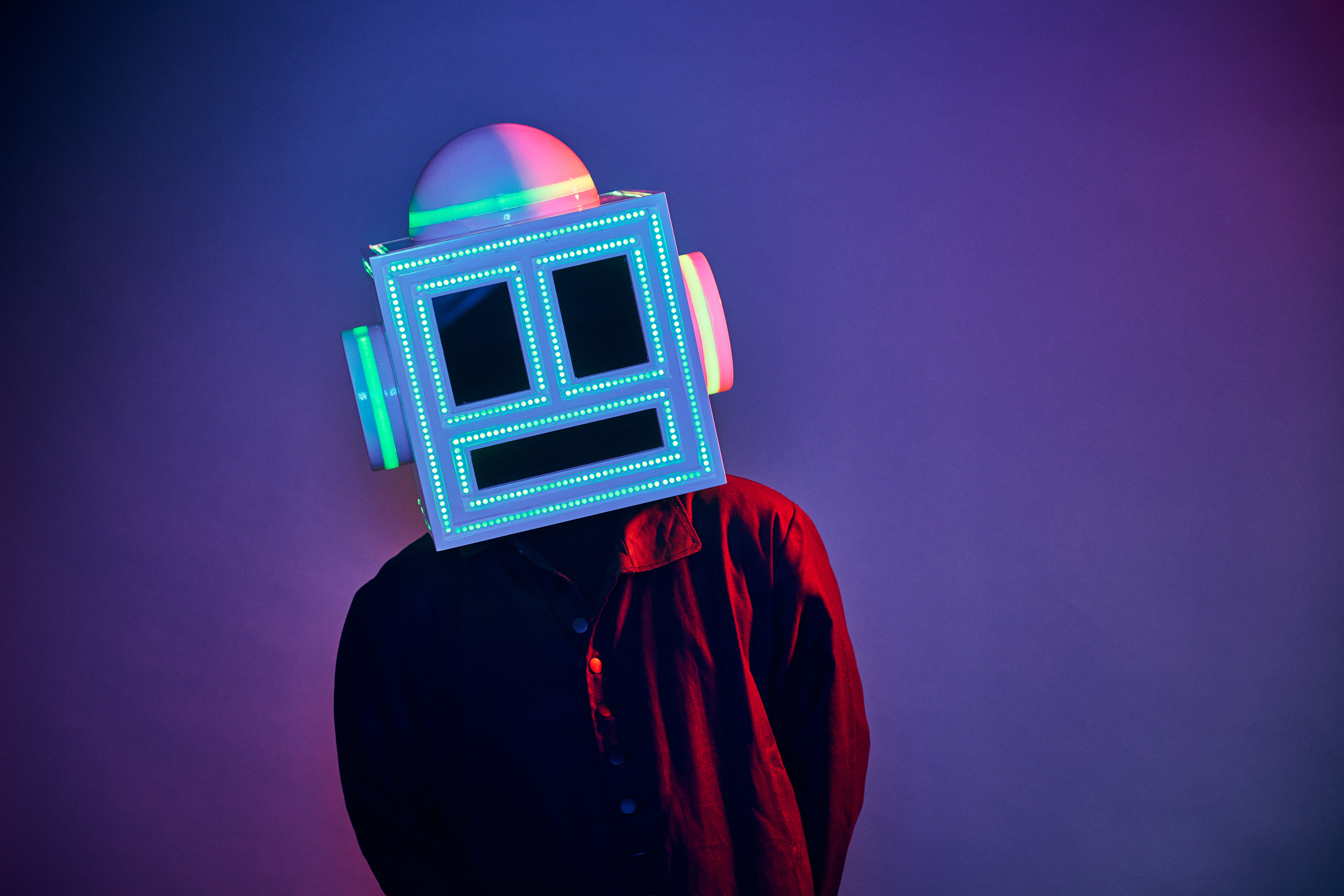
Modal Nodes wearing sci-fi masks for a feature on Destiny, Jawa Dub, Subtronics support, and their bass music project

Modal Nodes Talk ‘Destiny,’ ‘Jawa Dub,’ and Mystery as the bass act discusses Subtronics support, sci-fi influences, and what comes next

Modal Nodes have quickly become one of bass music’s most intriguing emerging projects, pairing a mystery-led identity with a sci-fi visual world and a sound tied to their fictional origin story. Their latest dual release, Destiny and Jawa Dub, gives the project two different entry points, with Destiny connected to their first shows and Jawa Dub rooted in the alien narrative behind Modal Nodes. In this interview, Modal Nodes discuss the concept behind the project, the brutalist architecture that influences their identity, recent support from Subtronics, and what may come next as their presence in bass music continues to grow.

Modal Nodes have quickly become one of the most talked-about emerging names in bass music despite still remaining anonymous. Was the mystery always part of the project from the beginning, or did it evolve naturally alongside the music?

Modal Nodes originally started out as an abstract concept on our home planet. It wasn’t anything serious to begin with, but has since progressed farther than we ever expected.

Your latest dual release, Destiny and Jawa Dub, showcase two very different energies. What inspired the direction behind each track?

We wanted to showcase the duality of what we’re capable of within one musical project. Destiny was inspired by our first shows, and Jawa Dub was inspired by a xenos race we encountered in our travels.

There’s a strong cinematic and sci-fi-inspired feel behind the music and visuals. What are some of the biggest inspirations behind the world of Modal Nodes?

Our sound and appearances come from the far reaches of the galaxy. We’ve taken a lot of inspiration from the brutalist architecture on our home planet, it plays a massive role in our identity and our sound tries to embody this.

You’ve already received support from major names in bass music, including a recent co-sign from Subtronics during Coachella and custom visuals at his sold-out Red Rocks headline. What has it been like watching the project gain traction so quickly?

It’s been incredible to see someone with such influence as Subtronics play our music out. We have never received this type of appreciation where we’re from. It’s been very rewarding seeing it received so well here on Earth.

Your early live appearances at events like Rampage in Belgium and Northern Invasion in Montreal are major milestones for a developing act. How has the live response compared to what you expected when starting this project?

When we first started the project we never considered the idea that we would have mistakenly arrived on this incredible planet. It came as a shock that humans were so receptive to it, and so far it’s been a dream come true. We are incredibly grateful.

Without revealing too much, what can fans expect from Modal Nodes as the project continues to evolve?

A lot more music, shows, collabs with great artists, merch and possibly something considered to be unnatural.

Thanks so much for taking the time to speak to us, is there anything else you’d like to say to our readers?

Thank you for all the support. We’ve only just begun.

As Modal Nodes continue gaining attention in bass music, the project is doing more than relying on anonymity alone. Destiny and Jawa Dub point to two different sides of their sound, while their sci-fi identity gives each release a wider concept to exist within. The references to brutalist architecture, distant planets, xenos races, and “something unnatural” also show that Modal Nodes are treating the project as a full creative world, not just a run of singles. With early support from Subtronics, appearances at Rampage and Northern Invasion, and more music, shows, collaborations, and merch ahead, the project is still in its early stages, but the direction already feels intentional.

Continue Reading

Trending