
Must Read
New EDM Friday April 24: Armin van Buuren, Argy, The Chainsmokers & More


New EDM Friday April 24 has come with new music from Armin van Buuren, Argy, The Chainsmokers, and more.
The final Friday of April has arrived with projects that prioritize emotional connection and environmental impact. Whether you’re looking for a deep melodic journey or hard-hitting, nature-inspired bass, these are the tracks you should not miss on this week’s New EDM Friday.
Lane 8 & Kasbo – World Is Mine
The wait is finally over for one of the most anticipated IDs in the This Never Happened ecosystem. Known by fans as “Superman” (a mis-hearing of the “soothe my mind” lyrics), “World Is Mine” is a stunning collaboration between Lane 8 and Kasbo. The track has been a staple of Lane 8’s Childish album tour and Kasbo’s sunset sets since 2025. Blending Lane 8’s club-rooted momentum with Kasbo’s introspective sound design, the record feels both intimate and widescreen—a true creative intersection of two of melodic music’s most influential voices.
Armin van Buuren & Argy ft. Marlo Rex – Like A Child
First premiered to a massive crowd at the Ultra Music Festival mainstage in Miami, “Like A Child” officially lands today. This heavyweight collaboration bridges Armin van Buuren’s legendary melodic trance sensibilities with Argy’s signature dark, driving techno style. Featuring an expressive vocal layer from Marlo Rex, the track balances emotional depth with a relentless energy that has already dominated sets at ASOT and EDC. It’s a peak-time weapon built for the world’s biggest stages.
Of The Trees – Amanita
Following his acclaimed Moonglade Park project, Of The Trees returns with his first solo single in a year, “Amanita.” The track leans into the heavier end of his spectrum, pairing hard-hitting bass design with the organic, nature-driven atmosphere he is known for. In a powerful move for Earth Day and Arbor Day, all royalties from “Amanita” will be donated to environmental causes. Having already raised over $45,000 for the planet, Of The Trees continues to use his platform as a vehicle for meaningful change.
The Chainsmokers & Oaks – Already Know
The Chainsmokers continue their prolific 2026 run, joining forces with Oaks for “Already Know.” The track leans into the duo’s modern “so-far-so-good” style—blending indie-pop sensibilities with a polished, upbeat dance production. It’s a catchy, radio-ready anthem that maintains enough club energy to satisfy their festival crowds, anchored by a relatable narrative of intuition and relationship dynamics.
ALIGN & Babsy. – Heart Racing
Chicago-to-LA producer ALIGN links up with Babsy. for the euphoric single “Heart Racing,” out now on bitbird. Breaking away from a traditional house structure, the duo opted for a halftime groove that allows the track’s massive chord stacks and chopped vocals to land with incredible weight. Drawing on the lineage of early future bass while pushing the sound design forward, it’s a record that functions as both a high-energy dancefloor moment and an emotional shelter.
Van Snyder, Serena Bleu & Alexander Popov – You Get What You Give (DJs From Mars Remix)
Van Snyder, Serena Bleu, and Alexander Popov have reimagined the New Radicals’ classic “You Get What You Give,” but it’s the DJs From Mars remix that turns this into a certified 2026 festival monster. The Italian masters of the mashup have amplified the track with pounding kicks and soaring synths, creating a high-octane anthem that reignites the nostalgia of the original for a new generation of ravers.
Honorable mentions:
Above & Beyond, Zoë Johnston – Carry Me Home (Koven Remix)
Adam Port, SG Lewis, Keinemusik – Be the One
Alle Farben, Tujamo – Know My Name
Amber Broos – Chicks (EP)
ARTY, Annie Schindel, Vikkstar – Where Have You Been
Bessey – Somn Like Dis (EP)
Devault – Can’t Wait No More
Eli and Fur, Hugo Cantarra – Fire to the Water
Eran Hersh, Tekkman, Juany Bravo – Energy
James Hype – Trigger Finger
Jennifer Lopez, David Guetta – Save Me Tonight (Seth Hills Remix)
Korolova – Another Life
LNY TNZ x DØMINA – KING MODE
MPH – Unconditional
Oliver Heldens & Aloe Blacc – Paraíso
Purple Disco Machine – Disco Cherry
R3HAB & Orem – Watch My Heart Go…
Showtek & SHOWTEKNO – Do You Like It Hardcore
Sick Individuals – Sunrise
Slushii, KENNEDY – Should’ve Known Better
taMe, Sam Feldt – Lost in Desire
The Chainsmokers, Oaks – Already Know
Thomas Gold, Bruno Martini – Electric
Topic, Becky G – Sorry Papi
Wax Motif ft. Maeta – You Forget
Zhu – Black Midas
Stream all the new music on Spotify and Audiomack to hear the full New EDM Friday April 24 playlist.
Subscribe to our Newsletter








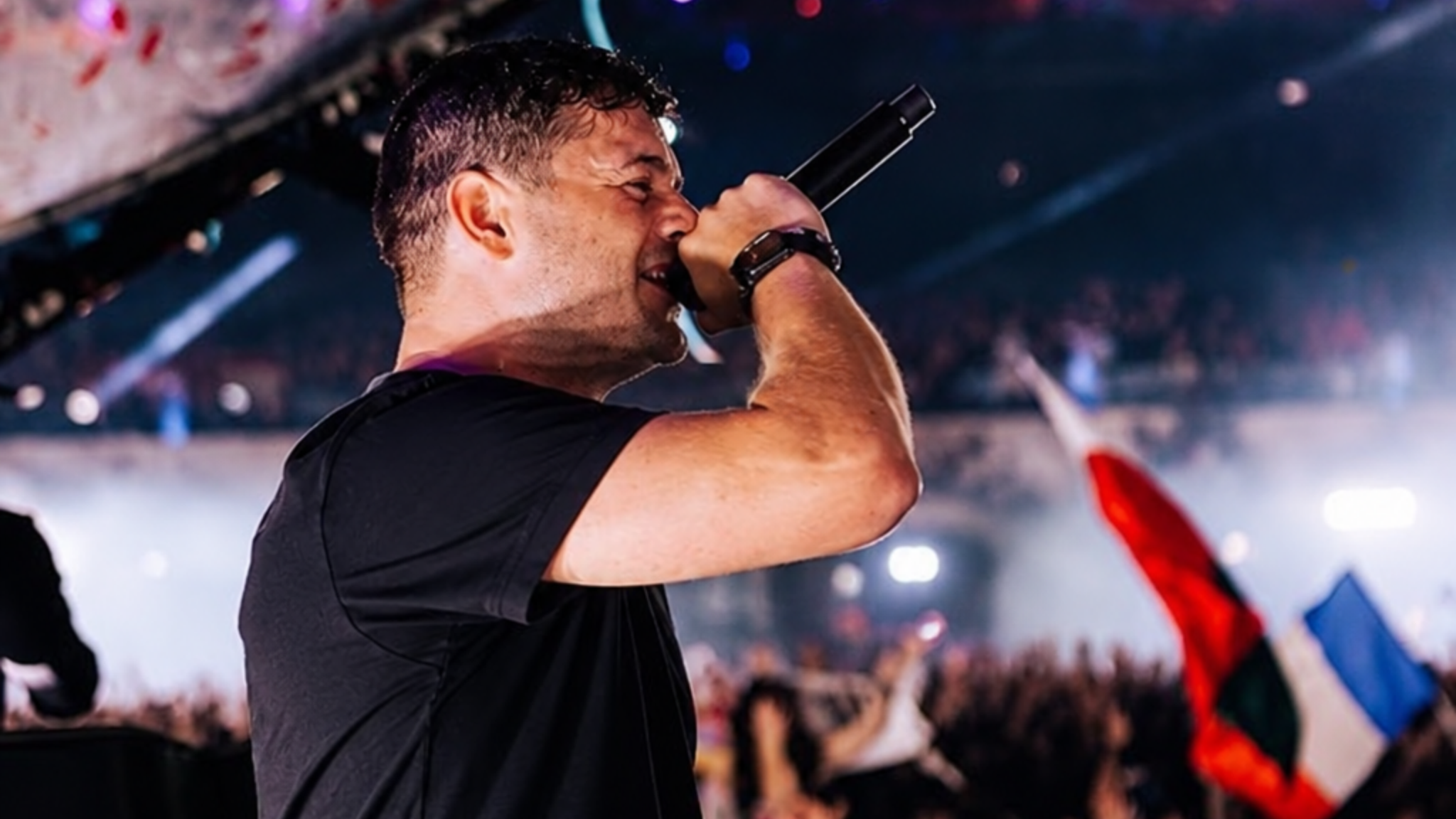
New EDM Friday Oct 2 brings new music from Martin Garrix, Dom Dolla, Solomun, Skepta, David Guetta, Tiësto, Tape B, and more.
New EDM Friday Oct 2 brings together new singles, album releases, collaborations, and remixes covering progressive house, techno, house, bass music, dubstep, and electronic dance. From Martin Garrix with This Dream of You to Dom Dolla, Solomun, and Skepta with DANGER DANGER, David Guetta and Jast with Mariô, Tiësto with Cleopard2000 and CH4YN on Hard To Be Around, and Tape B with Ghost in the Static, these are the tracks you should not miss on this week’s New EDM Friday.
Martin Garrix – This Dream of You
Martin Garrix releases This Dream of You, a new single featuring his own vocals. He first played the track at Tomorrowland, where it became one of his most requested IDs this year. The song keeps his melodic progressive sound, while placing his voice at the center. As a result, Martin Garrix opens New EDM Friday Oct 2 with a personal release led by his own vocals.
Dom Dolla, Solomun, Skepta – DANGER DANGER
Dom Dolla, Solomun, and Skepta come together on DANGER DANGER. The track pairs Skepta’s vocals with two major names in electronic music. It was tested across their Ibiza residencies this summer, including Dom Dolla at Hï Ibiza, Solomun +1 at Pacha, and Skepta’s Más Tiempo at Hï Ibiza. Later, Dom Dolla opened his sold-out Marvel Stadium show with the track. With DANGER DANGER, the three artists bring one of the week’s biggest collaborations into New EDM Friday Oct 2.
David Guetta & Jast – Mariô
David Guetta and Jast team up on Mariô. The track adds another major name pairing to this week’s releases. It follows David Guetta’s recent 2026 run, including You and I, Me and You with Hypaton. It also follows Somebody That I Used To Know with ARTBAT and Gotye. For Jast, the release places his name beside one of dance music’s biggest artists. With Mariô, David Guetta and Jast bring a direct dance release into New EDM Friday Oct 2.
Tiesto ft. Cleopard2000 & CH4YN – Hard To Be Around
Tiesto teams up with Cleopard2000 and CH4YN on Hard To Be Around. The track had already been heard in his recent live and radio sets. First, it appeared in Tiësto’s Prismatic 028 episode in July. Later, it appeared in setlists from Silverworks Island, Breakaway Festival, and Portola Music Festival. With Hard To Be Around, Tiesto, Cleopard2000, and CH4YN bring a live-tested dance release into New EDM Friday Oct 2.
Tape B – Ghost in the Static (Album)
Tape B releases Ghost in the Static, his debut album and a 12-track project inspired by classic dubstep and the UKF era. The album features Zaytoven on Signature Sound, Effin on I’ll Never Know, and Dani King on Underneath Your Skin. Across the project, he covers heavy low-end, melodic writing, hip-hop influence, and nostalgic bass textures. The release also follows sold-out headline shows at Red Rocks Amphitheatre, The Salt Shed, Shrine Expo Hall, Echostage, and The Armory. With Ghost in the Static, Tape B brings his first full album into New EDM Friday Oct 2.
Honorable Mentions:
Alison Wonderland & WINK – RESCUE U
BLR — Move It On ft. Lou
CHARMUR – Touch Me
Chris Lorenzo & Chromeo – Fancy Footwork
D.O.D & Armand van Helden feat. Sam Harper — Twice as Nice
ERAN (Eran Hersh), GrooveGeneration, Terri B! – Say My Name
Ewan McVicar x DART – Rollercoaster
Franky Rizardo – Marido Dansa
Hardwell & Maddix – AI CARALHO
John Summit & Absolutely – Don’t Believe It (GRiZ Remix)
Justus — Open Wide (feat. DJ Hyperactive)
KSHMR — Bonfire
L¥O & Dead Prez – Bigger Than
Lilly Palmer & Caroline Roxy – Unite The Universe
Linds – Destiny
Mojave Grey – Rendezvous
MORTEN & KREAM – Serotonin
Nil Martorell & John White — Find My Light
Nitro Fun & dnvn & Nito-Onna — if you wanna love me
Obskür – Speechless
Oliver Heldens & Will Clarke — Lost In Music
R3HAB, ARTBAT – Dramma
Raphi – Club Phi EP
Scorz — Stay Close / This Is Where It Starts
Tungevaag — RARE
Uberjak’d & The Rocketman — Disclaimer
Who Else & Zagitar – Voltage
Stream all the new music on Spotify and Audiomack to hear the full New EDM Friday playlist.
Subscribe to our Newsletter

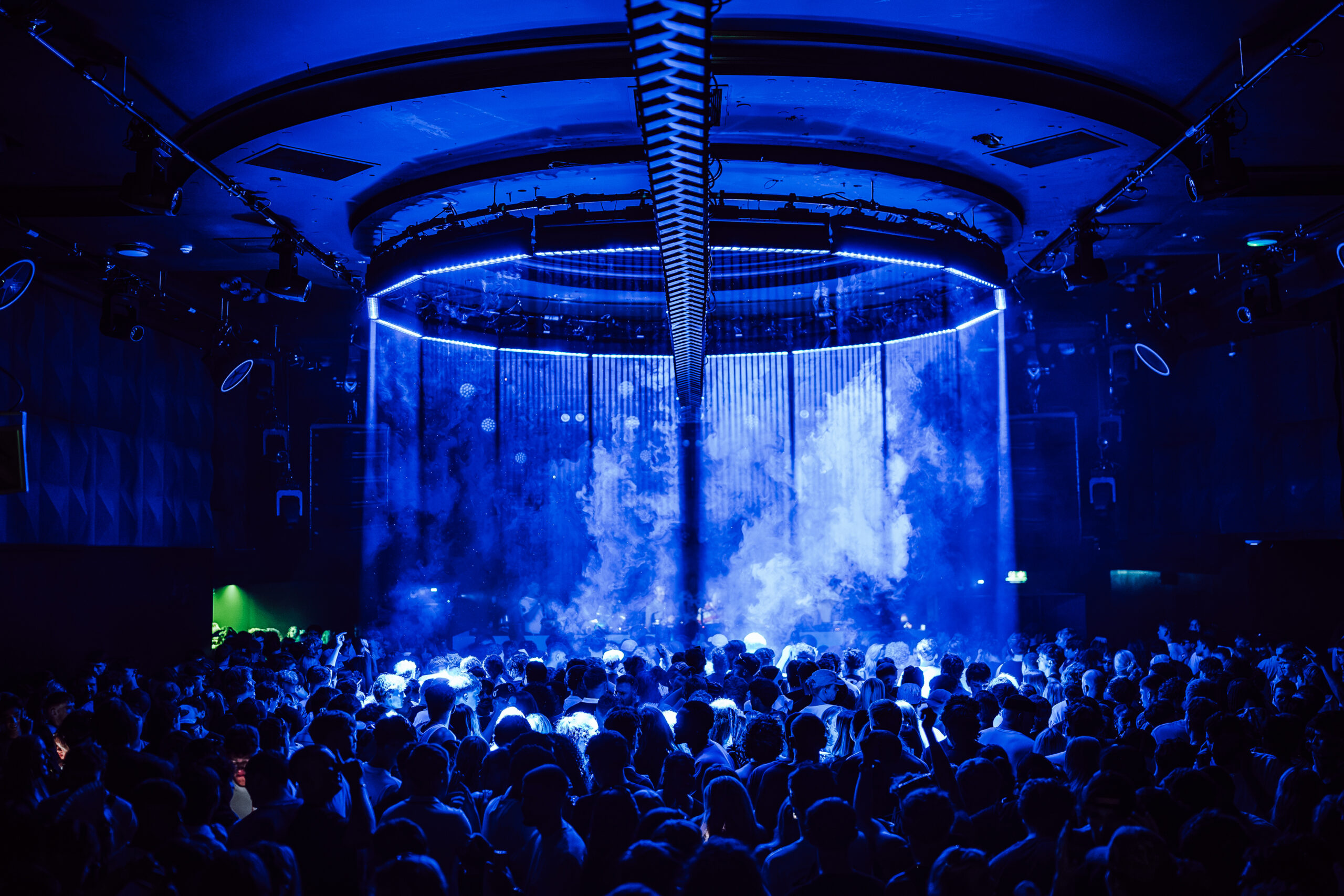
MiNT XL opens its doors in Leeds with a sold-out party for 2,500 ravers, as Craig Richards, Enzo Siragusa and Sonja Moonear launch the new nightclub
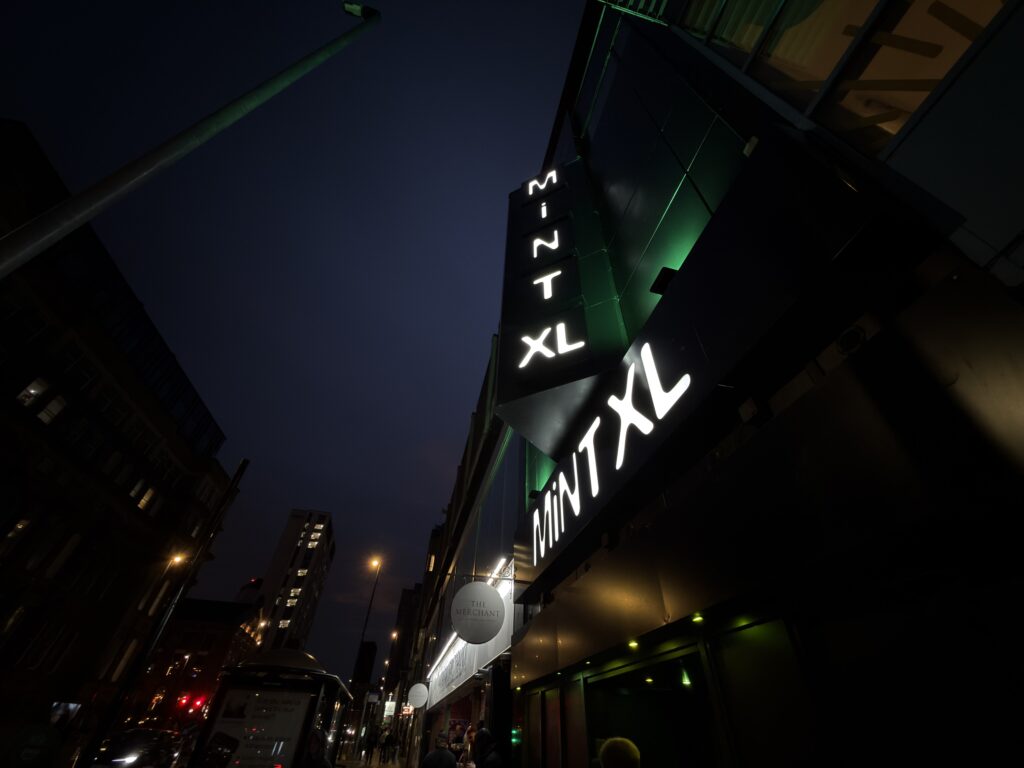
MiNT XL officially opened its doors on Friday, 25 September, with a sold-out opening party featuring names like Craig Richards, Enzo Siragusa and Sonja Moonear. 2,500 ravers gathered in the heart of Leeds city centre to experience the latest addition to the city’s rich rave culture, marking a memorable beginning for MiNT XL.
Taking over the former nightclub, PRYZM Leeds, MiNT set themselves the challenge of giving the venue a new identity through their own production and iconic signature. In an interview with EDM House Network earlier this year, MiNT marketing manager, Mikey McMahon said they wanted people to walk into MiNT XL and feel like they were part of something forward-thinking. There is no doubt they have achieved this, with the opening night already setting MiNT XL apart from other venues in Leeds.
Credit: David Dumitru
Exploring The Venue’s Layout
Arriving at the venue, you could feel the excitement in the air as people made their way into the club. Music was bumping through the walls and the night was just getting started. Walking inside, the dark environment immediately made it feel like a rave and not a regular nightclub.
Heading up the stairs from the entrance, we reached the main hall of the venue, which houses two of the three rooms at MiNT XL, as well as an open-air terrace. The ‘Clubroom’ was the first room people encountered on the floor, while the main room, also known as the ‘Ballroom’, sits to the left of the hall.
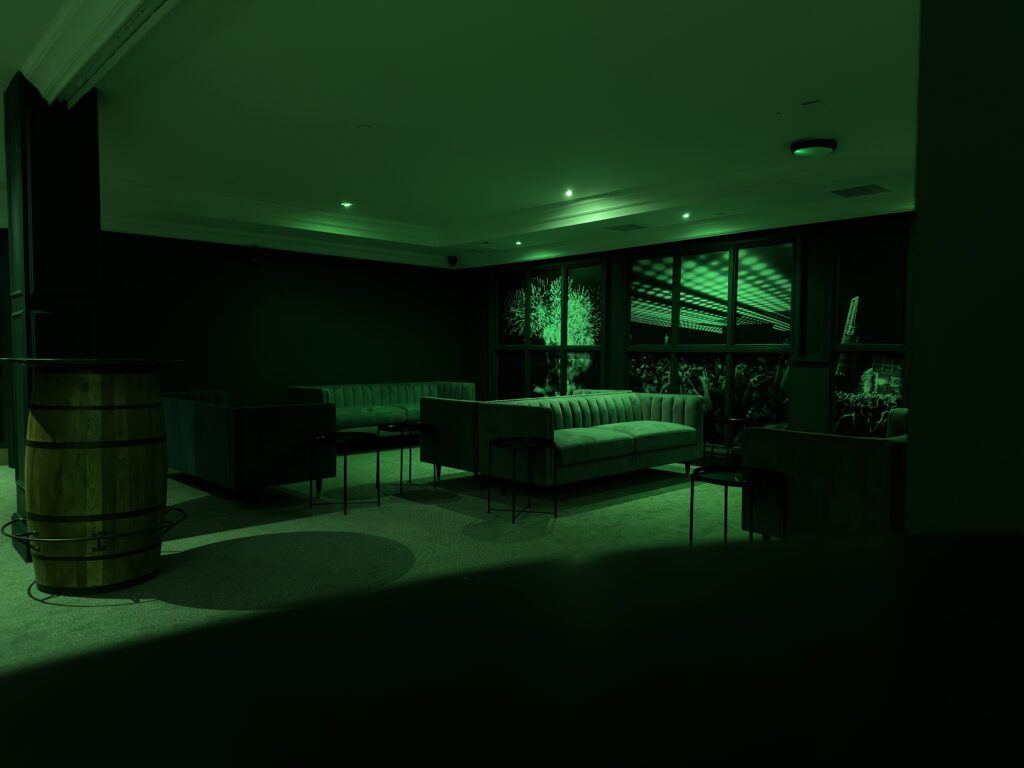
The second floor is a great extension of what the main floor has to offer, hosting the venue’s third room, ‘Cage’, as well as an additional bar with sofas and seating for those wanting a quick break from the dancefloor. The VIP area is also located on this floor, providing a comfortable chill-out space with its own bar and seating area.
Credit: David Dumitru
The Rooms at MiNT XL
1. Ballroom
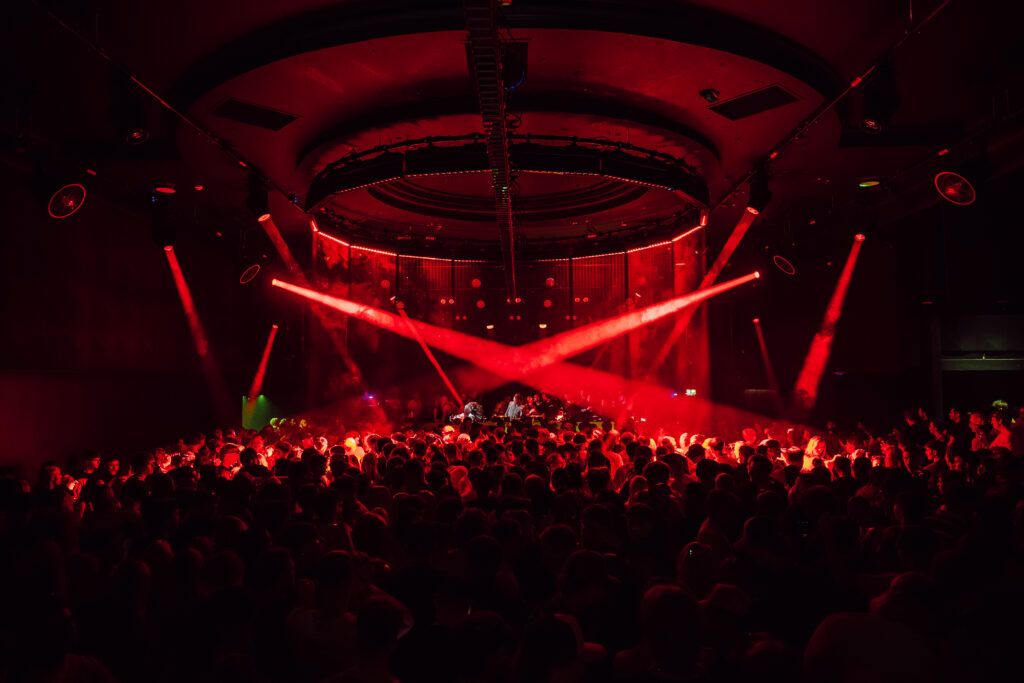
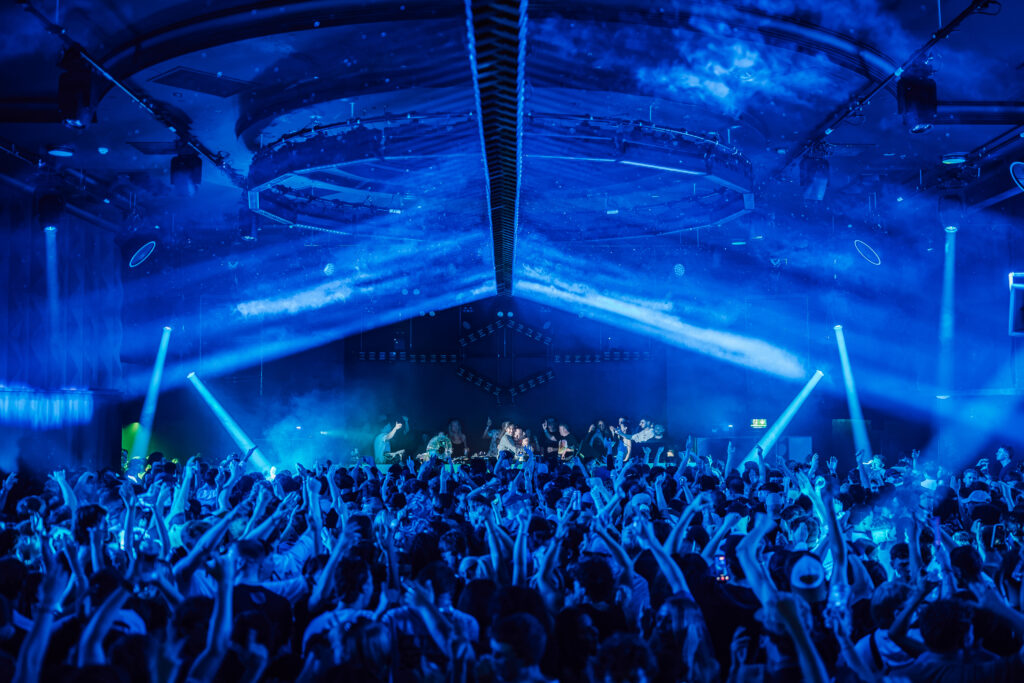
The largest of the three rooms, the ‘Ballroom’ is a warehouse type of space hosting the headlining names on MiNT XL’s line-ups. Some of the lighting features that stood out as soon as we walked into the room included the large ring structure above the dancefloor, as well as the linear rigs placed horizontally across the ceiling, which rotate to create a wave-like effect through light.
Another standout piece of the room is the newly installed Funktion-One Vero sound system, delivering bass that pumps through your body and an overall premium sound quality. The same system can also be found in the other two rooms, where its impact is even greater due to their smaller capacities.
Credit: @elliotyoungphoto
2. Cage
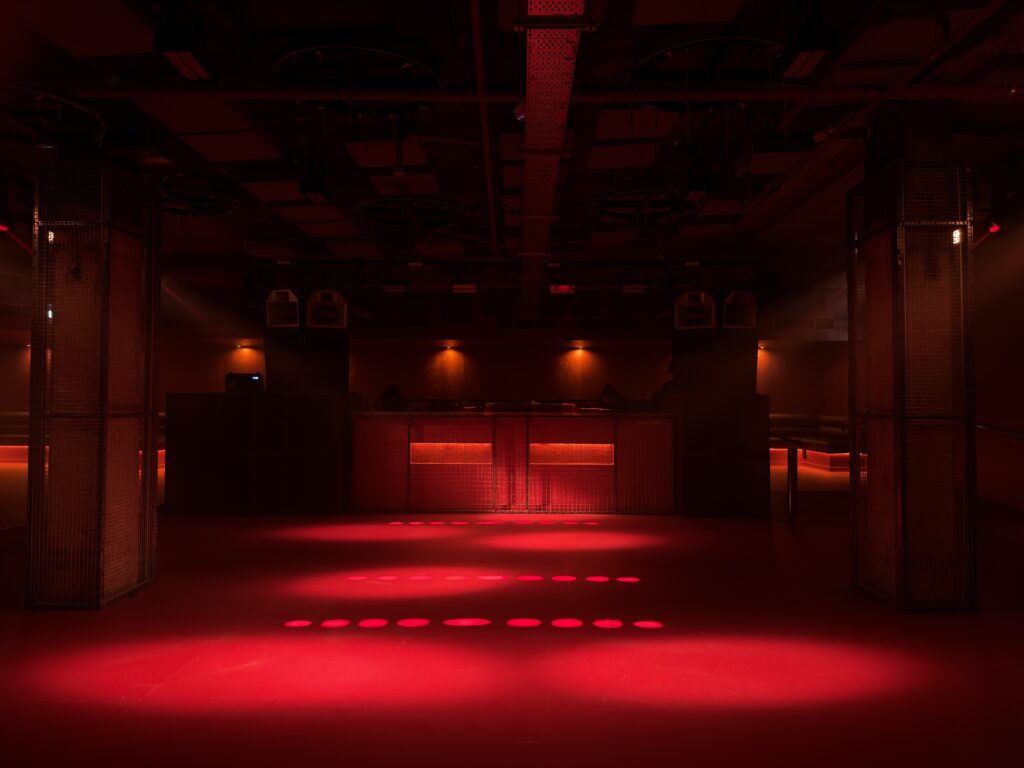
Probably the most interesting room of the three, and our personal favourite, ‘Cage’ delivers an experience like no other. Its design feels unique and fresh out of the box, while still maintaining a lush feel. Throughout the opening night, the room was lit up with orange lighting, creating a somewhat comfortable atmosphere amid all the chaos going on.
Credit: David Dumitru
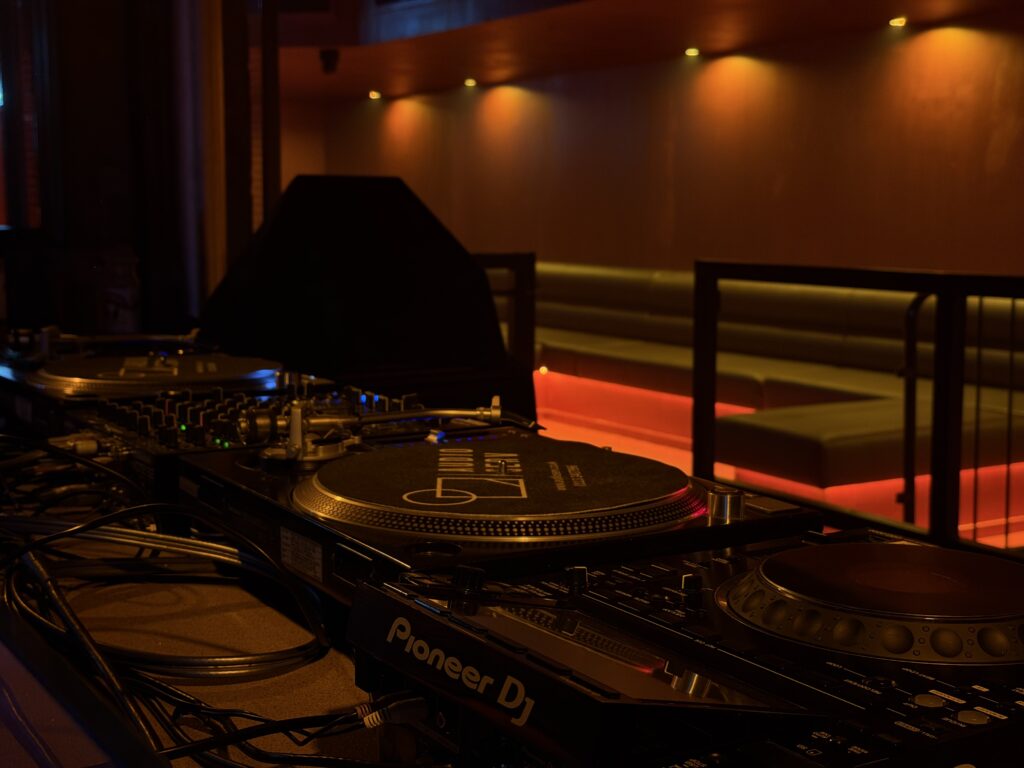
‘Cage’ also has a few sofas placed around the room, helping complete its luxurious feel. The cherry on top, however, is the fact that the space will often welcome DJs playing on vinyl. We had the chance to witness this live, and let me tell you, seeing the artists flip and swap records behind the decks totally elevates the experience.
Credit: David Dumitru
3. Clubroom
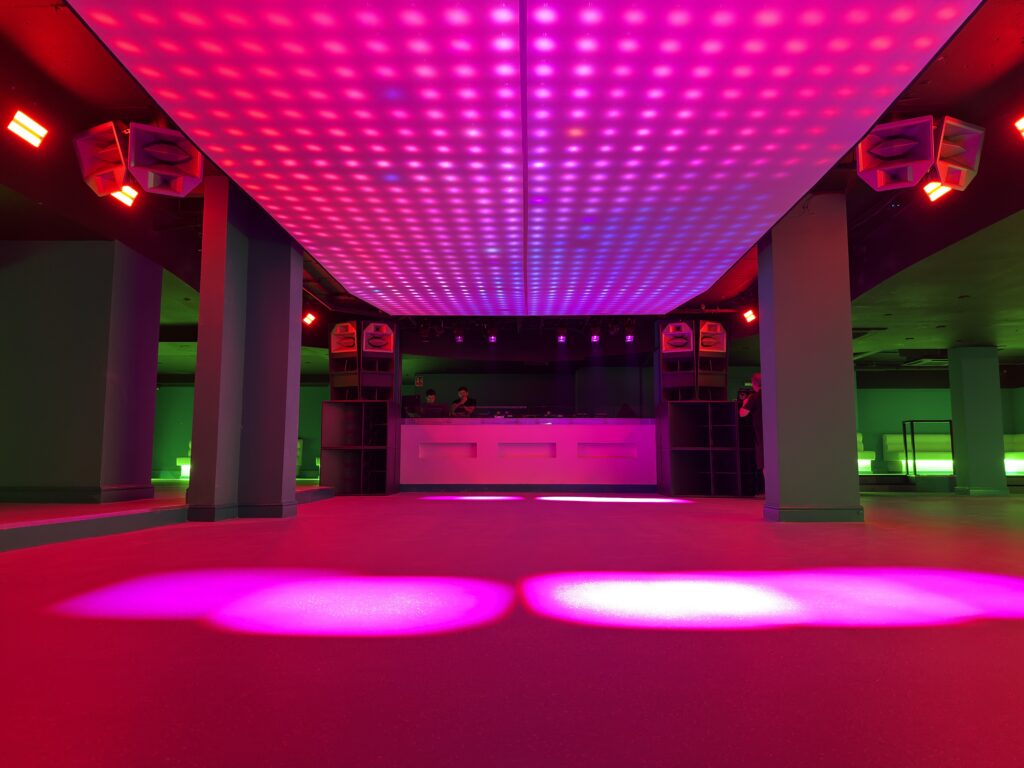
With a large light panel on the ceiling covering the centre of the dancefloor, ‘Clubroom’ is an ode to MiNT Warehouse, the brand’s second ever venue. Sharing similar characteristics, the room brings the MiNT Warehouse spirit to MiNT XL, carrying over the energetic vibes that have become a trademark of the brand.
While the room has a great design from a production perspective, the air conditioning isn’t felt as well in some corners, often making it a very hot space.
Credit: David Dumitru
4. Terrace
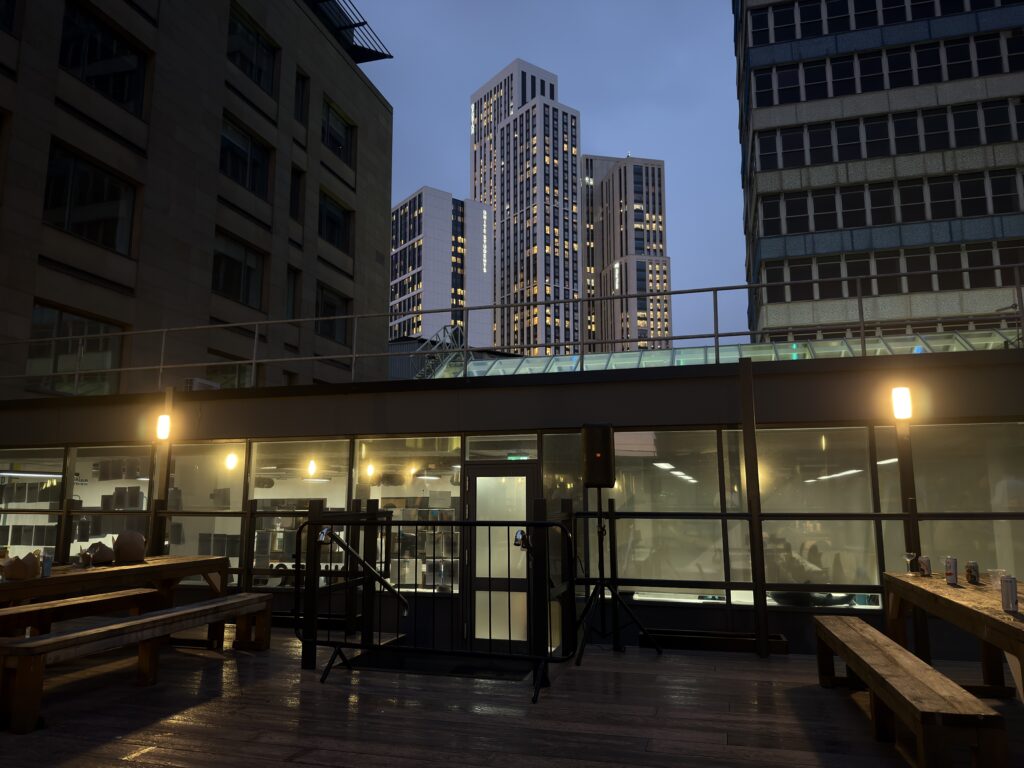
An open-air space with a nice view of some of Leeds city centre’s tallest buildings, the terrace is a well-arranged spot for those who want to unwind a little and take a breath of fresh air. Located close to the ‘Ballroom’, the path to the terrace can, however, become very busy at times.
Credit: David Dumitru
The Music at MiNT XL
The venue opened with the brand’s own event series, ‘system.’, taking over the decks. Across the three rooms, a well-curated line-up delivered the soundtrack to MiNT’s new beginning.
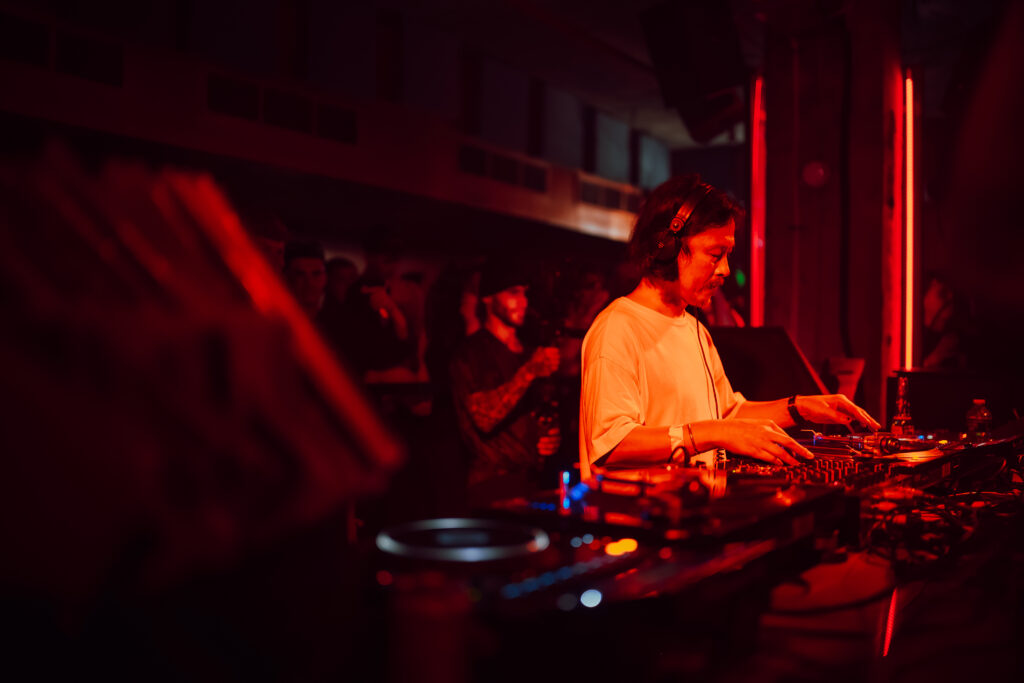
From the perspective of EDM House Network, our highlights were Foehn & Jerome at the ‘Cage’, Craig Richards B2B Francesco Del Garda at the ‘Ballroom’, and then back to the ‘Cage’ for a vinyl session with Fumiya Tanaka.
Credit: @elliotyoungphoto
Beyond the opening night, a wide range of renowned DJs are set to follow at MiNT XL, with the likes of Ewan McVicar, Riordan, Morgan Seatree and a Worried About Henry (WAH) takeover among those already announced. While so far only electronic music events make up the calendar, organisers have said they are excited to expand into new genres and live music.
Atmosphere Inside The Venue
MiNT XL operates a no-phones policy at all events, meaning attendees can fully immerse themselves into the music. Having experienced an event with such policy for the first time, it was impressive to see how big of a change it makes.
Seeing people living in the moment and having fun truly gave everyone a taste of what some mean when they say ‘raving was better in the 90s’. The no-phones policy genuinely made the night feel like a time machine that teleported us back to a time when people used to socialise and not chase Instagram clout at raves.
Credit: @elliotyoungphoto
With three state-of-the-art rooms, a 2,500-capacity venue, a sound system that blows the roof off and a no-phones policy, MiNT XL has real potential to become one of the best nightclubs in the entire UK. The opening party was not just the green light for a new venue in Leeds, but felt more like a statement that MiNT XL is here, and for good.
The club season is only just getting started, with a packed list of upcoming events already lined up at MiNT XL.
Friday 9 October – Marsolo Invites: Marsolo + more TBA
Saturday 10 October – Airspace: Notion, Kyle Starkey, Camille Doe + more
Saturday 17 October – Mint XL Presents: Cam Stockman b2b Tommy Phillips
Friday 30 October – Airspace: Riordan, Stef Davidse + more
Saturday 31 October – Ewan McVicar Presents: Halloween – Ewan McVicar, Special Request, Olive F
Saturday 7 November – Mint XL Presents: ALISHA, Robbie Doherty + more
Saturday 14 November – Mint XL Presents: Morgan Seatree + more TBA
Friday 20 November – Framework Presents: Ben UFO, Papa Nugs + more
Saturday 21 November – Jampacked Would Tour Leeds Edition: Jamback, Anil Aras, A For Alpha
Saturday 19 December – Framework x Mugpie Presents: Christian AB, Unai Trotti + more
Subscribe to our Newsletter
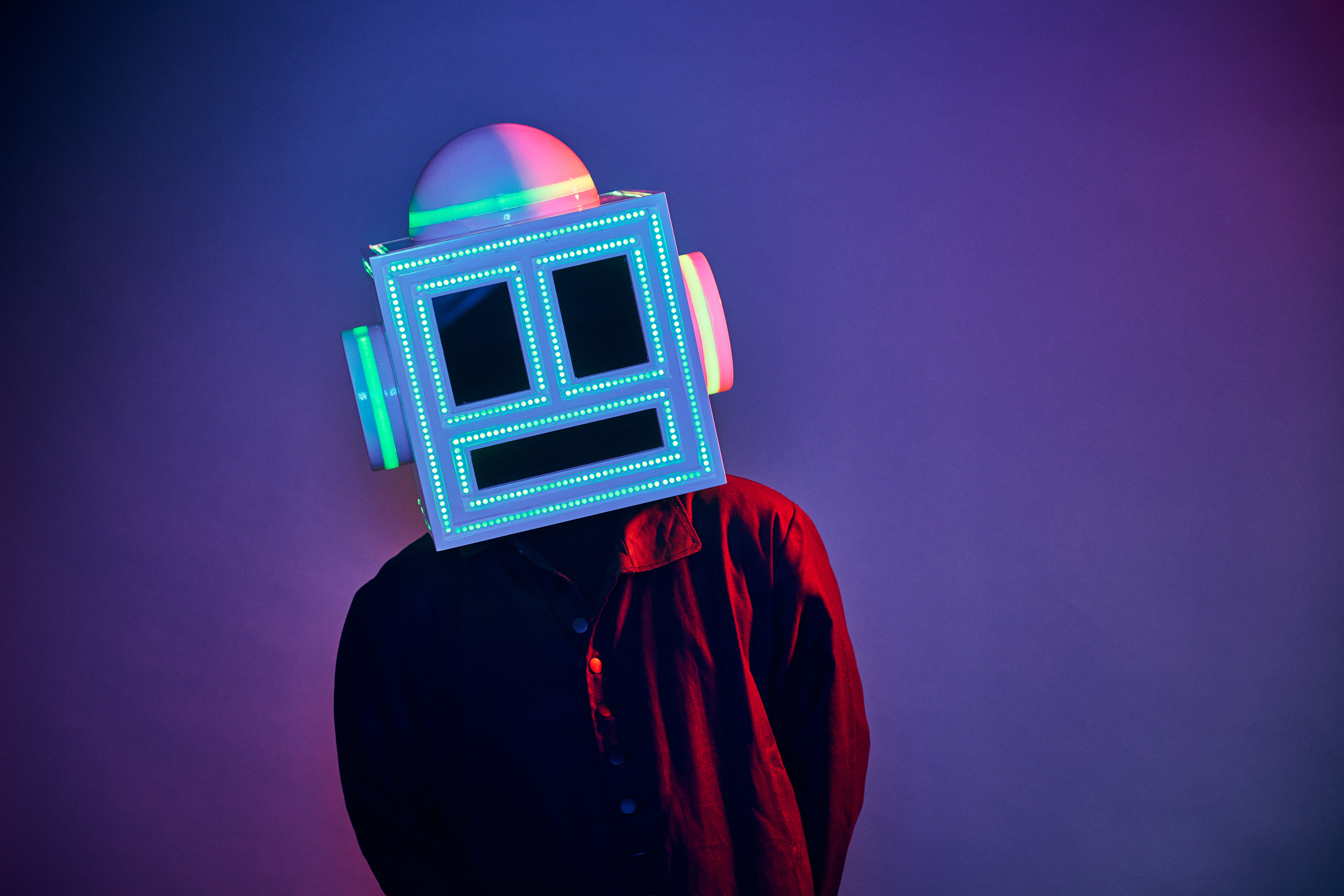
MEETCH interview about his new single ‘Reflections’ with Lacey, his Ørjan Nilsen collaborations and what’s next for the robot-headed producer
Subscribe to our Newsletter
-
 EDM Music3 weeks ago
New EDM Friday Sep 18: HALŌ, HUGEL, Sara Landry & More
-
 EDM Festival News3 weeks ago
Lost Lands Announces Full Set Times and Streaming Details
-

 EDM Festival News4 weeks ago
Tomorrowland Winter 2027 Dates and Ticket Sales Announced
-
 EDM Music2 weeks ago
New EDM Friday Sep 25: Charlotte de Witte, Armin van Buuren & More
-
 EDM Music4 weeks ago
New EDM Friday Sep 11: David Guetta, Armin van Buuren, Skrillex & More
-

 EDM news4 weeks ago
Tiësto Revives ‘In Concert’ for 2027 Stadium Show
-
 EDM Festival News4 weeks ago
Djakarta Warehouse Project Unveil First Lineup Phase For DWP 2026
-
 EDM news3 weeks ago
Noisia Announces Return with Amsterdam Comeback Show
