Interview
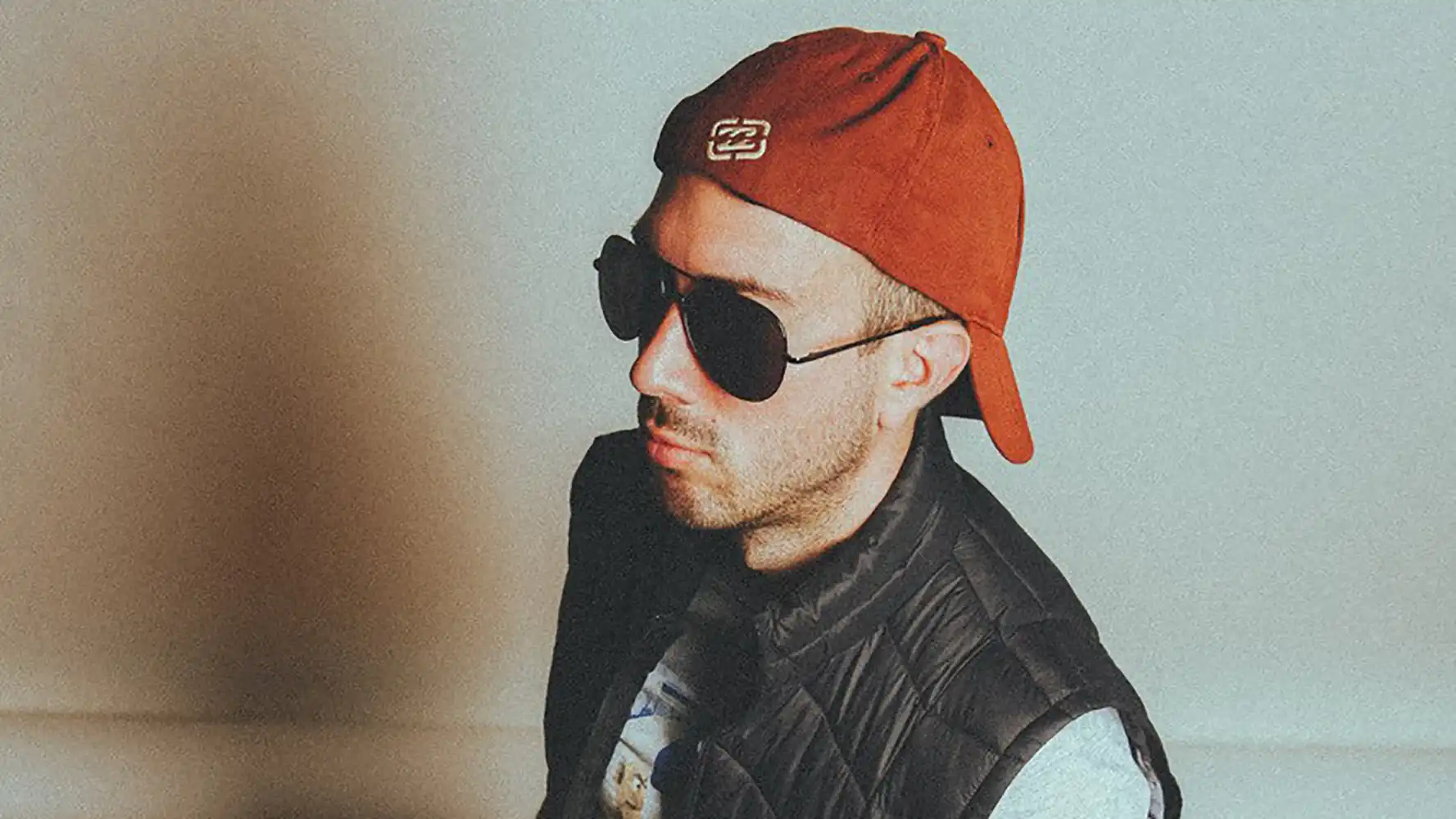
Inside the Enigmatic World of Ben Shawaer: A Quickfire Interview
In a rapid-fire exchange, we dive into the world of the enigmatic Ben Shawaer; standing as a enigmatic figure in the Electronic Dance music world, mand known for his silent demeanor and captivating compositions, Ben Shawaer’s music speaks for him, paving the way to become a Producer not to miss. Join us as we explore the musical tastes, influences, and surprising facts about this mysterious music Producer. Our source for this lightning-speed interview is none other than the president of the Ben Shawaer fan club, offering a unique glimpse into the artist’s world.
Collaborating or solo working?
Even though he is seen alone most of the time, it seems that Ben Shawaer enjoys making music both solo and collaboratively. Sometimes collaborating creates unexpected results, which are truly excellent. In addition, it allows you to mix styles, which is really enriching for a music Producer, I think. And also, it’s always nice to work with people.
Favourite venue he’s played?
People saw him mixing in a bar in Lille called “Base Camp”. It’s a chalet in the mountains style of bar, but the sound is as loud as in a nightclub, even though the place is not very big and everyone climbs onto the tables to dance. Small place, big atmosphere, great set!
All-time favourite artist?
His favorite artist seems to be Nobuo Uematsu. Some other witnesses have heard and seen him listening for several hours with a Discman, to the best music from the Final Fantasy video game. We can assume, therefore, that his favorite artist is indeed this composer.
Favourite genre outside of Electronic Music?
Referring to the question before, it seems that orchestral music present in video games like Final Fantasy is one of his favorite genres, outside Electronic music. I hope and believe that we will feel his love for this style in some of his own future musical productions.
Standout moment of your career so far?
Some time ago Ben Shawaer was working on music alone, but since last year other artists, mainly vocalists seem to have contacted him to start doing collaborations. The result of this work seems to have evolved his style in a significant way. Personally, I’m excited to listen to his new stuff.
Producing or DJing?
More of a Producer than a DJ, I’d say, even if we have already seen him mixing in places. I think he likes to share live with people, but he spends a lot of time producing, so he’s always offering quality music that connects best to what he feels.
Quiet night in or big night out?
Both, well it depends on the moment. Sometimes we want to go out but sometimes we don’t. Right now, it looks like Ben Shawaer doesn’t go out too much. He must be working on something cool! Otherwise, a good number of people have already seen him in parties, staying later than everyone else, but surprisingly appearing always fresh.
DJing in smaller venues or large festival stages?
He doesn’t often mix at small venues, but he seems to feel good there. Regarding large festival stages, we have never seen him mix in such places but, I think he would certainly be comfortable there. I’m also curious to see how he would move in front of a larger crowd. With his natural stoicism, it must be something to see!
All-time favourite track?
We all have several favorite songs, I imagine, but in any case we once saw him listening to the song ‘To Zanarkand’ from the Final Fantasy X soundtrack on repeat, so it must be one of his favorites.
Top creative milestone you think he’s hoping to achieve this year?
It seems that he is currently working on a secret project concerning the definition of his musical style. You tell me, it’s not much of a secret anymore actually! We can guess that finishing the outline of Ben Shawaer’s style must be something he would like to finish as quickly as possible, so definitely happening this year.
As a big fan of his, what are three surprising facts about Ben Shawaer?
It seems that he was making another style of music before getting into Electronic music. He himself isn’t sure but we feel it in his productions, especially those that are Melodic. The track “Better Now” from his first EP is a good example, even if all the music in this EP is rather Melodic. He has 4 different outfits when we thought he only had one. Personally, I’ve only seen him wear one so far. He’s the one who plays the piano in the music he produces.
And there you have it, a whirlwind journey through the musical universe of Ben Shawaer, guided by his devoted fan club president. We hope these insights have piqued your curiosity and added a touch of intrigue to your appreciation of this enigmatic artist. Stay tuned for more surprises from the world of Ben Shawaer!
Interview
DJ Isaac Talks ‘Let Yourself Go’ And 30 Years In Hard Dance
DJ Isaac interview talks about ‘Let Yourself Go’, reflects on 30 years in hard dance, and shares how his early rave roots and Defqon.1 2024 still connect to what he plays today.
Interview
Audio Paak ‘Dallas Dance’ Interview And Afro House Shift
Audio Paak ‘Dallas Dance’ Interview And Afro House Shift Explained Through Real-Life Inspiration And Production Process
Marking a clear shift in direction, Audio Paak’s ‘Dallas Dance’ sees the Ghana-born, UK-based artist move deeper into Afro House territory – drawing on his roots in Afrobeats while refining a more groove-led, culturally grounded sound. For Audio Paak, ‘Dallas Dance’ comes from a moment that feels personal and specific, and that carries through both the way it was made and how he explains it now. The track did not come from a fixed concept or a planned direction. It started from a real scene he witnessed and followed that feeling through the production, which gives the release a clear sense of identity without feeling forced.
The Moment Behind ‘Dallas Dance’
The starting point for ‘Dallas Dance’ came while Audio Paak was passing through DFW Airport, where a small detail ended up shaping the entire track. Reflecting on that moment, he said, “It was at the DFW airport when I noticed a woman in a simple white dress, wearing headphones and carrying a backpack, dancing to the music only she could hear.” What stayed with him was how natural it felt. It was not exaggerated or staged, just someone completely absorbed in their own music, and that feeling became the reference point for the record.
When he later sat down to make the track, there was no structured idea guiding the session. He explained, “I didn’t have a specific idea; I just wanted to make something that felt as fun and alive as she looked dancing.” That intention carries through clearly, with the rhythm and pacing tied closely to movement rather than overworked detail. The environment around him also played a part in shaping the record. Looking out from his apartment in Dallas, he could see the highway lights stretching across the city, and he noted, “The apartment view definitely influenced it. I could see the Dallas highway from the window, the lights were mesmerizing, and it created this perfect club-like atmosphere to make music.” That detail connects the title, the original moment, and the late-night feel present throughout the track.
How The Production Came Together
From a production standpoint, ‘Dallas Dance’ stayed close to its original version, which is not always the case with tracks made while travelling. After sharing it with Blvck Navy, the only real adjustment came through a simple suggestion. As he put it, “To be honest, I sent it to my friend Blvck Navy, and he suggested adding more drums. So that’s really the only change from the first draft.” That shows the core of the track was already clear early on, with the added drums helping to reinforce the groove without shifting the direction.
The setup behind the record was also relatively minimal. Since he was on holiday, he worked with a compact setup instead of a full studio environment, relying on what he had available. He explained, “I was working with limited tools since I was on holiday, and I only had my mini-PC and portable gear with me. But FL Studio had everything I needed in terms of tools and presets.” Within that process, certain elements stood out, particularly on the low end. He noted, “I’d say Analog Bass 1 TE from the GMS Basses program was my favourite. It really locked in the groove, together with the claps and snares.” At the same time, the chords required more attention, as he explained, “I needed the chords to carry that spiritual energy while still feeling club ready, with the drums complementing them to achieve that balance.”
Where ‘Dallas Dance’ Fits Now
Beyond the production itself, ‘Dallas Dance’ gives a clearer idea of where Audio Paak is heading next. He described the release as part of the early stages of a wider move into Afro House, saying, “I’m just at the beginning of my Afro House journey, but the response has shown me this could really be what I’m meant to do.” That perspective places the track within a longer trajectory rather than treating it as a standalone release, especially as he continues to refine that direction.
The response to the track has also played a role in shaping that confidence. He shared, “Getting messages from respected artists congratulating me has meant a lot,” which adds another layer to how the release has been received. Looking ahead, he is already building on this with more music in progress. He said, “I’m wrapping up two more singles, and then I’ll be putting together an EP to release on my birthday.” That makes ‘Dallas Dance’ feel like the starting point of a larger run of releases.
There is also a sense of how he measures a finished record through his own circle. When asked how he decides when a track is done, he answered, “For me, it’s when I send it to Blvck Navy and he goes, ‘YOH, did you make that?’ that’s when I know it’s ready!” It is a simple answer, but it reflects a process guided by instinct and reaction, keeping the original idea intact without overworking it.
Interview
Claude VonStroke Interview On ‘Wrong Number’ Album In 2026
Claude VonStroke interview about ‘Wrong Number’, his forthcoming album, stepping away from Dirtybird, and why making music entirely on his own terms feels like the right move.
Claude VonStroke has never been particularly interested in doing things the easy way, and ‘Wrong Number’, his forthcoming album, makes that clearer than ever. More than two decades into his career, the Dirtybird founder is stepping away from the label, stripping things back, and making exactly the kind of music he wants to make: patient, detailed, and completely unbothered by what’s trending. We sat down with him to talk about the album, the family members who voiced it, and why turning down big paydays right now feels like the right call.
When you started writing Wrong Number after the Dirtybird chapter ended, what direction did you want the album to take compared with the music you had been releasing in recent years?
I was able to drop expectations because I took year off from all house music. This album is not so much weirder or so drastically different, but just for example there was a massive banger on the album and I actually took it off because it didn’t feel right. In the past that would have probably been single AA1.
While working on Wrong Number, which producers or labels from the early minimal and house scenes did you find yourself returning to?
I kept going back to labels like Playhouse, Poker Flat, Planet E—stuff that felt like it had space and identity. Records that weren’t trying too hard. There’s a confidence in that era the records don’t always go left when they are supposed to go left. Sometimes they go right or up or down, and that mindset definitely crept into this album. A the same time I’m not a guy who makes grasshoppers on tinfoil – my records are easy to dance to.
“Static In The Deep End” is the first single from Wrong Number, so what about that track made you feel it was the right introduction to the album?
It sets the tone without over-explaining anything. It’s restrained, a little hypnotic, a little uneasy. It doesn’t try to win you over immediately, which is kind of the point of the whole project. I led with a deep cut on purpose just to let the fans know where Im headed. I dont need 1000 bro-tastic commercial tech house fans showing up and being disappointed on my tour dates because I didn’t play 15 drum roll breakdowns and a bunch of bongos at 132bpm. I’m trying to tip my hand early.
Nearly all the vocals on Wrong Number come from inside your own family, especially your son Jasper, so what made you decide to keep the vocal side of the album completely within the VonStroke household?
The whole project is more personal, so it made sense that the voices were too. Both Jasper and Ella are incredible musicians and singer songwriters. They know more about music theory than I ever will. For example Ella and I created an entire choral section with just our two voices and she directed all of it herself. Jasper came in and just riffed magical R&B vibes all of the place. They are just so talented I am a proud Dad.
Jasper appears across several tracks on Wrong Number while studying pop vocals at USC, so how did the two of you actually work together when recording those parts?
It was pretty loose. I made most of the record then he came in and just riffed on top of it. Then I would spend tons of hours chopping and effecting things. At one point Jasper and Ella made the track Two Line Groove with me which is them singing in the round. It was tough to record becuase I couldn’t get them in at the same time but I think this is one of the coolest records on the album. They go back and forth until it resolves in a giant harmony moment.
Since the music on Wrong Number was written with club spaces in mind, what made you decide this tour should focus on smaller venues like Vent in Tokyo or Panorama Bar in Berlin?
Because that’s where this music actually works. These tracks are built on detail and patience—you need a room where people are really listening with a nice sound system that isnt all muffled and massive. Smaller spaces, better systems – It’s less about spectacle and more about immersion. That environment lets the music breathe the way it’s supposed to. I’m also adding some free open air events I think that is also a space where this music can work.
After spending years building Dirtybird and helping launch artists like Fisher and Eats Everything, how has completing Wrong Number changed the way you think about your place in dance music today?
I used to actually worry about things like this which in my opinion is a waste of time. Now, if you are lucky enough to book me, you will get something that isnt generic that has been crafted and honed and is fucking dope. That’s all I can offer. Before, there was a responsibility to a sound and a whole ecosystem. Now I can follow ideas that don’t make sense commercially or strategically. I’m making a ton of terrible business decisions and it’s awesome.
When people listen through Wrong Number from beginning to end, what do you hope they understand about where you are creatively today?
I’m not trying to be the loudest voice in the room. If the record feels a little unexpected, a little more human, then it’s doing its job. I mixed and mastered this record myself for the very first time I didn’t ship it off to get finalized in some expensive mastering suite – so you are getting this straight from my home studio warts and all. This is what I do now.
Stream the first single ‘Static In The Deep End’ from this album below.
Follow Claude VonStroke:
-
Editorial4 weeks agoUltra Music Festival 2026: Your Essential Festival Guide
-
Editorial3 weeks agoPioneer / AlphaTheta Removes Sync Button From All Future Products
-
Editorial3 weeks agoSteve Aoki Stops Throwing Cake Forever
-
Coachella Festival News3 weeks agoEDM Festivals April 2026: What’s Happening Worldwide
-
Armin van Buuren News3 weeks agoTiësto and Armin van Buuren Make It Official: “Alibi” Is No Longer A Rumour
-
Editorial2 weeks agoWhy Women Over 40 Still Attend EDM Events
-
EDM Festival News2 weeks agoBreakaway Mass 2026 Lineup Announced
-
Editorial3 weeks agoJohn Summit Might Be Done Going Shirtless at Shows