
Interview
Marlo Talks 808 Festival, Thailand Fans, and Why He Created V3NOM


We sat down with Marlo ahead of his set at 808 Festival 2025 in Bangkok, Thailand, on December 5. During the interview, he spoke about returning to Thailand, a country he has played in for many years, and how the energy of local crowds has remained consistent even as festival formats and venues have grown larger. Marlo also discussed how he approaches performing at large-scale events like 808 Festival, explaining that he pays close attention to crowd response rather than following a fully pre-planned set. He also shared his reasons for launching the V3NOM project, and why separating his harder sound from the Marlo name became necessary as his performances began to include a wider range of styles.
So, when you first played in Thailand which was probably years ago, do you remember how you felt back then cause the scene has definitely changed a lot, but you have the same fan base and new, so I’d like to know what your experience was like.
I don’t remember the first show I ever played in Thailand but one thing that stayed the same since then is the passion of the fans. The people here are really passionate and lovely, and they like to go out and have a good time so you feel that energy regardless of if you’re playing in a small club or a big festival. You know people are always so excited to be there and they just have a lot of fun. I love it.
So, now that you’re back in Thailand and at 808, can you tell us what excites you about playing in front of this festival crowd in BITEC Bangna?
This is a great venue. I’ve played here before but yeah it’s amazing to be here for 808 in this huge big hall and I can’t wait to see how the crowd reacts. I haven’t had the chance to look at the setup beforehand, so I want to be surprised but I’m really excited as for me it’s very important that the first time the crowd sees me, it’s also the first time I see them as well.
So, when you prepare a Marlo set for a large crowd like this one at 808 festival, what usually guides the direction of the set?
In short, the crowd. I don’t completely pre-plan the set. I still very much go with what the crowd’s responding to and also what the DJ’s before me have played.
When you decided to start Venom, you were obviously influenced by your background from having grown up in Australia but is there anything else that influenced that decision?
That’s the main thing really. It was getting to a point where I was playing a lot of harder style sets especially in Australia and in Australia, Hardstyle is really popular and of course I like hardstyle with so many of the DJs being my friends and I personally go to hardstyle events as well so I just thought you know I want to separate the hardstyle out of Marlo a little bit and just create a new project where I can play only that. You know if I show up as Marlo playing, you know people kind of expect that sound so I wanted to give something different for the people that prefer the harder style stuff.
So, now that you’re here in Thailand, and you’re about to go on at 808 festival, is there anything you’d like to say to the fans?
I can’t wait to see all of you. So let’s rock it like we always do!
Over the years, Marlo has settled into a way of working that prioritizes instinct over control, especially when it comes to playing live. Rather than locking himself into a fixed plan, he pays attention to how the crowd responds and lets that guide what happens next. That approach is also tied to how he thinks about his music more broadly. Instead of forcing different sounds into one space, he chose to separate them, giving the harder side its own home through V3NOM while keeping Marlo focused on what people expect from that name.
Looking ahead, Marlo seems intent on keeping that balance intact. He wants to stay responsive to the room, to the people in front of him, and to the different scenes he moves through, without letting any one format dictate how he plays or what he releases. That leaves his work open rather than fixed, and keeps the focus on how each moment feels rather than on repeating what has already worked before.
Subscribe to our Newsletter




MEETCH interview about his new single ‘Reflections’ with Lacey, his Ørjan Nilsen collaborations and what’s next for the robot-headed producer
Subscribe to our Newsletter

Promo Push head of promotions Russell Biles explains how the UK company promotes dance music releases across DJ, radio, press and Spotify campaigns
Promoting releases from the likes of MK, Chris Lake, Claptone, Above & Beyond, Tiësto, Diplo, Flashmob, DJ Hype, Axwell, Jamie Jones & Vintage Culture – Promo Push was founded in 2011 & is one of the industry leaders in dance music promotion, based in the UK.
Speaking to Russell Biles, head of promotions at Promo Push - we asked some questions about the company & how they promote a release in today’s dance market.
Since the launch of Promo Push in 2011, how have the range of services you offer evolved?
We launched with a firm focus on DJ & Club promotion, delivering genre specific & bespoke campaigns – across the electronic music landscape. The next natural progression, was us moving into dance radio promotion & we’ve built an extensive network with international heads of music, playlist managers & mix show hosts. Online Press campaigns then followed & we work with a range of music journalists & editors at dance music publications – closely aligning online coverage & building further awareness around a release. In 2019, we also moved into Spotify promotion – with us pitching to a range of leading 3rd-party playlist curators.
Musically, what dance music genres does your DJ promotion cover?
Whether it’s a House, Tech House, Deep House or Nu-Disco leaning track, a melodic Techno or Trance record – or Mainstage release, we deliver tastemaker DJ & 1001 Tracklists mix show promotion. With a deep understanding of the industry, each of our DJ / Club campaigns are tailored & finely tuned. Working with both major & independent labels, along with management agencies & directly with artists – from underground clubs to festival main-stages, we get our client’s release to the right DJs at the right time.
Across your radio promotion, what territories do you focus on?
Our radio promotion is international & reaches in to each key global territory. We target dance music stations & specialist DJ shows worldwide, including across BBC Radio 1, SiriusXM, Radio 538, Kiss FM, One World Radio, Ibiza Bpm Radio, SLAM FM! & stations throughout Europe, USA, Australia & beyond. In addition to FM stations, we also push to an array of specialist digital & online dance stations and use the monitoring tool WARM (World Airplay Radio Monitor) for tracking plays & radio support.
Do your campaigns follow a specific timeline?
Each Promo Push campaign runs over four weeks & we report to clients weekly, with feedback & scores from DJs / Radio and who’s listened, reviewed and intends to support. Our Press & Spotify campaigns also run over a four timeframe, with weekly reporting too & detailing each Press feature / Spotify placement we’ve secured – with direct links to each. We provide a full & comprehensive summary with the final reporting, ideal for our client’s Press pack and their future release planning.
In terms of your Press service, can you tell us more about how this works?
We offer standalone Press campaigns, or including DJ & Radio promotion – as part of our Prime Tier. From leading online dance publications, to influential niche blogs — our Press network covers a wide spectrum of sites that dance music fans read. Press release curation is included in our service & our weekly reporting is in PDF, providing coverage links – readership estimates & a full overview of online release traction.
With Promo Push delivering over 4,000 campaigns to date & working with the likes of Anjunabeats, Axtone, SIZE, Ministry of Sound, Positiva, Spinnin’ Records & Defected Records – they continue to promote releases from some of dance music’s most established labels & artists, along with the best up & coming talent.
Connect:
www.promopush.com
[email protected]
+44 (0) 20 3633 1721
Subscribe to our Newsletter
Interview
A.N.I. Interview: Classical Roots, Keytar Moments, and Why She Refuses to Stay in One Lane

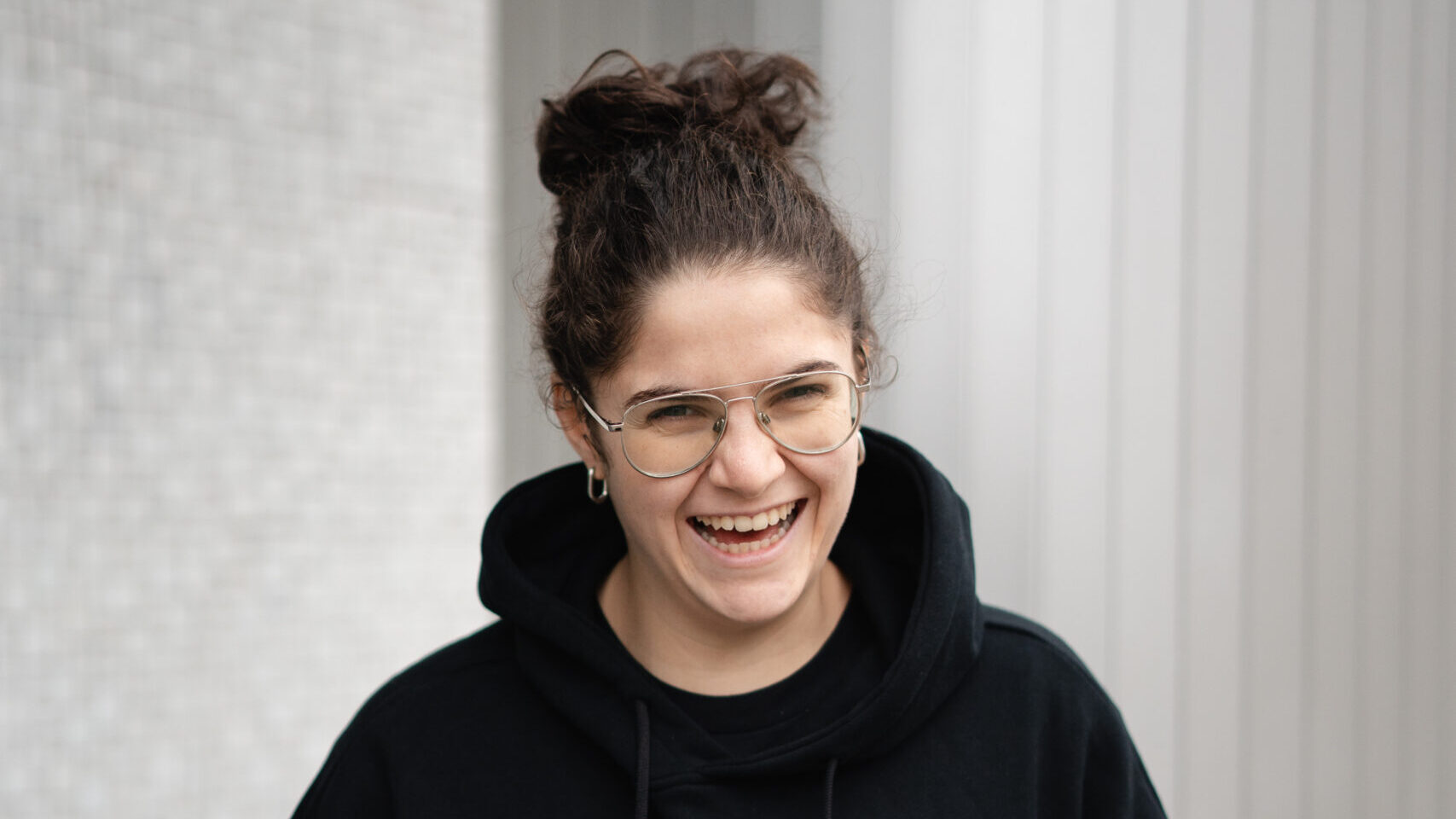
After a summer through Hive Festival, Tomorrowland and Verknipt Croatia, A.N.I. sits down to talk classical roots and the hard techno craft.
Subscribe to our Newsletter
-
 EDM Music3 days ago
New EDM Friday Oct 9: David Guetta, Armin van Buuren & More
-
 EDM Music3 weeks ago
New EDM Friday Sep 18: HALŌ, HUGEL, Sara Landry & More
-
 Amsterdam Dance Event News5 days ago
ADE Announces Full 30th Anniversary Program
-
 EDM Festival News4 weeks ago
Lost Lands Announces Full Set Times and Streaming Details
-
 EDM Festival News4 weeks ago
Tomorrowland Winter 2027 Dates and Ticket Sales Announced
-
 EDM Music2 weeks ago
New EDM Friday Sep 25: Charlotte de Witte, Armin van Buuren & More
-
 EDM Music1 week ago
New EDM Friday Oct 2: Martin Garrix, Dom Dolla & More
-
 EDM Festival News4 weeks ago
Djakarta Warehouse Project Unveil First Lineup Phase For DWP 2026
