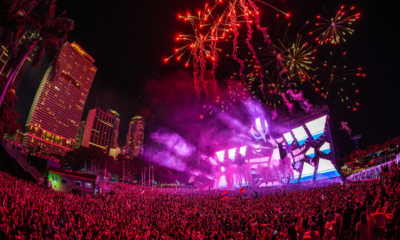
Ultra Music Festival Miami Contract Renewed For 20 Years as City Commission approves long-term Bayfront Park agreement with review terms
The Miami City Commission has approved a long-term agreement that secures Ultra Music Festival at Bayfront Park for up to 20 years, structured through renewable five-year terms with formal review checkpoints. The decision follows years of debate around noise, park access, and downtown resident concerns, making this more than a routine extension. Instead, the city has tied Ultra’s future in Miami to stricter oversight, including reporting requirements and continued engagement with the local community, while still recognizing the festival’s role in bringing international attention and economic activity to the city each March. The approval also comes just as legal pressure from resident groups resurfaces, which adds another layer to how this agreement will be monitored moving forward. For a festival that began in 1999 and has since grown into a global brand, this deal confirms that Miami remains its core location, even as expectations around how the event operates continue to tighten.
What The New Bayfront Park Agreement Means For Ultra’s Future
The agreement between the City of Miami and Ultra Music Festival keeps the event at Bayfront Park for up to 20 years, but the structure behind it is what defines how it will actually operate. The deal is split into five-year terms instead of one continuous contract, with each phase requiring approval before moving forward. That gives the City of Miami a clear checkpoint to evaluate how Ultra Music Festival runs each edition, including logistics, crowd management, and compliance with event conditions tied to the park. For Ultra Music Festival, this still provides long-term visibility. Planning a global event calendar, coordinating artist bookings, and maintaining partnerships across sponsors and production teams all depend on knowing that its main location at Bayfront Park remains secured over a potential 20-year period.

The agreement also introduces a more structured approach to how Ultra Music Festival operates within Miami, especially around communication and accountability. Each cycle requires post-event reporting and scheduled engagement with local stakeholders, which formalizes a process that has developed over the years as the festival expanded. Bayfront Park remains a public space outside of the event, so the City of Miami retains oversight across each five-year term to ensure it is managed in line with city expectations. At the same time, Ultra Music Festival continues to play a central role during Miami Music Week, bringing in international attendees and industry activity that extends beyond the festival weekend itself. The 20-year framework gives both sides a defined timeline to build on, while still allowing adjustments to how the event runs at Bayfront Park as the city and the festival continue to grow.
Ultra’s Role In Miami Music Week And The Global Electronic Music Scene
Ultra Music Festival sits at the center of Miami Music Week, which runs across five days leading into the festival weekend and extends far beyond Bayfront Park. During that week, major labels host their own events across the city, including STMPD RCRDS, Revealed Recordings, and Drumcode, each bringing their full artist rosters into Miami. Venues like LIV Nightclub and E11EVEN Miami operate on extended schedules with international bookings, while hotel venues such as the The National Hotel Miami Beach host back-to-back daytime events. In 2024, Ultra Music Festival brought in roughly 165,000 attendees across three days, with visitors traveling from more than 100 countries, which feeds directly into the wider activity happening across the week and across the city.
Beyond Miami, Ultra Music Festival runs events across countries including Japan, South Africa, Brazil, Peru, and South Korea, alongside other markets in Europe and Asia. These events take place at different points in the year, but the main edition at Bayfront Park remains the starting point for many artists’ annual schedules. New tracks are often first played in Miami before appearing in summer sets across Europe, and collaborations are frequently introduced during this week before being released later in the year. Industry teams also use the timing of Miami Music Week to confirm bookings for major festivals such as Tomorrowland and Creamfields, which places Ultra Music Festival in a position that connects both the live event side and the business side of electronic music.Keeping Ultra Music Festival in Miami under a 20-year agreement secures its place in the global calendar, with Bayfront Park continuing to host the edition that opens the year for many artists and events.
Ultra’s Economic Impact On Miami And Why The City Backed The Deal
The renewed agreement for Ultra Music Festival at Bayfront Park for up to 20 years is backed by figures that the City of Miami has tracked over time. In 2024, the festival generated more than $207 million in local economic activity, based on analysis from The Washington Economics Group, with over 1,400 jobs supported and approximately $128 million added to Miami-Dade County’s GDP. Across its full history, the total contribution linked to Ultra Music Festival is estimated to be close to $3 billion, which places it among the most consistent annual tourism drivers tied to a single event in the city. The scale of that return, concentrated within a few days each year, gives the City of Miami a measurable baseline when evaluating long-term agreements tied to Bayfront Park.
Visitors arriving for Ultra Music Festival typically stay multiple nights, which increases demand across hotels in Downtown Miami, Brickell, and Miami Beach, with occupancy reaching near capacity during the event period. Restaurants, transport services, production crews, security teams, and venue operators all see a direct increase in activity tied to the same timeframe. The new 20-year framework allows the City of Miami to retain that cycle while adding required reporting after each edition and scheduled community meetings ahead of future events. Those requirements are written into the agreement to ensure that operations at Bayfront Park are reviewed consistently, not only during renewal discussions. For Ultra Music Festival, remaining in Miami keeps the event positioned within a city that already supports this level of demand each year.
Ultra’s History In Miami And Why Bayfront Park Still Matters
Ultra Music Festival began in Miami in 1999, originally as a one-day beachfront event before expanding into a multi-day festival and eventually settling at Bayfront Park in the early 2000s. That location became closely tied to the identity of Ultra Music Festival, with the downtown skyline, waterfront setting, and central access shaping how the event is experienced each year. The connection was tested in 2018 when the City of Miami voted against renewing its permit at Bayfront Park, forcing Ultra Music Festival to relocate to Virginia Key for its 2019 edition. That move created logistical challenges, particularly around transport and accessibility, which made it clear how much the original downtown location contributed to the event’s structure.
Following that edition and a pause during the pandemic period, Ultra Music Festival returned to Bayfront Park under a new agreement, re-establishing its position in the center of Miami. The location allows direct access to surrounding hotels, public transport routes, and nearby venues, which supports how attendees move through the city during the event. For the City of Miami, keeping Ultra Music Festival at Bayfront Park under a 20-year framework maintains that central positioning while allowing the park to remain a managed public space outside of the festival dates. The site itself is not interchangeable, and its role in the event’s identity has been reinforced through each phase of the festival’s history.
What This Means For Ultra Moving Forward
The new 20-year agreement gives Ultra Music Festival a level of continuity in Miami that has not been in place for several years. With Bayfront Park confirmed as its main location, the festival can move forward with long-term planning across production, partnerships, and international scheduling without the uncertainty that previously affected its position in the city. For the City of Miami, the structure of the agreement keeps that stability in place while maintaining oversight through its review system.
With both sides now aligned under a defined framework, Ultra Music Festival remains anchored in Miami in a way that supports its role each year without requiring repeated negotiations around location. The agreement sets a clear direction for how the festival will continue to operate at Bayfront Park, with the next phase focused on maintaining consistency across each edition while working within the conditions set by the city.
Subscribe to our Newsletter