Connect with us

Editorial

We Asked ChatGPT For The Most Iconic Electronic Dance Music Tracks Of All Time!

Unknown's avatar

Published

on

The world of electronic dance music is a vibrant, ever-evolving landscape, with a rich history spanning several decades. From underground raves to massive music festivals, the electronic dance genre has not only shaped the music industry but has also left an indelible mark on popular culture. Within this dynamic and diverse realm, there are certain tracks that stand out as true game-changers—songs that have defined eras, ignited dance floors, and resonated with millions around the globe.

As we journey through the annals of EDM history, we’ve turned to ChatGPT, an advanced AI language model, to curate a list of the most iconic electronic dance tracks of all time. These are the timeless classics, the groundbreaking anthems, and the melodies that have the power to transport you to the heart of a pulsating dancefloor, no matter where you are. Without further ado, let’s explore these tracks that have not only survived the test of time but continue to inspire and invigorate both seasoned ravers and new generations of electronic music enthusiasts.

10. Kraftwerk – Trans-Europe Express
A pioneering track from the electronic music forefathers that has influenced countless artists in the EDM world.

9. The Prodigy – Smack My Bitch Up
A controversial but iconic track that showcases The Prodigy’s boundary-pushing approach to electronic music.

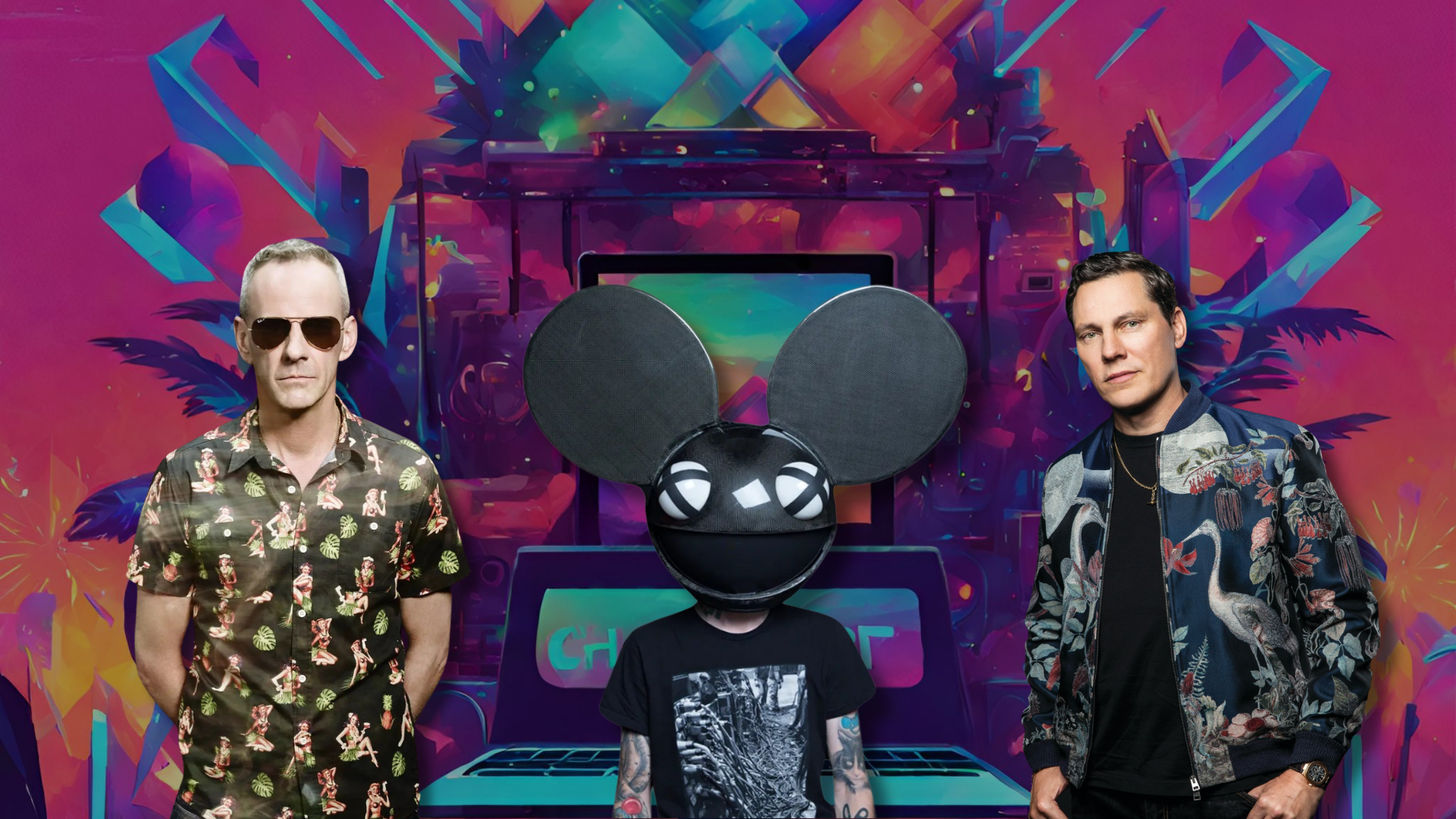
8. Deadmau5 – Strobe
A melodic and progressive house gem that’s considered one of Deadmau5’s finest works.

7. Fatboy Slim – Praise You
A funky and infectious big beat track that has achieved legendary status.

6. Underworld – Born Slippy (NUXX)
Featured in the movie “Trainspotting,” this track is a quintessential techno and progressive house hit.

5. Tiesto – Adagio for Strings
A trance masterpiece that’s recognized for its euphoric and emotional impact.

4. The Chemical Brothers – Hey Boy Hey Girl
A big beat classic that’s synonymous with the late ’90s electronic dance scene.

3. Moby – Porcelain
Known for its emotive melodies and reflective quality, this track has left a significant mark on electronic music.

2. The Prodigy – Firestarter
A high-energy anthem that blends electronic, breakbeat, and rave elements.

1. Daft Punk – Around the World
A pioneering track from the French duo that’s celebrated for its infectious repetition and innovation.

this article was entirely written by ChatGPT.

Founder, Owner & Manager of EDMHouseNetwork. Instant lover of all things electronic dance music from the moment I heard Fatboy Slim and The Prodigy. After pursuing a career as a DJ, creating EDM content quickly became a love of mine and it has been my mission to keep delivering high quality content ever since.

Editorial

US vs Europe: How Ticket Prices for EDM Festivals Really Compare

Unknown's avatar

Published

on

A triptych of three large electronic music festival stages from different global events, visually comparing the high production scale common across US and European EDM festivals.

Understanding the Price Gap Between American and European EDM Events

The cost of attending electronic music festivals has shifted noticeably in recent years, with a clear difference emerging between the United States and Europe. While both regions host major events with global line-ups, the pricing structures behind them follow very different models. In the US, ticketing often includes dynamic pricing, service fees, and tiered installment plans, creating higher final costs once additional charges are added. European festivals, by contrast, tend to follow more stable pricing with clearer tax-inclusive structures and fewer transaction-level fees. These differences shape how much fans ultimately pay for multi-day passes, single-day tickets, and club shows, forming the basis for understanding how regional systems influence the real cost of attending EDM events.


View this post on Instagram


A post shared by g e o 李嘉文 (@jiaorgeo)

How US Pricing Models Create Higher Final Costs

The way ticketing works in the United States has become a major factor behind rising festival costs, especially for large EDM events. At Ultra Miami, the GA weekend pass usually begins in the 399 to 429 dollar range, but the number shown during checkout tells a different story. Service fees, processing charges, and state tax often lift the total above 500 dollars, even during the earliest tiers. This structure is familiar across the US market. For EDC Las Vegas, Insomniac’s opening GA price is typically 379 dollars, yet buyers regularly report totals closer to 480 to 510 dollars once all platform fees are added. The separation between the advertised price and the final total is a standard feature of US ticketing, especially on Ticketmaster, where each line item is broken out into individual charges. The system creates a shopping experience where fans rarely know the actual price of a ticket until the final step.

The same structure is even more visible during high-demand shows where price adjustments occur in real time. Swedish House Mafia’s New York dates demonstrated how quickly prices can move on Ticketmaster when demand increases. Seats that opened at one level shifted into a much higher bracket within hours, with no change to the seat location or viewing quality. Fans describe situations where a ticket that appeared affordable early in the day was no longer in reach later that night. Promoters such as Insomniac have introduced installment plans to help buyers spread payments across several months, which has become common for EDC, Beyond Wonderland, Hard Summer, and Escape. While the structure makes large purchases manageable, the total does not decrease and can rise slightly when processing fees are applied to each installment. Together, these elements define how US festivals are priced and explain why American events continue to sit at the top end of global EDM costs.

@cameliamotoc90 When you think prices might be $50-$100. #swedishhousemafia #nyc #fyp #notfair #concert ♬ Don’t You Worry Child – Radio Edit – Swedish House Mafia

How European Festivals Keep Pricing More Stable

Across Europe, EDM festivals follow a structure that is noticeably different from the United States, and the difference becomes clear the moment you compare the final checkout totals. Events such as Tomorrowland in Belgium list their Full Madness Pass at roughly 280 to 350 euros, and that figure already includes VAT and service costs. Buyers see a price that stays consistent from the first page to the last, which creates predictable expectations and avoids the sharp increases seen on American platforms. The same pattern holds at Creamfields in the United Kingdom, where a standard three-day ticket sits close to 290 pounds with fees already folded into the displayed price. Germany’s Parookaville follows a similar approach with weekend passes around 259 euros, and the final amount remains close to that number unless buyers add camping or travel upgrades. These festivals operate with upfront pricing that makes the true cost clear to attendees, even during the earliest tiers.

The stability continues when looking at multi-day formats that would be significantly more expensive under the US system. Sziget Festival in Budapest offers a six-day full pass for roughly 320 euros, positioning it as one of the lowest per-day costs among major global events. Awakenings in the Netherlands lists its weekend tickets around 235 to 265 euros, again showing minimal differences between the displayed and final totals. Fans in Europe are less likely to encounter sudden price jumps or algorithm-driven changes during checkout because the region does not rely heavily on dynamic pricing for festival access. Instead, tickets are typically released in structured phases with fixed increases between tiers, and the inclusion of taxes and service charges keeps the listed price transparent. This clarity in pricing, combined with strong competition between major festivals across Belgium, Germany, the Netherlands, and the United Kingdom, helps maintain a market where the total cost of attending remains comparatively lower than in the United States.

Why the Price Gap Between the US and Europe Continues to Grow

Several factors continue to widen the difference between ticket prices in the United States and Europe, and most relate to how each region structures the buying experience. In the US, platforms such as Ticketmaster separate the base ticket from the service fees, processing charges, facility fees, and taxes that appear during checkout. This structure has remained largely unchanged across the last decade and is reinforced by the introduction of dynamic pricing, which pushes the cost higher when demand increases. Festivals and large shows rely heavily on this system because it maximises early revenue while keeping the advertised entry price artificially low. As a result, fans are often met with totals far above what they expected, especially for high-demand artists and multi-day EDM events. Europe does not follow this model in the same way. VAT and service costs are typically included in the displayed price, which removes the gap between the advertised cost and the final amount. This difference in transparency creates two very different buying environments and contributes to the widening price gap.

The edges of the gap become clearer when looking at how promoters and markets respond to rising costs. In the United States, promoters such as Insomniac have turned installment plans into a standard feature for EDM festivals, including EDC, Escape, Hard Summer, and Beyond Wonderland. These plans make large purchases accessible for younger audiences, but they do not reduce the total cost and can increase the amount paid due to multiple processing charges across several months. Europe has not adopted installment systems at the same scale because the base prices are already lower and more stable. Festivals like Tomorrowland, Awakenings, Parookaville, and Creamfields rely on clear tiered pricing with limited fluctuation across release phases. Competition between major European festivals also places downward pressure on ticketing because fans can choose between several strong events within a short travel radius. These contrasting systems, combined with the impact of dynamic pricing in the US, explain why the gap between American and European EDM ticket prices continues to grow and why the United States remains the most expensive region for large-scale electronic events.

What the Current Landscape Suggests for the Coming Years Ahead

The divide between the United States and Europe is unlikely to narrow soon because both regions continue to rely on systems that move in opposite directions. The US model is shaped by dynamic pricing, rising service fees, and installment structures that support access but increase the overall cost for many buyers. Europe maintains clearer, tax-inclusive pricing and competitive festival markets that keep totals more stable. As a result, fans are now weighing the benefits of attending large American events against the possibility of travelling to Belgium, Germany, the Netherlands, or the United Kingdom for festivals that offer lower per-day costs and fewer unexpected fees. The contrast has made the regional divide a central part of the conversation around EDM travel and festival planning, and it will continue to influence how audiences make decisions as the global festival calendar expands in 2026.

Continue Reading

Editorial

Inside HUGEL’s Appearance at Harvard University’s Music Business Series

Unknown's avatar

Published

on

A Deeper Look Inside HUGEL’s Appearance at Harvard University’s Music Business Series

Hugel’s appearance at Harvard University’s Music Business Series gave students a close look at his path from Marseille to international recognition. The session moved through his early influences, key turning points in his career, and the decision to build his sound independently. Throughout the conversation, Hugel spoke openly about creativity, consistency, and developing work that feels authentic rather than designed for trends. For Harvard’s music community, the talk offered a rare opportunity to hear how Hugel approaches his craft, his daily process, and the mindset that guides his direction as an artist today.


View this post on Instagram


A post shared by HUMBA (@harvardmusicbusiness)

How Hugel Found His Sound and Direction

During his session at Harvard University’s Music Business Series, Hugel traced his connection to music back to his childhood in Marseille, describing it as the place he turned to when home life felt unstable after his parents’ divorce and his father’s time in jail. His mother played Kool & The Gang, Earth, Wind & Fire, and Al Green, and those records became his first point of escape. By twelve, Hugel shifted from listening to creating, inspired by early-2000s hip-hop and R&B, especially Dr. Dre and the Interscope era. He began making beats on the EJ software while rapping with kids from his neighbourhood. At the same time, he was playing football at a competitive level for Olympique de Marseille, until the club told him at fourteen that he would not progress to the professional tier. In the conversation, he called that moment devastating, yet also the point where he realised he was drawn to artistic work more than athletic success.

When Hugel discovered DJing at sixteen, he saw a path that connected naturally to the production he had already been experimenting with. He described learning alone for years without YouTube tutorials or modern shortcuts, eventually reaching a level where his tracks sounded “right” after four years of steady practice. He told students that his direction became clear when he noticed how deeply he could work without watching the clock, referencing a French saying that when you love something, you do not count. That instinct remains central to his process today: if a project makes him lose track of time, he follows it. Those early influences, the turning point in football, and the long period of self-teaching formed the foundation of the sound and identity that Hugel now carries globally.

How Monita Became a Turning Point for Hugel

When Hugel spoke about Monita at Harvard, he described it as a track created during a time when he felt trapped by mainstream expectations and the pressure to make radio-friendly releases. He explained that before the pandemic, he was producing with radio approval in mind and constantly worried about whether stations would support his next record. During lockdown, he stepped away from that cycle and started making music purely for himself, drawing on the Latin house sound he grew up with in France, Spain, and Italy. Monita was one of those ideas: a personal experiment rooted in older records he used to play as a resident DJ, made without any intention of chasing a chart position.

After finishing the track, Hugel sent Monita to every label he knew. All of them passed except Mark Brown of CR2 Records, who connected with the influence of Spanish club culture in the production. Clearing the sample took more than a year, and when the track finally came out, Hugel expected nothing. Instead, it reached number one on Beatport and quickly caught the attention of major US artists. He recalled being at dinner when he received a message from Diplo asking for more music, followed soon by Vintage Culture, John Summit, Fisher, and eventually Insomniac reaching out to his team. At Harvard, he told students that this was the moment he realised what happens when he stops creating for the radio and starts creating for himself, calling Monita the release that changed the direction of his career.

Hugel’s Guidance for Emerging Artists

Before the session ended, Hugel spent time answering questions from students who wanted to understand how he works and how he built a career without formal training. His main message was that artists should rely on consistency rather than waiting for perfect conditions. He told the room that posting daily on social media is one of the most effective tools available, comparing each post to a free lottery ticket that could reach the right audience at any moment. For Hugel, visibility begins with showing your own personality, which is why he keeps full control of his Instagram and TikTok accounts and avoids letting others manage how he appears online.

Hugel also encouraged students to trust their instincts and avoid comparing themselves with others, explaining that progress comes from reviewing their own growth rather than measuring against other artists. He spoke about the value of building the right team, sharing how earlier managers took advantage of him before he met the German team he works with today. Above all, he emphasised working in the present and paying attention to ideas when they appear, whether on a plane or late at night, because inspiration disappears quickly if not captured. For the students listening, it was a direct look at how Hugel approaches discipline, self-belief, and the daily habits that keep his work moving forward.

Continue Reading

Editorial

DJ Snake Named GQ Man of the Year 2025 After Years of Global Influence

Unknown's avatar

Published

on

The Career Milestones Behind DJ Snake’s Latest Achievement.

DJ Snake has been named GQ Man of the Year 2025, recognising a career built on releases with global reach through collaborations with Major Lazer, Bipolar Sunshine, Justin Bieber, Ozuna, and Selena Gomez. From “Turn Down for What” and “Lean On” to “Let Me Love You” and “Taki Taki,” his catalogue has remained present across radio, streaming platforms, and major festivals for more than a decade. Alongside his main body of work, he has continued developing his separate identity as The Outlaw, adding another layer to his presence within electronic music. The GQ Man of the Year 2025 title reflects how DJ Snake enters the coming year with sustained influence across multiple regions, active touring, and a catalogue that remains relevant to both mainstream and electronic audiences.


View this post on Instagram


A post shared by ™ ( ) (@snaketurkey)


Tracing DJ Snake’s Rise in Global Music

The rise of DJ Snake began in Paris, where he moved from local club work into early studio credits with major artists, including engineering and co-production roles for Lady Gaga. This period introduced him to larger production environments and set the foundation for his move into electronic music. His international profile grew rapidly after “Turn Down for What” with Lil Jon, followed by “Lean On” with Major Lazer and , both of which brought his name to wide audiences across several regions. He expanded this reach with releases such as “Middle” featuring Bipolar Sunshine, “Let Me Love You” with Justin Bieber, and “Taki Taki” with Ozuna, Cardi B, and Selena Gomez, establishing a catalogue recognised across radio, streaming platforms, and major events.

Alongside his primary releases, DJ Snake introduced The Outlaw, a separate identity used for tracks that carry a different production direction from his commercial work. This project has allowed him to release music that does not sit within the format of his larger collaborations while still remaining connected to his main artistic identity. His visibility continued to rise through appearances at Tomorrowland, Ultra, EDC, and Coachella, as well as his growing connection to the Middle East and North Africa. “Disco Maghreb,” tied to his Algerian roots, became a notable release throughout the region and added another layer to his international presence. These developments form the background to his recognition as GQ Man of the Year 2025, highlighting a career that remains active across multiple markets.

What the GQ Award Signifies for DJ Snake in 2026

The recognition of DJ Snake as GQ Man of the Year 2025 places him within a group of public figures acknowledged for shaping culture across the last year, according to GQ’s own criteria for the award. It highlights the relevance of his catalogue, his visibility across several regions, and his role in bringing non-Western influences into global music spaces through releases such as “Disco Maghreb.” The award also acknowledges his presence outside traditional music channels, including his work in fashion, live events, and cross-regional collaborations, which have helped maintain his profile in markets that extend beyond electronic music.

Moving into 2026, the award reinforces DJ Snake’s position at a time when he continues to balance mainstream releases with projects under The Outlaw identity. The recognition places additional attention on the direction of his upcoming work, whether that involves new collaborations, continued activity in the Middle East and North Africa, or further expansion into areas where his influence has recently grown. For his team, the title strengthens opportunities around partnerships, appearances, and cross-industry projects, while signalling that his role in global music remains active as he enters the next phase of his career.

Looking Ahead to DJ Snake’s Next Phase

As DJ Snake enters 2026, he approaches the next chapter of his career with the advantage of global recognition and a catalogue that continues to remain visible across multiple regions. His primary releases still carry strong reach on radio, streaming platforms, and major events, while The Outlaw gives him a separate lane for ideas that sit outside the structure of his commercial work. With the added attention from the GQ Man of the Year 2025 title, the upcoming year opens the possibility for new collaborations, deeper involvement in markets where he has gained traction recently, and further exploration of sounds tied to his background and international audience. These elements place him in a position where both his established identity and his alternate project can evolve in parallel, giving him flexibility as he decides how to shape his plans for the year ahead.

What direction do you think DJ Snake should take as he moves into 2026?

cover photo credits: ARNO PARTISSIMO

Continue Reading

Trending