Interview
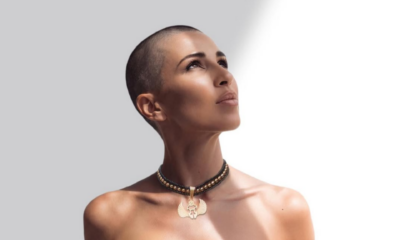
B JONES TALKS ABOUT WHAT IT’S LIKE TO PLAY TOMORROWLAND MAINSTAGE, HOW SHE PREPARES FOR SETS, & MORE
We sat down with B Jones backstage after her set on the Mainstage at Tomorrowland during Weekend Two. During this interview we chat about what it was like to receive so much support before and during her set, the road to Tomorrowland Brazil, and lastly a special message to her fans.

So yesterday you played the mainstage at Tomorrowland, not only the mainstage, but you had hundreds I don’t know how many hundreds of Spanish fans flags and a meet up before your set. What did it feel like to play for that crowd?
The support of my country, it’s the biggest gift I can have in the whole world. I worked really hard on the set at Tomorrowland and for the last thirty years in my career and I feel that my country supports me and you could feel that during my set.
We were there and it was it was crazy, it was amazing. Such good energy. What do you think makes Tomorrowland a special festival? What sets it apart from all the other festivals you’ve been to or played at in the world?
Tomorrowland is not a normal festival, you can feel the energy when you’re inside the festival it’s everything is complete perfectly, the stage, the artists, the mainstage is crazy, but it’s also the people that come here every year, it’s the Tomorrowland family. You feel amazing.

Next up you have Tomorrowland Brazil. Can you tell us a little bit about that and what are you preparing for your set? Are you expecting so many Spanish people to come as well? Because that is kind of far.
It is really far, but really Brazilian people have the same passion. I feel completely at home in Brazil. There might not be that many Spanish people there but there will be people from Brazil, Argentina, a lot of people, and a great crowd. I didn’t start yet to prepare my set because I will start Monday when I arrive in Brazil.
How much time goes into preparing for these sets?
It’s not like I will go to the studio but you know, for me Tomorrowland is like one dream. All of Tomorrowland is a dream, Tomorrowland Brazil, Tomorrowland Winter, I love listening to the music, checking my set times, I dedicate some days to decide my outfit. When I arrive on the Monday, I’ll start to think about how my experience at Tomorrowland will be, what I can give differently because I love to be different every time. I want to always improve, always do better. I will listen to Brazilian music as well.

Last year, I saw your set at Crystal Garden weekend one, but this year I got to see you on the Main Stage for weekend two. Where you prefer to play? Do you prefer the smaller stages or the big Mainstage?
The Mainstage, I love it. The view from the DJ booth where you see all the people, its amazing. But any stage at Tomorrowland, I would love to play at.
Final question. You have so many fans, do you have a message want to shout out to the fans all over the world?
Thank you so much for supporting me and for understanding my vision of my Mainstage set. I always try to do something with big personality. Thank you for supporting me and I hope you join me at any club or any festival in the world and we can enjoy it together.
Interview
Meet The Bausa: Norway’s Funky House Trio Taking Europe by Storm
Norwegian house trio The Bausa interview discusses breakout single Magnetic, their self-coined Scandi House sound, and what’s next for the Baerum-based three-piece.”
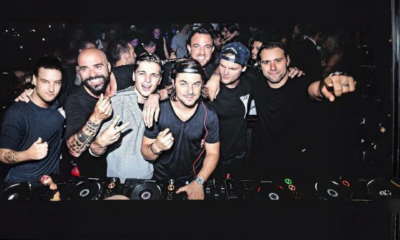
If you haven’t heard “Magnetic” on the radio yet, you will soon. The Bausa, a three-piece house act from Baerum, Norway, are making serious waves across Europe, and after a conversation with Fredrik, Edward, and Filip, it’s clear this is just the beginning. In The Bausa Interview, we’ll explore what sets this group apart and where they’re heading next.
The trio’s origin story is one of those happy accidents that makes for great mythology. Filip and Fredrik had been making music together for two weeks when Filip brought Edward into the picture at a high school party. “He showed me one of the tracks they made and it was so bad,” Edward laughs. “But he was interested in the whole thing, and none of my friends were making music.” A studio session at Fredrik’s home studio sealed the deal. They made a song in two hours and partied to it for the rest of the night. The Bausa was born.
The name has its own story. A friend suggested “Brødrene Bausa,” telling them it meant “boss” in German. They ran with it. Years later, on a trip to Germany, they found out it doesn’t mean that at all. “It sounds dope, it sounds cool,” Filip says, unbothered. When pressed on the actual meaning, they landed on something like “big” and “ambitious.” Close enough.

250 Tracks a Year and the Bus That Made Them
Before playlists and streaming algorithms, The Bausa were sharpening their craft in one of the most uniquely Norwegian ways imaginable: making music for russ buses. If you’re not Norwegian, this requires some explanation. Russetime is a rite of passage at the end of high school where groups of about 30 students rent or buy a bus, get it painted with their crew name and logo, commission custom songs from producers, and then party inside it every night for 30 days. They go to school during the day. They do this for a month.
One of those bus crews was called Tournée, meaning “tour” in Norwegian. They commissioned a track from The Bausa, and that song ended up becoming one of the group’s early breakthrough moments. At their peak, the trio were producing around 250 custom tracks a year for various russ groups, covering everything from hip-hop to drum and bass. “We got a lot of training from that,” Edward says. “We were mixing and mastering the tracks as well.” It’s an unconventional music school, but the output speaks for itself.

Finding Their Sound
Today The Bausa describe their music as “Scandi House,” a term they coined themselves for a style that blends disco, funk, and house in a way that didn’t fit neatly into any existing genre. Their first English-language EP came together almost by accident. They were working on a Norwegian album in January and couldn’t crack the lyrics for a particular beat, the one that would eventually become “Addicted to Your Love.” An English top line clicked where Norwegian hadn’t, and suddenly they were making an English EP.
“Magnetic,” the lead track, has been getting significant radio play across Europe, including here in the Netherlands. There’s an ease and warmth to it that translates across borders, a summery groove that feels effortless even if the work behind it wasn’t.

What’s Next
The Bausa have a busy summer ahead, with festival appearances lined up across Europe. When asked about a dream destination they haven’t played yet, the answer was India, a market with a passionate and rapidly growing electronic music fanbase that they’re clearly keeping an eye on.
As for Norway’s own scene, they’re optimistic. They see a new generation of house producers and underground DJs building something real in Oslo, and they’re quietly hinting at plans to help shape what that becomes. A house festival of their own? “We have some plans,” is all they’ll say.
In the meantime, follow The Bausa on their socials and streaming platforms. All the links are in the show notes below.
Want to hear the full conversation? Stay tuned for the complete interview, coming soon to the Ten Days in Dance podcast on Spotify.
Interview
Zehavi Interview: Aliya, Lior Narkis, And Music Without Borders
Zehavi Interview: Aliya, Lior Narkis, And Music Without Borders as he talks Aliya, Mediterranean roots, and culture-crossing electronic music
Zehavi’s music began with the sounds he grew up around, from Arabic, Moroccan, Persian, Greek, and Mediterranean melodies to the bouzouki he first learned through his father. Those early influences now sit inside his electronic productions, giving his work a personal link to tradition without pulling it away from a wider audience. In this interview, Zehavi discusses his collaboration with Lior Narkis on Aliya, the creative control behind the release, and how different languages, instruments, and cultural references can meet inside one record without losing their emotional weight.
Great to have you with us. Before we dive in, can you tell us a bit about the artists, sounds, or moments that originally drew you toward music as a profession?
Interview
Modal Nodes Talk ‘Destiny,’ ‘Jawa Dub,’ and Mystery
Modal Nodes Talk ‘Destiny,’ ‘Jawa Dub,’ and Mystery as the bass act discusses Subtronics support, sci-fi influences, and what comes next
Modal Nodes have quickly become one of bass music’s most intriguing emerging projects, pairing a mystery-led identity with a sci-fi visual world and a sound tied to their fictional origin story. Their latest dual release, Destiny and Jawa Dub, gives the project two different entry points, with Destiny connected to their first shows and Jawa Dub rooted in the alien narrative behind Modal Nodes. In this interview, Modal Nodes discuss the concept behind the project, the brutalist architecture that influences their identity, recent support from Subtronics, and what may come next as their presence in bass music continues to grow.
Modal Nodes have quickly become one of the most talked-about emerging names in bass music despite still remaining anonymous. Was the mystery always part of the project from the beginning, or did it evolve naturally alongside the music?
Modal Nodes originally started out as an abstract concept on our home planet. It wasn’t anything serious to begin with, but has since progressed farther than we ever expected.
-
EDM news3 weeks agoThese Were The Most Played Songs At EDC Las Vegas 2026
-
Editorial3 weeks agoEDC Las Vegas 2027 Expands To Two Weekends
-
Afrojack News4 weeks agoTomorrowland Thailand 2026 Confirmed Artists So Far
-
Defqon.1 News2 weeks agoEDM Festivals June 2026: Festivals We Can’t Miss Worldwide
-
EDM news3 weeks agoJohn Summit Announces CTRL ESCAPE Arena Tour
-
EDM news1 week agoSkrillex Teases SOMA With 13-Song Tracklist
-
EDM news4 weeks agoMartin Garrix & Ed Sheeran Release ‘Repeat It’ After 12 Years
-
Anyma News3 weeks agoEDM Events Held At The World’s Most Historic Sites