
Interview
From Church Choirs to Global Charts: A Sofiya Nzau Interview


When Kenyan artist Sofiya Nzau’s voice first echoed across dance floors worldwide in 2023, few knew the incredible story behind the vocals. Her collaboration with Zerb on “Mwaki” wasn’t just another dance track—it became a cultural moment that proved authentic voices singing in native languages could dominate global charts. In this exclusive interview, Sofiya Nzau Mwaki’s creator opens up about her unexpected journey from village church choirs to international stardom, and how one reluctant decision changed everything.
From Village Churches to Viral Stardom
Growing up in Kenya, Sofiya never imagined music would become her profession. She sang in church choirs, Sunday school groups, and school performances, but it was simply something she loved doing.
“I’ve been singing in school, in church. I was raised in church and I was always in Sunday school, junior Sunday school, the youths, and I’ve always been part of a singing group,” Sofiya explains. “But I never thought it would be like something professional. It’s just, I have a good voice and I can sing and I just want to sing.”
After finishing high school, she moved from her village to the city, where her husband invited her to join their church worship team. He was also a producer working with a band, and he saw something in Sofiya that she didn’t see in herself—the power of her native language.

The Ultimatum That Changed Everything
The turning point in Sofiya Nzau’s Mwaki journey came with what felt like a limitation. Her husband, who served as her producer, gave her an ultimatum: sing in Kikuyu, your native language, or don’t record at all.
“I was really angry, honestly, because I didn’t want to sing in my language,” Sofiya admits candidly. “I thought you can only make it if you sing in English or something else. So I felt like he was limiting me, but he knew what he was doing.”
The resistance was rooted in years of conditioning. Like many African artists, Sofiya had internalized the belief that international success required singing in English. Her native Kikuyu felt like something to move past, not lean into.
But when her husband gave her a chorus to sing in Kikuyu, something clicked. “It was so good. And I was like, okay, this makes sense because it’s not the traditional Kikuyu songs that I know. So this sounds different.”
Creating Hundreds of Vocals—Then Lightning Struck
Her husband introduced her to Fiverr and other platforms where she could create vocal samples for DJs and producers. They began uploading samples in Kikuyu, sending them to producers worldwide. It was a numbers game—create enough content, and something would eventually break through.
“I remember telling him, these are a lot of vocals. One of them is going to be a hit,” Sofiya recalls. “And we waited and we waited and we waited.”
Multiple producers used the Mwaki sample, but nothing caught fire. Then Dutch DJ Zerb picked it up, and everything changed.
“There are so many Mwaki songs and then Zerb comes with a sample and the song and boom, it’s international. It’s a big one and it’s opening more doors. And that was it.”

The Sofiya Nzau Mwaki Phenomenon Nobody Expected
What makes the Sofiya Nzau Mwaki story even more remarkable is that she almost wasn’t officially part of the track. When Zerb’s version went viral on TikTok, fans demanded to know who was behind those captivating Kikuyu vocals.
“For me it was just another song because the Mwaki sample was used so many times and I was like I hope it’s not Mwaki,” she laughs. “I actually had it put on my notes so that when someone asks for translation, I can just copy paste because they were asking for it so many times.”
But this time was different. The song exploded across TikTok, and comment sections filled with one question: “Who is the singer?”
“TikTokers are asking, okay, who is the singer? Because it’s not you. Every time he posts that post, who is the singer? Tag the singer,” Sofiya remembers. “I wasn’t supposed to be part of the song and I became part of the song because the world demanded for it.”
TikTok: The Great Equalizer
The role of TikTok in the Sofiya Nzau Mwaki success story cannot be overstated. The platform allowed the track to reach millions organically, with users across countless niches using it as a soundtrack for their content.
“I think in this age, especially these past years and right now, I think you need TikTok,” Sofiya explains. “People are doing a lot of videos and as they are doing videos, they need a background song and you want your song to be that background song.”
The beauty of TikTok’s algorithm meant that people selling products, creating dance videos, or sharing life moments could all use the same track, exponentially increasing its exposure. “Your song is just, you’re being marketed for free,” she adds.
One particularly memorable moment came when a popular EDM reaction YouTuber featured the Sofiya Nzau Mwaki track. She and her husband had been longtime fans of his content.
“We’ve been watching that guy react to songs with my husband and we’re like, yeah, that drop is crazy. That drop is crazy. We never thought it will be the song he’s reacting to,” she says with wonder. “That was a dream that we didn’t even have coming true.”

Kenyans Fighting for Recognition
When the reactor expressed surprise that the vocals weren’t in English, Kenyans flooded the comments with pride. “Kenyans are there saying, hey, excuse me, this is Kenyan, that is Kenyan. It’s called Kikuyu,” Sofiya recalls warmly. “Honestly, Kenyans fought for this song. They fought for recognition. And it was amazing to see them owning the win even for them, because it was not just for me, it was for the whole country and the whole continent.”
Breaking Down Barriers for African Artists
The impact of Sofiya Nzau Mwaki extends far beyond one viral song. By achieving global success while singing in Kikuyu—one of 56 languages spoken in Kenya—she’s helped shift perceptions about what African artists need to do to succeed internationally.
“It was like this thing you need to get over. You need to get over your accent. You need to get over shrubbing and all those things,” Sofiya explains. “But right now, we can just speak as yourself. You can be yourself. You can be authentic and you can sing like that.”
The change is already visible. “Nigerians have been doing it, which is amazing. And Kenyans are also starting to embrace it,” she notes. “People are starting to acknowledge their roots. And it’s cool for me to sing in my language because it wasn’t cool.”
The comparison to “Despacito” isn’t lost on her. “I don’t even know what Despacito is, but I love that song and it’s an all time hit,” she says. “You don’t actually have to” sing in English to achieve global success.
What Does “Mwaki” Actually Mean?
Interestingly, the Sofiya Nzau Mwaki lyrics tell a story about forbidden love—but most listeners, even in Kenya, don’t understand the words.
“So many people even in my country don’t understand the language. So they actually don’t know what I’m singing about,” Sofiya reveals. “I think what resonated more with people was the difference and that, wait, this is different. And it’s actually going big.”
It was the shock factor—proof that artists don’t need to conform to Western language standards to achieve international recognition. The sound, emotion, and authenticity transcended linguistic barriers.

The Creative Process Behind the Magic
Working primarily with her husband as producer, Sofiya’s creative process varies based on each project’s origin. Sometimes producers send instrumentals requesting vocals; other times, they build songs from scratch using just piano keys.
“There’s just a way where producers and vocalists just match each other’s energy and whatever everyone was looking for in a song,” she explains. “I don’t have like a specific, I work with how the song started.”
The timing of her breakthrough was also fortuitous. “Mwaki came in a season where outside artists or international artists were very hungry or were looking for something new from Africa,” she notes. “That gave me a very good opportunity to collaborate with other big artists who are in the dance music.”
Life in Kenya’s Music-Filled Streets
For those unfamiliar with Kenyan culture, Sofiya paints a vivid picture of a country where music is omnipresent. From matatus (local buses) to tuk-tuks, barbershops to street vendors, sound fills every corner.
“We have this thing in Kenya where everything has music. If it’s a shop, it’s a salon, it’s a barber shop, it’s a bus, it’s a matatu, it’s a tuk tuk. There’s so much noise outside, but most of it we listen to our local music,” she describes enthusiastically. “I tell people Kenya is so loud.”
The dance music scene is growing, but local Kenyan music dominates the soundscape, creating a unique cultural ecosystem where traditional and contemporary sounds coexist.
Looking Toward 2026: New Music and Independence
As 2025 closes, Sofiya reflects on two years of intense learning. Building her career alongside her husband meant navigating challenges together, making mistakes, and growing stronger.
“We’ve been learning and making mistakes and getting into holes and needing to come out of them,” she shares. “But at the same time, I’m so grateful for all the things that we’ve gone through because if we didn’t go through those things, we wouldn’t have learned the things that we’ve had to learn.”
Her primary focus for 2026? Releasing original music under her own name and stepping fully into her identity as a solo artist.
“I’m hoping to release a lot of my music. And I’ll start my journey as an artist without having to rely on someone else or another artist,” she reveals. “I am waiting also for some performances all around the world and just a big something. Just growth, just another step.”
After enjoying Kenya’s cherished holiday season with family and a New Year’s Eve performance in Zimbabwe, Sofiya will return with new music she’s been developing throughout the year. “We have amazing music in store. I’ve done a lot of songs and I can’t wait for my fans to hear them next year.”
The Legacy of Authenticity
The Sofiya Nzau Mwaki story represents something bigger than one artist’s success. It’s proof that the next generation of global music stars will sound more diverse, more authentic, and more representative of our world’s rich cultural tapestry.
Her reluctance to sing in Kikuyu transformed into her greatest strength. Her husband’s ultimatum, which felt limiting at the time, became the key that unlocked international doors. And her voice—singing words many listeners don’t understand but deeply feel—now bridges continents through the universal language of music.
“We don’t have to try to be people that we are not. And that’s the beauty of it,” Sofiya emphasizes.
As dance music continues evolving and seeking fresh perspectives, Sofiya Nzau stands as living proof that authenticity resonates louder than conformity ever could.
Spotify – https://open.spotify.com/episode/7zw6V9vRmoIsmqjqPv9Jhl?si=6f57384b28e04631
Connect with Sofiya Nzau
Find Sofiya Nzau’s music on all major streaming platforms. Follow her journey on Instagram and TikTok @SofiyaNzau to stay updated on new releases and performances.
Subscribe to our Newsletter











MEETCH interview about his new single ‘Reflections’ with Lacey, his Ørjan Nilsen collaborations and what’s next for the robot-headed producer
Subscribe to our Newsletter

Promo Push head of promotions Russell Biles explains how the UK company promotes dance music releases across DJ, radio, press and Spotify campaigns
Promoting releases from the likes of MK, Chris Lake, Claptone, Above & Beyond, Tiësto, Diplo, Flashmob, DJ Hype, Axwell, Jamie Jones & Vintage Culture – Promo Push was founded in 2011 & is one of the industry leaders in dance music promotion, based in the UK.
Speaking to Russell Biles, head of promotions at Promo Push - we asked some questions about the company & how they promote a release in today’s dance market.
Since the launch of Promo Push in 2011, how have the range of services you offer evolved?
We launched with a firm focus on DJ & Club promotion, delivering genre specific & bespoke campaigns – across the electronic music landscape. The next natural progression, was us moving into dance radio promotion & we’ve built an extensive network with international heads of music, playlist managers & mix show hosts. Online Press campaigns then followed & we work with a range of music journalists & editors at dance music publications – closely aligning online coverage & building further awareness around a release. In 2019, we also moved into Spotify promotion – with us pitching to a range of leading 3rd-party playlist curators.
Musically, what dance music genres does your DJ promotion cover?
Whether it’s a House, Tech House, Deep House or Nu-Disco leaning track, a melodic Techno or Trance record – or Mainstage release, we deliver tastemaker DJ & 1001 Tracklists mix show promotion. With a deep understanding of the industry, each of our DJ / Club campaigns are tailored & finely tuned. Working with both major & independent labels, along with management agencies & directly with artists – from underground clubs to festival main-stages, we get our client’s release to the right DJs at the right time.
Across your radio promotion, what territories do you focus on?
Our radio promotion is international & reaches in to each key global territory. We target dance music stations & specialist DJ shows worldwide, including across BBC Radio 1, SiriusXM, Radio 538, Kiss FM, One World Radio, Ibiza Bpm Radio, SLAM FM! & stations throughout Europe, USA, Australia & beyond. In addition to FM stations, we also push to an array of specialist digital & online dance stations and use the monitoring tool WARM (World Airplay Radio Monitor) for tracking plays & radio support.
Do your campaigns follow a specific timeline?
Each Promo Push campaign runs over four weeks & we report to clients weekly, with feedback & scores from DJs / Radio and who’s listened, reviewed and intends to support. Our Press & Spotify campaigns also run over a four timeframe, with weekly reporting too & detailing each Press feature / Spotify placement we’ve secured – with direct links to each. We provide a full & comprehensive summary with the final reporting, ideal for our client’s Press pack and their future release planning.
In terms of your Press service, can you tell us more about how this works?
We offer standalone Press campaigns, or including DJ & Radio promotion – as part of our Prime Tier. From leading online dance publications, to influential niche blogs — our Press network covers a wide spectrum of sites that dance music fans read. Press release curation is included in our service & our weekly reporting is in PDF, providing coverage links – readership estimates & a full overview of online release traction.
With Promo Push delivering over 4,000 campaigns to date & working with the likes of Anjunabeats, Axtone, SIZE, Ministry of Sound, Positiva, Spinnin’ Records & Defected Records – they continue to promote releases from some of dance music’s most established labels & artists, along with the best up & coming talent.
Connect:
www.promopush.com
[email protected]
+44 (0) 20 3633 1721
Subscribe to our Newsletter
Interview
A.N.I. Interview: Classical Roots, Keytar Moments, and Why She Refuses to Stay in One Lane

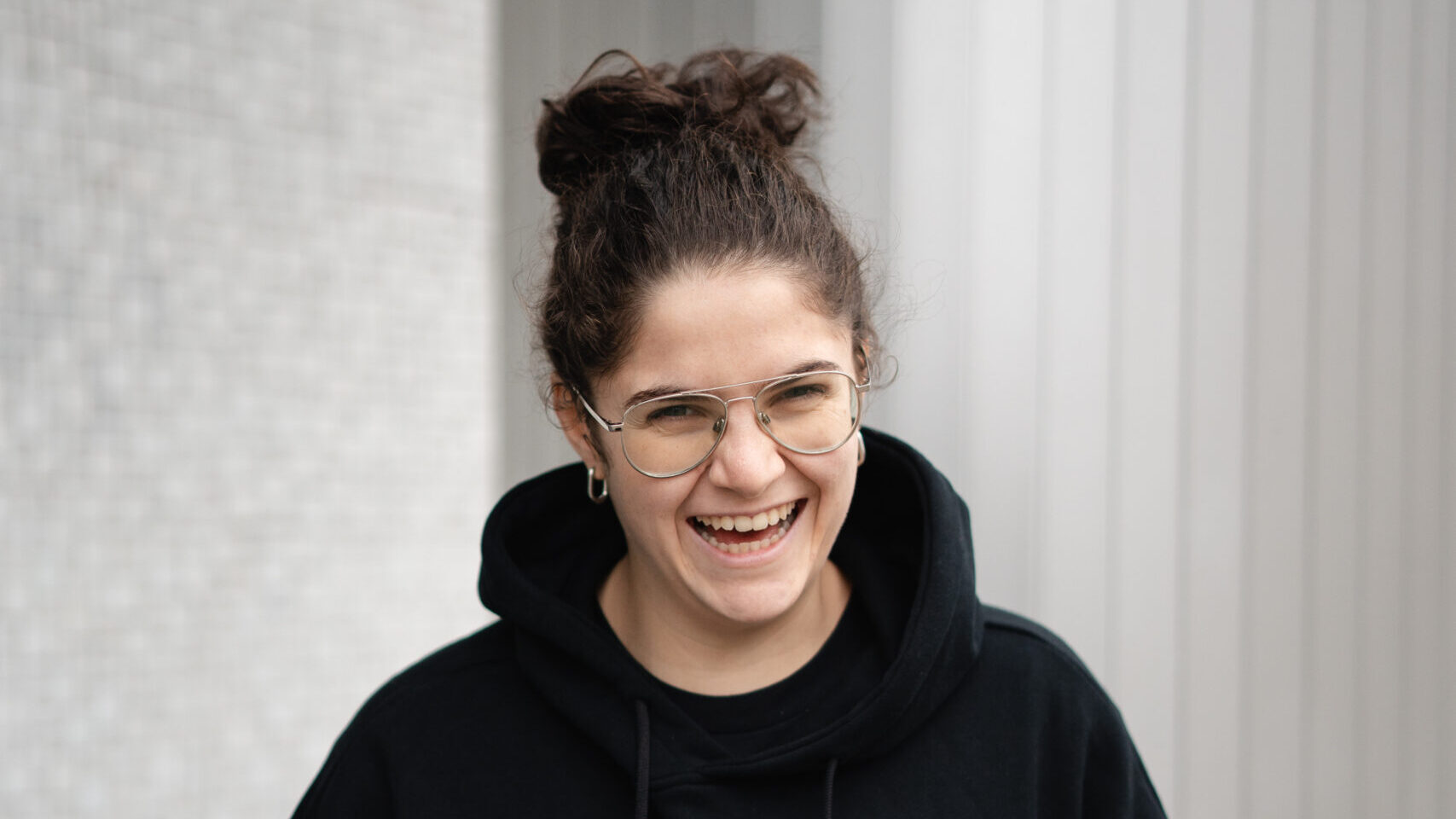
After a summer through Hive Festival, Tomorrowland and Verknipt Croatia, A.N.I. sits down to talk classical roots and the hard techno craft.
Subscribe to our Newsletter
-

 EDM Music3 weeks ago
New EDM Friday Sep 18: HALŌ, HUGEL, Sara Landry & More
-

 EDM Festival News3 weeks ago
Lost Lands Announces Full Set Times and Streaming Details
-

 EDM Festival News4 weeks ago
Tomorrowland Winter 2027 Dates and Ticket Sales Announced
-

 EDM Music2 weeks ago
New EDM Friday Sep 25: Charlotte de Witte, Armin van Buuren & More
-

 EDM Music4 weeks ago
New EDM Friday Sep 11: David Guetta, Armin van Buuren, Skrillex & More
-

 Amsterdam Dance Event News2 days ago
ADE Announces Full 30th Anniversary Program
-

 EDM news4 weeks ago
Tiësto Revives ‘In Concert’ for 2027 Stadium Show
-

 EDM Festival News4 weeks ago
Djakarta Warehouse Project Unveil First Lineup Phase For DWP 2026
