Connect with us

Editorial

How Professional Equipment Shapes EDM Production

Unknown's avatar

Published

on

Electronic dance music production comes with various challenges, from not knowing where to start to staying motivated to see your project through to the end.

It doesn’t matter if you’re a novice EDM producer or a long-time EDM lover looking to level up your current production setup. This guide can help you.

Discover the benefits of professional equipment, as well as the most important pieces to add to your collection, below.

The Power of MIDI Controllers

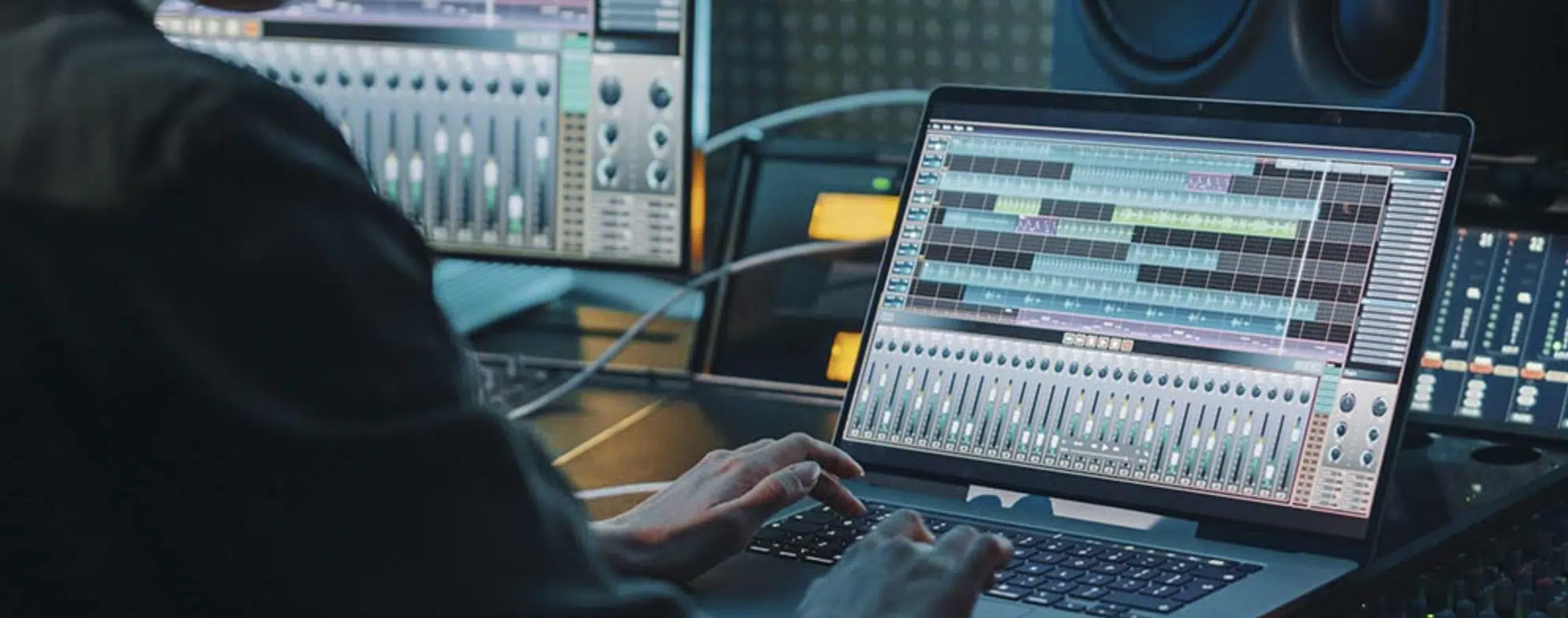
Music Instrument Digital Interface or MIDI controllers — also known as MIDI keyboards — are devices that send MIDI data to your computer or another piece of hardware. The keyboard does not produce any sound on its own. Instead, it triggers sounds from another device.

These keyboards come in various sizes, ranging from 25-88 keys, with non-weighted keys, hammer-action keys, and everything in between.

With a MIDI controller, you can “play” virtually any instrument. You can also record songs using a variety of instruments and then combine the sounds to make it seem as though an entire band is playing.

If you’ve ever wanted to compose your own music, a MIDI keyboard makes the entire process easier. You have access to a range of instruments at your fingertips (literally) and can layer melodies, chords, instruments, etc., to create an original piece.

How to Choose a MIDI Controller

If you’re getting ready to upgrade your current MIDI controller or purchase your first one, these tips will help you make the correct choice:

● Choose the right size and number of keys: If you’re a beginner, you can likely get by with a 25-key controller; if you’re more advanced, consider investing in a larger, 88-key version.

● Consider your music background: If you have previous piano experience, you might feel limited by a 25-key controller and would prefer a larger option. Conversely, if you’re new to music production or like using tools like faders, a smaller controller with more control knobs could serve you better.

● Check knob size and functionality: If you buy a controller with small or awkwardly shaped knobs, you’ll likely have a harder time using it correctly and efficiently. If

possible, test controllers in person so you can see which one feels the best before making a decision.

Digital Audio Workstations (DAWs)

A digital audio workstation (DAW) is a software application you can use to record, edit, and produce audio.

With the help of a DAW, you can record tracks, layer beats, incorporate instruments and vocals, apply sound effects, and mix the finished product all from one centralized location.

How to Choose a DAW

The good news is that most MIDI controllers work with any type of digital audio workstation. Before you pick one to add to your EDM production studio, be sure to keep these factors in mind:

● What kinds of instruments do you use the most? If you work primarily with virtual instruments, look for a DAW that caters to that style, such as Fruity Loops, rather than one favored by those who use the music they’ve played and recorded on a guitar, piano, etc. — Pro Tools is a popular option.

● What is your experience level? If you’re new to music production, you might do better with a more streamlined DAW like Garage Band, which is available for free on MAC devices. For more advanced producers, you may prefer something like Logic Pro X.

● What kind of hardware do you use? Many tools, such as Pro Tools and Fruity Loops, are compatible with Apple and Windows devices. Meanwhile, options like Garage Band are only available to Apple users.

Integrating DACs into Your Studio Setup

Digital-to-analog converters, also known as DACs, take digital data and transform it into analog audio signals. They then send the analog signal to an amplifier.

Typically, when you hear a digital recording, you’re hearing an analog signal converted by a DAC.

Here is a quick breakdown of how DACs work:

● An artist lays down a track during the recording process. The microphone picks up the sounds as analog audio signals.

● Recording engineers store the analog signals as digital signals, typically in a digital audio file.

● During playback, the digital-to-analog converter decodes the stored digital signals and converts them into analog audio.

● The DAC then sends the converted signal to an amplifier, which sends music through headphones or stereo speakers.

How to Choose the Best DAC

If you’re looking for the best digital-to-analog converters on the market, keep the following factors in mind:

● Compatibility: Make sure the DAC you’re considering supports a variety of file formats, especially those you intend to play most often.

● Inputs and Outputs: Check that the DAC has all the necessary inputs to connect your digital sources, as well as the outputs to amplifiers, speakers, etc.

● Resolution: Most modern DACs support high-resolution audio. However, it’s best to double-check that your DAC supports at least 24-bit/96kHz.

● Sound Signature: Is the sound signature neutral, warm, detailed, or smooth? Check reviews to see what users say about the converter’s sound.

Synthesizers and Synth VSTs

A synthesizer is an electronic musical instrument that produces a range of sounds using analog or digital circuits. Synth virtual studio technology, or VST, is a type of audio plug-in software that integrates with software synthesizers and digital audio workstations.

How to Choose a Synth VST

When shopping for a synth VST, it’s easy to get overwhelmed. Focus on these elements to ensure you make the best choice for your EDM production needs:

● Prioritize sound quality: Don’t get caught up in long lists of fancy features. Remember that sound is the most critical factor.

● Consider the interface: Look for a synth VST with an easy-to-navigate interface. After all, it doesn’t matter how good the sound is if the tool is too complicated for you to use, right?

● Check the average plugin cost: Some plugins for VSTs are expensive and can easily set you back hundreds of dollars. Consider the average price for the plugins for a tool you’re thinking about using to determine if the overall value is worthwhile.

Level Up Your EDM Production

From midi controls and DACs to DAWs and synthesizers, you can choose from a wide range of equipment to enhance your EDM production process. Use the guidelines and tips shared above to ensure you’re selecting the best pieces that will produce the best results.


Subscribe to our Newsletter

Founder, Owner & Manager of EDMHouseNetwork. Instant lover of all things electronic dance music from the moment I heard Fatboy Slim and The Prodigy. After pursuing a career as a DJ, creating EDM content quickly became a love of mine and it has been my mission to keep delivering high quality content ever since.

Editorial

20 Must-See Tomorrowland 2026 Sets

Unknown's avatar

Published

on

A packed crowd watching the Tomorrowland Mainstage as blue and green lasers shine across the festival grounds during a nighttime set.

As Tomorrowland approaches its 2026 edition, the Belgian festival giant returns with another stacked line-up. Taking place across two weekends, 17-19 and 24-26 July, the festival promises another edition for the books.

400,000 festivalgoers from all over the world will reunite on the festival grounds, experiencing the new ‘Consciencia’ theme, as well as sets from every corner of the electronic music spectrum.

With so many exciting artists taking to the stages at Tomorrowland, here are EDM House Network’s 20 must-see sets throughout the festival’s two weekends.

Calvin Harris’ Tomorrowland Debut

When: Sunday, 19 July, Weekend 1 – 22:50 – 23:50 / Saturday, 25 July, Weekend 2 – 23:45 – 00:45

Where: Mainstage

The Scottish superstar finally makes his Tomorrowland debut, bringing together some of the greatest dance hits to close out the Mainstage on Sunday, weekend 1 and Saturday, weekend 2. What was initially a pleasant surprise to see on the line-up poster is now expected to pack the Mainstage’s dancefloor for a historic set.

4444 OF A KIND

When: Friday, 17 July, Weekend 1 – 22:30 – 23:30

Where: Freedom By Bud

Forming a new hardstyle supergroup, Sub Zero Project and D-Block & S-Te-Fan are set to deliver one of the most anticipated hard dance moments of the festival. Having recently launched their new project, 4444 OF A KIND, with the release of their first single on Tomorrowland Music, the two iconic hardstyle duos are expected to bring fresh material to the Freedom by Bud stage.

ILLENIUM’s Debut

When: Friday, 24 July, Weekend 2 – 00:00 – 00:55

Where: The Great Library

ILLENIUM will make his Tomorrowland debut this year, taking over The Great Library stage as one of the festival’s most exciting first-timers. The American artist will deliver his legendary blend of heavy drops and emotional moments, putting him on the radar for The Great Library’s best sets.

Kettama B2B Michael Bibi

When: Friday, 17 July, Weekend 1 – 21:00 – 23:00

Where: Crystal Garden

Kettama and Michael Bibi are joining forces, bringing together two unmatched energies from the house music scene. From Kettama’s fast-paced rhythms to Bibi’s iconic presence and sonic identity, this b2b stands out as one of weekend 1’s most unique sets.

Martin Garrix Closing Mainstage

When: Friday, 17 July, Weekend 1 – 23:50 – 00:50 / Sunday, 26 July, Weekend 2 – 22:50 – 23:50

Where: Mainstage

Returning for what has become a tradition, Martin Garrix will close the Tomorrowland mainstage on Friday of weekend 1, and Sunday of weekend 2. After all, Tomorrowland would not feel complete without a set from one of the world’s most loved DJs.

Amelie Lens presents Aura

When: Sunday, 26 July, Weekend 2 – 22:00 – 23:30

Where: Freedom By Bud

The Belgian techno queen will turn the Freedom by Bud stage into a modern underground rave, blending her unstoppable techno energy with the immersive visuals of her ‘Aura’ show concept. For those who enjoy hard beats and visual experiences, Amelie Lens’ set is not one to miss.

Kaskade

When: Friday, 24 July, Weekend 2 – 22:00 – 23:00

Where: The Great Library

Returning for a second consecutive year, Kaskade will once again bring his unmistakable sound to the Tomorrowland grounds. The legend who helped define the 2010s with progressive house classics like ‘Atmosphere’ and ‘Eyes’, continues to remain an important name on festival line-ups thanks to his heartfelt sets.

Ben Hemsley

When: Saturday, 18 July, Weekend 1 – 18:30 – 20:00

Where: Crystal Garden

An essential set for trance heads, Ben Hemsley will take over the decks at Crystal Garden for one hour and 30 minutes of euphoria and old-school rave vibes. The Scottish DJ is expected to deliver one of the weekend’s most uplifting sets.

Malugi in the Forest

When: Sunday, 26 July, Weekend 2 – 22:00 – 23:50

Where: CORE

Following an electrifying performance at the Atmosphere stage in 2025, the German producer returns to Tomorrowland with his fast rhythms. Blending trance, eurodance and hard house, Malugi’s set is a highlight of the CORE stage line-up during weekend 2.

Steve Angello’s 3-hour set

When: Saturday, 18 July, Weekend 1 – 21:30 – 00:30

Where: Crystal Garden

Three hours of Swedish masterclass await at the Crystal Garden stage. Steve Angello is preparing for one of weekend one’s most anticipated sets, building on the hype that he and his Swedish House Mafia colleagues generated last year, playing the same slot. If there is one extra-special place to close out Saturday night outside the mainstage, Crystal Garden with Steve Angello is the one.

MPH’S Debut at the new Celestia Stage

When: Friday, 17 July, Weekend 1 – 18:30 – 20:00

Where: Celestia By Kucoin

MPH, one of the fastest-rising names in the industry, is set to make his Tomorrowland debut at the all-new Celestia by Kucoin stage. Representing the United Kingdom, MPH will bring his signature UK garage sound that has taken the world by storm.

Hannah Laing

When: Sunday, 19 July, Weekend 1 – 14:30 – 15:30 / Friday, 24 July, Weekend 2 – 18:30 – 19:30

Where: Weekend 1 – Mainstage / Weekend 2 – Atmosphere

Another mainstage debut to watch, Hannah Laing will bring her hard-hitting sound back to Tomorrowland for another year. While she will take over the mainstage during weekend 1, the Scottish superstar will also return to the Atmosphere stage during weekend 2, following her performance there last year.

Alleycvt’s First Tomorrowland

When: Friday, 24 July, Weekend 2 – 18:00 – 19:00

Where: The Rose Garden

Marking her first ever set at Tomorrowland, ALLEYCVT is part of the Bassrush takeover at The Rose Garden stage. The rising dubstep DJ will bring her signature sound to the festival, playing alongside other major names such as Borgore and Riot Ten.

Return of The Chainsmokers

When: Friday, 17 July, Weekend 1 – 21:45 – 22:45

Where: Mainstage

The Chainsmokers are back at Tomorrowland following a three-year absence. While harder drops will still have their place in the set, the American duo are expected to cause some of the biggest singalong moments at De Schorre, with tracks such as ‘Closer’ and ‘Don’t Let Me Down’ remaining highlights of their chart-topping catalogue.

Chase & Status Tomorrowland Debut

When: Sunday, 19 July, Weekend 1 – 20:00 – 21:00 / Sunday, 26 July, Weekend 2 – 17:35 – 18:35

Where: Weekend 1 – Freedom By Bud / Weekend 2 – Mainstage

UK drum & bass heavyweights Chase & Status make their Tomorrowland debut during the ‘Consciencia’ edition too. Playing two sets across the two weekends, the British duo will perform on the Freedom by Bud stage during weekend one, before taking over the mainstage on weekend two. Expect some of the filthiest drum & bass drops of the festival, as Chase & Status bring the UK to the world.

Dimitri Vangelis & Wyman

When: Saturday, 18 July, Weekend 1 – 18:00 – 19:00

Where: Celestia By Kucoin

Making their long-awaited return to Tomorrowland are Dimitri Vangelis & Wyman, the Swedish duo behind some of progressive house’s greatest anthems. Known for their timeless melodies, the pair have new material up their sleeves, following recent production work alongside Anyma and a highly anticipated ID with Kevin de Vries.

Kevin de Vries B2B Meduza

When: Sunday, 26 July, Weekend 2 – 21:30 – 00:00

Where: Crystal Garden

When it comes to special B2B sets, this one cannot be omitted. Kevin de Vries joins forces with Meduza for 2 hours and 30 minutes of bliss at the Crystal Garden stage. The two will bring melodic techno and house together, standing out as one of the most intriguing pairings of the weekend.

HALŌ Debut

When: Saturday, 18 July, Weekend 1 – 18:10 – 19:10 / Friday, 24 July, Weekend 2 – 21:00 – 22:00

Where: Weekend 1 – Mainstage / Weekend 2 – The Great Library

When it comes to progressive house, few acts capture melodic Heaven quite like HALŌ. Composed of three legendary names, Third Party, Matisse & Sadko and DubVision, the supergroup has quickly become one of the year’s biggest surprises. Now, it is time for them to bring the project to the Tomorrowland mainstage, with new music and progressive house classics like no other.

Subtronics

When: Sunday, 19 July, Weekend 1 – 23:00 – 00:00

Where: Planaxis Stage

Subtronics, one of the icons of the bass music scene will step into Tomorrowland for the first time, bringing absolute madness to the festival’s Planaxis stage. From the United States to Belgium, Subtronics will deliver one of the sounds that define dubstep culture around the world.

Morgan Seatree at Celestia By Kucoin

When: Sunday, 26 July, Weekend 1 – 19:30 – 21:00

Where: Celestia By Kucoin

One of the UK house scene’s fastest-rising names is making his Tomorrowland debut in 2026. Morgan Seatree will bring his uplifting and infectious energy to the Celestia by Kucoin stage, ready to deliver a fast-paced set that proves why he is one of Britain’s future house music stars.

With so many exciting acts ready to hit the stages at Tomorrowland, the 2026 edition shapes up to be a memorable one, like usual. Picking artists from such a busy line-up is never easy, but this list highlights 20 essential sets across the festival’s two weekends.

For more information and the full line-up, follow this link.

Subscribe to our Newsletter

Continue Reading

Editorial

Chris Candela Becomes First Venezuelan Artist to Release on mau5trap

Unknown's avatar

Published

on

Chris Candela becomes the first Venezuelan artist to release on mau5trap with debut single ‘Move Your Feet’ alongside AOSM.

Chris Candela and AOSM debut on mau5trap with the single ‘Move Your Feet’, making Candela the first Venezuelan artist to release music on deadmau5‘s iconic label. Marking a significant milestone and the beginning of a new chapter in his career, the record introduces a darker, more club-oriented sound from Chris Candela.

Discussing the track’s sonic identity, the Venezuelan artist says: “When AOSM first sent me the initial idea for ‘Move Your Feet,’ I immediately felt the track had something special. I’ve always been inspired by artists like Justice, Wolfgang Gartner, and even Knife Party, so bringing those influences together felt completely natural.”

Drawing on those influences, the two artists created a record that fits naturally within mau5trap’s darker, experimental sound. Blending gritty electro-house energy with cinematic sound design, “Move Your Feet” establishes a strong narrative identity. Built around distorted synths, driving grooves and atmospheric textures, the single delivers a modern club sound filled with raw energy.

Chris Candela not only produced the instrumental with AOSM, but also wrote and performed the track’s vocals.

“One of my favourite parts of the process was writing and recording my own vocals. The lyrics explore the overwhelming feeling that can sometimes come with being in a crowded club, until you realize the only thing that really matters is letting go and moving your feet,” says the artist.

Who Is Chris Candela?

Currently based in Mallorca, Spain, Chris Candela is an Italo-Venezuelan artist with more than 15 years of experience in the electronic music industry. Beyond the studio, he has built a substantial Spanish-speaking EDM community through his CDCVLOGS platform, before launching the Chris Candela alias project in 2025.

Throughout his career, Candela has received support from artists including Don Diablo and Fedde Le Grand, but also reached No. 44 on Beatport’s Bass House Top 100 with “Lost To The Rhythm”, his collaboration with RE-KA. Now, with his mau5trap debut, Candela reaches another major career milestone.

Reflecting on the significance of the release, he says: “Releasing on mau5trap has been a dream of mine for years. deadmau5 has been one of the artists who has influenced me the most, both creatively and personally. To become the first Venezuelan artist to sign with the label, alongside my good friend AOSM, who becomes only the second Mexican artist to do so, makes this milestone even more meaningful.”

With “Move Your Feet”, Candela enters a new chapter in his career, defined by a darker and more club-focused sound. “Move Your Feet” is out now on all major streaming platforms. Listen to Chris Candela and AOSM’s latest track below.

Follow Chris Candela:

Spotify / Apple Music / Instagram / YouTube / X (Twitter)TikTok / SoundCloud

Subscribe to our Newsletter

Continue Reading

Editorial

Skrillex Says AI Songs Still Miss Human Connection

Unknown's avatar

Published

on

Skrillex Says AI Songs Can Go Viral, But His Comments Point To A Bigger Issue Around Human Connection In Dance Music.

The debate around AI music has often focused on fake vocals, copied artist styles, copyright issues, and whether machine made songs should be labeled clearly, but Skrillex has brought the subject back to something more human. In his first formal interview in over a decade, published in 032c Issue #49 Summer 2026, Skrillex spoke with Ecco2K about creativity, rave culture, and the limits of AI in music, including the idea that AI songs can go viral while still missing the feeling of being seen by another human being. That distinction gives the topic more depth because he is not only questioning whether AI can generate music that performs well online. He is asking what happens to dance music when a song can reach listeners quickly, but the person, history, and lived experience behind it become harder to find.


View this post on Instagram


A post shared by Joerg Koch / 032c (@032c)

Why Skrillex’s View On AI Is Not About Rejecting Technology

Before Skrillex became known as a producer and DJ, he was the vocalist of From First To Last, a post hardcore band that already placed him in a scene where live emotion, distortion, and internet era fandom were closely connected. His move into solo production did not erase that background; it carried some of that intensity into songs like Scary Monsters And Nice Sprites and Bangarang, where chopped vocals, aggressive bass design, sharp edits, and software based production became part of the identity of the record. The same artist who helped make those sounds reach a wider audience is now saying that AI songs can go viral, which is why the point cannot be reduced to fear of computers in music.

His own career shows the opposite: technology can still carry feeling when there is a real person making the decisions behind it. In the 032c interview, Skrillex discussed making Mora in GarageBand before moving into Pro Tools and Ableton, along with ideas like Bangarang beginning from rough recordings on Snowball mics or laptop mics. Those details show that electronic music does not lose its human side just because it starts from rough digital material, software, or imperfect recordings. The difference is that an artist is choosing what to keep, cut, distort, rebuild, or leave imperfect, while a generated song can imitate the texture of those choices without carrying the bands, scenes, failed ideas, studio accidents, and years of taste that came before the final record.

Why Viral AI Songs Do Not Prove Listeners Are Connecting

When Skrillex talks about AI songs going viral, the point is easy to connect to cases the music industry has already dealt with. Heart On My Sleeve, the fake Drake and The Weeknd song made with AI vocals, did not become a talking point because listeners had discovered a new artist with a real story. It went viral because people were trying to work out how close the vocals sounded, whether the artists had approved it, and what it meant if a fake collaboration could travel that quickly. That kind of attention can make a song look successful on the surface, but the reaction is tied to the stunt, the confusion, and the technology behind it, not to a real connection between artist and listener.

Dance music has its own version of that problem because records often gain meaning before they are officially released. Rumble by Skrillex, Fred again.., and Flowdan was already circulating through DJ set recordings and crowd clips before its official release, while Baby again.. by Fred again.., Skrillex, and Four Tet gained more attention after being played live, including during their back to back set at Madison Square Garden. That path is different from an AI song going viral because it sounds close to an existing artist or copies a familiar vocal style. In dance music, the memory around a song is often tied to the DJ who tested it, the crowd that reacted to it, the festival or club clip that kept circulating, and the months of people asking for the release. AI can copy the sound of a viral record, but it cannot recreate the human trail that makes people care about where the song came from.

What This Means For AI Music Going Forward

The next stage of AI music will probably come down to what artists, labels, and platforms are willing to make clear before a song reaches listeners. John Summit’s call for human made music labels points to one possible response, especially as fake vocals and copied artist styles become harder to spot at first listen. David Guetta’s experiment with an AI generated vocal in the style of Eminem showed how quickly a technical demo can raise bigger questions about likeness and consent, while deadmau5 has already warned about deepfakes and false endorsement. Once a voice, image, or artist identity can be copied well enough to confuse people, the problem is no longer only about whether the song sounds convincing; it is about whether listeners know who actually made what they are hearing.

Skrillex’s point is closer to what listeners may start caring about as AI music becomes more common. AI may keep producing songs that go viral, especially when the hook feels familiar, the voice sounds close to someone famous, or the curiosity around the technology is strong enough to push the clip online. But dance music has always depended on more than a first reaction. People remember the DJ who played a song before release, the set where they first heard it, the crowd clip that made them search for the ID, and the artist history that made the record feel connected to something real. AI can copy parts of that format, but without a person behind the choices, the trust becomes weaker, and that may be the difference between a song people click on once and a record they keep returning to.

As AI music becomes easier to make and harder to identify, the future of dance music may depend less on whether listeners reject the technology and more on whether they still trust the people attached to the songs. Skrillex’s comments point to a problem that goes beyond one viral record or one copied vocal, because the deeper risk is a culture where the source of a song becomes unclear and the relationship between artist and audience starts to feel less certain. Dance music has always moved through clubs, festivals, IDs, edits, and shared recordings, but those moments only last when people believe there is a real person behind the choices, the risk, and the history of the record. AI may continue to create songs that travel quickly online, but the harder question for artists, labels, platforms, and listeners is whether speed can ever replace trust, and whether a song can still mean something long after the first reaction if no one can feel the human life behind it.

Subscribe to our Newsletter

Continue Reading

Trending