
EDM news
Spotify Removes 75 Million ‘Spam’ AI Tracks


Spotify just dropped its biggest anti-AI move yet, removing 75 million spam tracks from its platform and rolling out strict new rules.
Spotify just quietly cleaned house — like, 75 million tracks worth of “house.” And not the good kind. We’re talking AI spam: 30-second clips uploaded en masse to trigger royalties, copy-paste “lo-fi study beats” with SEO titles, and voice clones that sound like a bad Drake cosplay.
Instead of letting it slide, Spotify rolled out its new AI playbook. Think less innovation announcement, more damage control.
The Playbook
Impersonation crackdown
No more “AI Drake” unless Drake actually signs off. Spotify now requires permission before someone can upload a vocal impersonation of a real artist. They’re also tightening protections against “profile mismatches” — where someone sneakily uploads tracks under another artist’s page.
Spam filter = algorithmic bouncer
This is the big one. Over the past 12 months, Spotify says it’s already removed 75 million spammy tracks. That includes duplicates, micro-songs over the royalty threshold, metadata hacks, bulk uploads — basically anything trying to game the system. They intend a “gradual and conservative” rollout so legit artists aren’t unfairly penalized.
AI transparency
Spotify is working with DDEX (the music metadata standard body) to let creators disclose how AI was used — whether for vocals, instrumentation, production, or post-processing. The company insists that merely disclosing AI usage won’t tank your playlist chances. It’s pitched more as trust-building than punishment.
Also: Spotify affirms it does not create or own music, which pushes back on rumors that they were secretly generating tracks to sidestep royalties.
Why It Matters (and What Could Go Wrong)
-
Less spam = clearer discovery for real artists.
-
More transparency = stronger trust between creators and listeners.
-
Cleaner feeds = fewer junk tracks drowning your radar.
But yes, there are risks:
-
False positives — legit tracks caught in the filter.
-
Slow uptake — metadata standard adoption is rarely fast.
-
Spam gets clever — AI tools will try to evolve around defenses.
-
Ambiguity: who defines what “spam” or “legitimate AI use” really is?
The EDM Angle
If you’re using AI as a tool — layering synths, crafting atmospheres, blending textures — you’re probably fine. If you’re mass-uploading 200 tracks titled “Deep Vibes 001” to farm royalties? You’re getting ghosted (literally).
Be original, be transparent, don’t try to beat the system — the system’s watching now.
Final Thoughts
Spotify calling out AI spam is overdue, but necessary. Removing 75 million tracks is bold; claiming AI spam engagement is minimal might be optimistic.
In a world where generative tools only get sharper, the fences have to rise. Spotify’s job is to sweep out the garbage without tossing out the artists. If they pull that off, maybe we finally get a catalog that doesn’t feel like a clearance bin.
Subscribe to our Newsletter





Bob Sinclar’s ‘Love Generation’ celebrates 21 years since its release as one of the most successful songs of his career
Twenty-one years after Bob Sinclar released ‘Love Generation’, the track is still one of the songs most associated with his breakthrough period in the mid-2000s. Released in 2005, it paired his house production with a warm, instantly recognisable vocal and quickly found an audience far beyond clubs. What followed took the song across international charts, major sporting events and into one of the most successful periods of Bob Sinclar’s career.
The Story Behind ‘Love Generation’
Before ‘Love Generation’ became an international hit, Bob Sinclar had already developed much of the instrumental when he connected with Gary Pine, who had previously performed with The Wailers. The two worked together in New York, where Bob Sinclar asked for lyrics with a positive message. Gary Pine then wrote and recorded the vocal, which sat alongside the track’s acoustic guitar, whistle and house production.
From there, ‘Love Generation’ found success across several markets, reaching No. 1 in countries including Germany, Austria, Australia and Belgium. In the UK, it peaked at No. 12 and spent 27 weeks inside the Top 100, while also reaching No. 2 on the UK Dance Singles Chart. That international response gave the song a much larger profile heading into 2006, when it became tied to another major moment.
‘Love Generation’ Reached An Even Wider Audience
The track gained further attention through its connection to the 2006 FIFA World Cup in Germany, where a version featuring tournament mascot Goleo VI helped bring it into a much broader mainstream setting. By then, ‘Love Generation’ had already become one of the key songs associated with Bob Sinclar’s mid-2000s rise, and the World Cup connection introduced it to even more listeners outside the club and dance music audience.
That same period also led into Western Dream, the 2006 album that included ‘Love Generation’ alongside ‘World, Hold On (Children of the Sky)’ and ‘Rock This Party (Everybody Dance Now)’. Together, those releases gave Bob Sinclar one of the strongest commercial periods of his career and helped establish a run of songs that remained closely associated with his name long after their original release.
Twenty-one years later, ‘Love Generation’ still reflects the period when Bob Sinclar was reaching audiences far beyond house music. From Gary Pine’s vocal and its international chart success to the World Cup connection and the Western Dream album, the track became one of the clearest examples of how wide his music was travelling during the mid-2000s.
Subscribe to our Newsletter
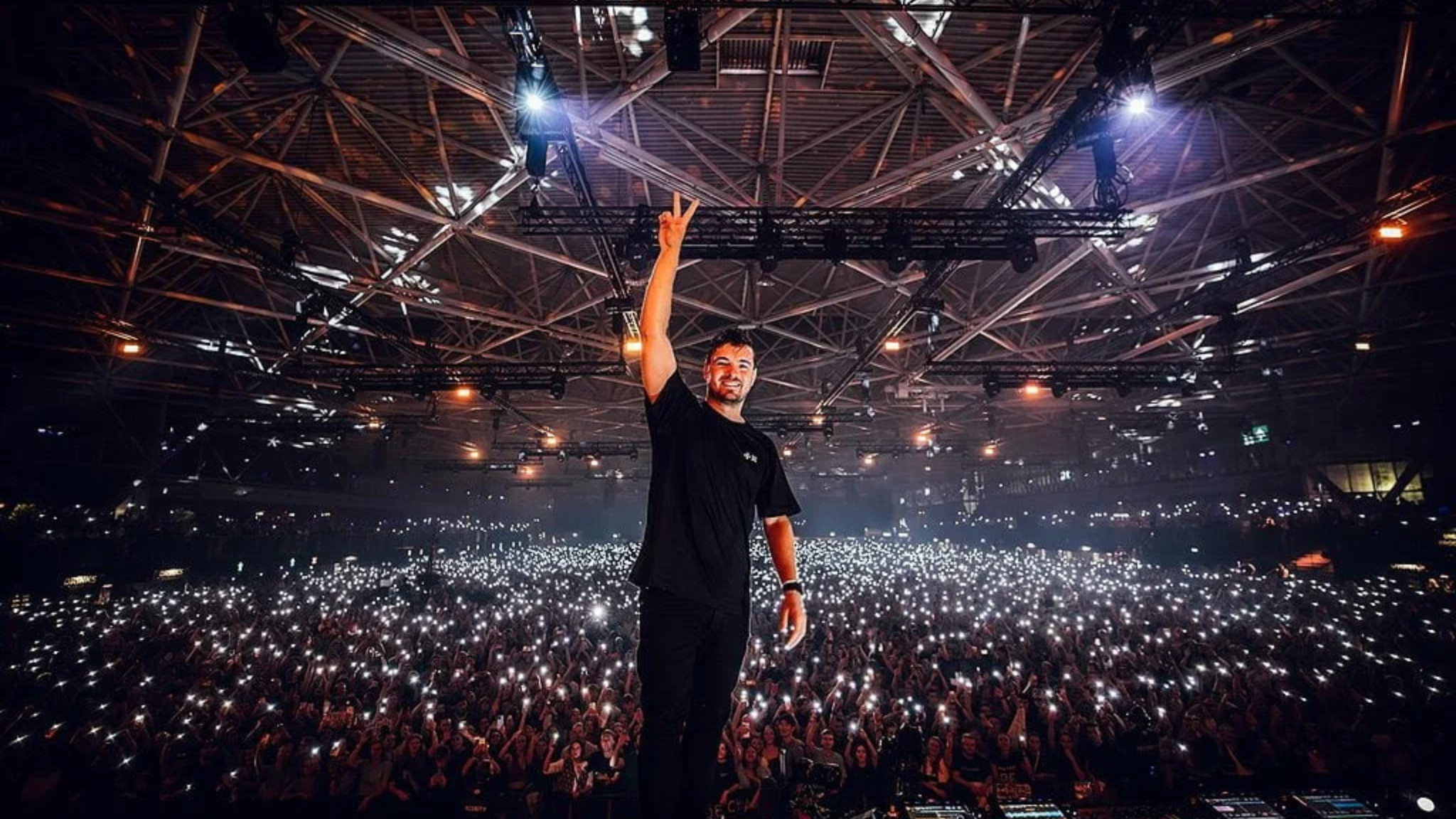
Title: Martin Garrix And MOTi Mark 12 Years Of ‘Virus (How About Now)’
Martin Garrix and MOTi mark 12 years of ‘Virus (How About Now)’, one of the biggest big room collaborations from their 2014 period
It’s been 12 years since Martin Garrix and MOTi teamed up on ‘Virus (How About Now)’, a collaboration that quickly became a familiar part of the big room sound dominating electronic dance music in 2014. The track had already been appearing in major DJ sets before its official release, with speculation growing around who was behind the then-unidentified record. Once Spinnin’ Records confirmed Martin Garrix and MOTi, ‘Virus (How About Now)’ went on to receive support from names including Hardwell, Avicii, Tiësto, David Guetta, Afrojack, W&W and Nicky Romero.
View this post on Instagram
How ‘Virus (How About Now)’ Came Together
The collaboration started after MOTi shared an early version of ‘Virus’ with Martin Garrix, several years after the two first became friends. MOTi later recalled that Martin Garrix liked the melody of the drop and added the breakdown, with the pair finishing the track together. The final version also featured vocals from Jenny Wahlström, who received a songwriting credit alongside Martin Garrix, MOTi, Niclas Lundin and Leon Paul Palmen.
At the time, both artists were closely connected to the big room and electro house sound that had become central to major festivals. Martin Garrix was coming off the success of records such as ‘Animals’ and ‘Wizard’, while MOTi had already released music through Musical Freedom, including ‘Zeus’ with Kenneth G and ‘This Is Dirty’ with DVBBS. Their styles met naturally on ‘Virus (How About Now)’, which went on to reach No. 1 on the Beatport Top 100.
‘Virus’ Became A Major 2014 Festival Record
By the time the track became officially available, support from some of electronic music’s biggest DJs had already helped introduce it to festival audiences. Spinnin’ Records published the official music video on October 13, 2014, while the commercial single later appeared across platforms that month. The track also charted internationally, including in the Netherlands, Belgium, France and Germany.
The accompanying video followed the song’s title quite literally, with a virus passing between different people while a computer game runs alongside the story. Released during the same period as the track, it went on to collect more than 22 million views on the official Spinnin’ Records upload.
More than a decade later, ‘Virus (How About Now)’ remains closely connected to the period when big room was dominating festival stages around the world. For Martin Garrix and MOTi, the collaboration captured a moment when both producers were releasing music made for those larger stages, and its continued presence in throwback sets has kept the track familiar well beyond 2014.
Subscribe to our Newsletter
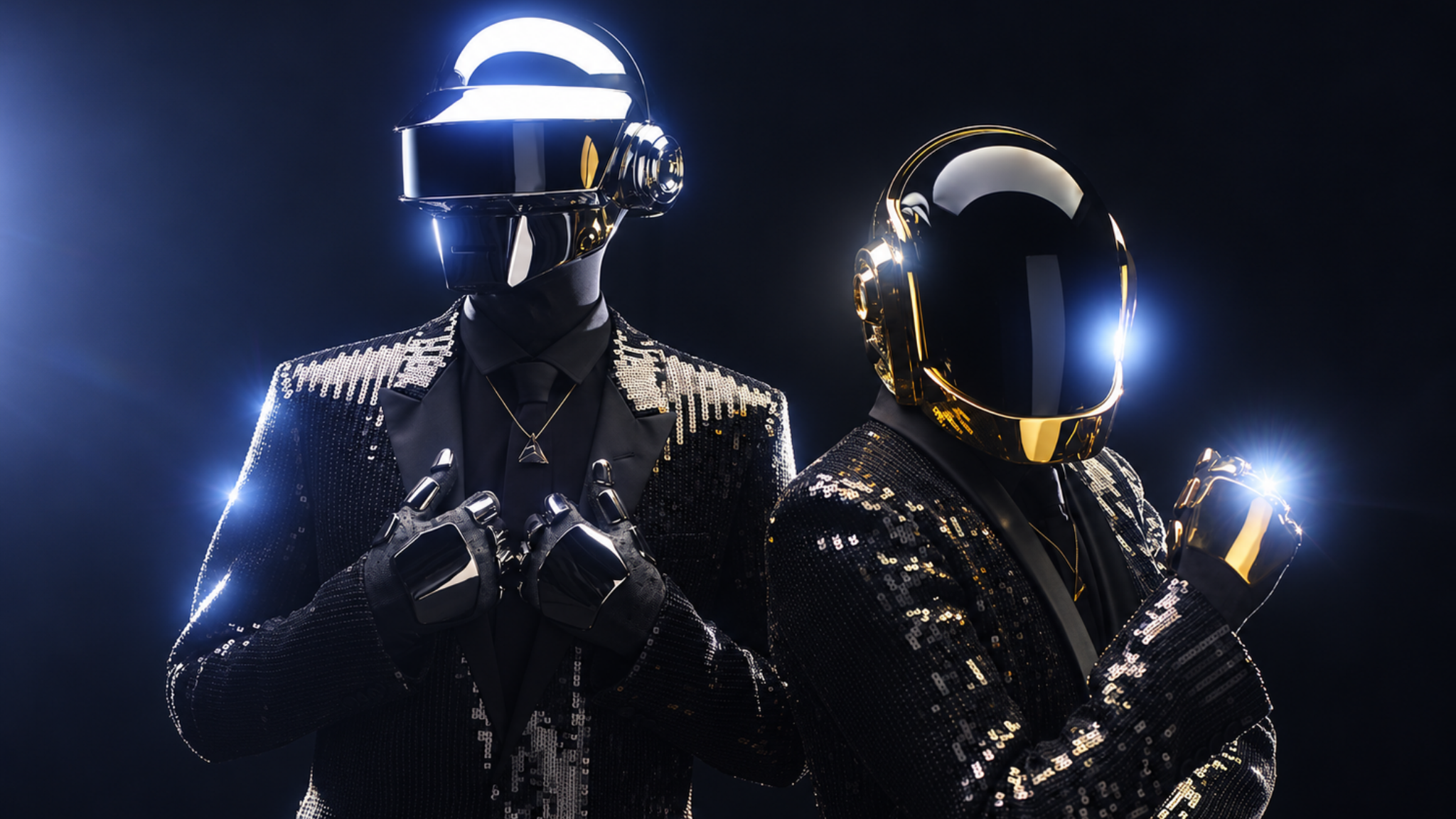
Daft Punk’s ‘Harder, Better, Faster, Stronger’ celebrates 25 years since its release as one of the most recognisable tracks from their album ‘Discovery’
Twenty-five years after Daft Punk released ‘Harder, Better, Faster, Stronger’, the track remains one of the songs most closely associated with Discovery. Its chopped funk sample, robotic vocal and repetitive structure gave the album one of its most distinctive moments, while the song itself would go on to have a much longer life beyond 2001. From Alive 2007 to Kanye West’s use of the track on ‘Stronger’, ‘Harder, Better, Faster, Stronger’ became part of several major moments that kept bringing new listeners back to Daft Punk.
View this post on Instagram
The Story Behind ‘Harder, Better, Faster, Stronger’
Much of the track’s character comes from Edwin Birdsong’s ‘Cola Bottle Baby’, a 1979 funk record that Daft Punk sampled while working on Discovery. Thomas Bangalter and Guy-Manuel de Homem-Christo reshaped that material around the song’s repeated rhythm and processed vocal, turning a short sequence of words into one of the album’s most recognisable hooks.
That approach also reflected what Daft Punk were doing across Discovery, where samples, live instrumentation and electronic production regularly met in unexpected ways. Released in 2001, the album included ‘One More Time’, ‘Digital Love’, ‘Something About Us’ and ‘Face to Face’, with ‘Harder, Better, Faster, Stronger’ becoming one of the tracks that listeners continued returning to long after the album’s original release.
From ‘Alive 2007’ To Kanye West’s ‘Stronger’
The song gained another life through Daft Punk’s live shows, particularly during the Alive 2007 tour. Its live version later appeared on the Alive 2007 album and won Best Dance Recording at the 2009 Grammy Awards, giving the track another major achievement eight years after its original release.
By then, ‘Harder, Better, Faster, Stronger’ had also become closely connected to Kanye West’s ‘Stronger’. Released in 2007, the song sampled Daft Punk’s vocal and helped introduce that part of the original track to another generation of listeners. Daft Punk later joined Kanye West on stage at the 2008 Grammy Awards, marking one of the few televised performances of their career.
The track’s history now spans far more than its original place on Discovery. From the Edwin Birdsong sample and the Interstella 5555 visual to Alive 2007, Kanye West and a Grammy win, ‘Harder, Better, Faster, Stronger’ has continued to appear in different parts of popular and electronic music over the past 25 years.
Subscribe to our Newsletter
-
 EDM Music4 days ago
New EDM Friday Oct 9: David Guetta, Armin van Buuren & More
-
 Amsterdam Dance Event News6 days ago
ADE Announces Full 30th Anniversary Program
-

 EDM Music4 weeks ago
New EDM Friday Sep 18: HALŌ, HUGEL, Sara Landry & More
-

 EDM Festival News4 weeks ago
Lost Lands Announces Full Set Times and Streaming Details
-
 EDM Festival News4 weeks ago
Tomorrowland Winter 2027 Dates and Ticket Sales Announced
-
 EDM Music3 weeks ago
New EDM Friday Sep 25: Charlotte de Witte, Armin van Buuren & More
-

 EDM Music2 weeks ago
New EDM Friday Oct 2: Martin Garrix, Dom Dolla & More
-
 Amsterdam Music Festival News3 weeks ago
EDM Festivals October 2026: Festivals We Can’t Miss
