Connect with us

EDM Artist News

RÜFÜS DU SOL Makes History With Highest-Selling Electronic Tour Of All Time

Unknown's avatar

Published

on

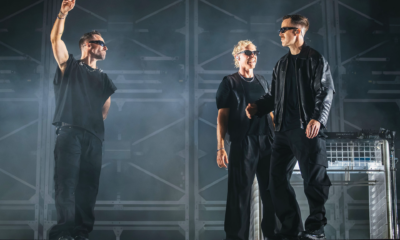
Grammy-winning trio RÜFÜS DU SOL performing a live electronic set on a massive stage bathed in white and red lights and fog, during their record-setting Inhale / Exhale World Tour.

Following a trio of sold-out hometown headline shows in Sydney, Grammy-winning live electronic trio RÜFÜS DU SOL have been honored with a commemorative plaque, presented by Live Nation and Untitled, recognizing their Inhale / Exhale World Tour as the highest-selling electronic tour of all time. The milestone caps a record-breaking 2025, during which the trio sold 750,000 headline tickets and performed to 1.5 million fans worldwide across their festival and headlining shows.

The Inhale / Exhale era has been a critical and commercial success, earning RÜFÜS DU SOL a 2026 GRAMMY nomination for Best Dance/Electronic Album and four nominations at the 2025 ARIA Awards. The album debuted on the Billboard 200 and spawned the band’s first #1 on U.S. dance radio with “Music is Better” highlighting their crossover appeal and position as pioneers in the live electronic music landscape.

Spanning nearly 50 headline shows across four continents, the Inhale / Exhale World Tour has solidified their position amongst the world’s most iconic live acts, performing in venues traditionally reserved for legacy artists, headlining major festivals around the globe like Lollapalooza, and cementing their status as the only electronic act performing at this scale globally. The tour featured historic moments, including the band becoming the first electronic act to headline Los Angeles’ Rose Bowl and now hold the record for the highest selling Australian act the Qudos Bank Arena in their hometown of a Sydney, while setting new benchmarks for electronic music and the live ecosystem, reaffirming their broader influence on contemporary musical culture worldwide.

The recent plaque presentation celebrates RÜFÜS DU SOL’s unmatched live performance achievements in 2025 and marks the start of their record-setting journey into 2026 when they head back on tour for their biggest headline tours in South America and Europe, where demand continues with new shows added this week in Dublin, Dusseldorf and Bologna. These performances join a staggering run of dates at some of Europe’s most celebrated arenas including London’s The O2, Paris’ Adidas Arena, and Barcelona’s Palau Sant Jordi. Go to rufusdusol.com/live for full tour dates and tickets to select shows while supplies last.


View this post on Instagram


A post shared by RÜFÜS DU SOL (@rufusdusol)

RÜFÜS DU SOL Inhale / Exhale Word Tour Dates:
January 4 – Zamna – Tulum, MX (^)
February 19 – Movistar Arena – Buenos Aires, AR
February 22 – Movistar Arena – Santiago, CL
February 25 – Pedreira Paulo Leminsky – Curitiba, BR
February 27 – Mercado Livre Arena Pacaembu – São Paulo, BR
March 4 – Estadio Cincuentenario – Medellín, CO
March 6 – Coliseo MedPlus – Bogotá, CO
April 22 – PSD Bank Dome – Dusseldorf, DE (*)
April 24 – Palau Sant Jordi – Barcelona, ES (*)
April 26 – Movistar Arena – Madrid, ES (*)
April 28 – Unipol Forum – Bologna, IT (*)
April 29 – AG Hallenstadion – Zürich, CH (*)
May 1 – Velodrom – Berlin, DE (*)
May 3 – ING Arena – Brussels, BE (*)
May 6 – Ziggo Dome – Amsterdam, NL (*)
May 9 – Adidas Arena – Paris, FR (*)
May 13 – The O2 – London, UK (*)
May 15 – 3Arena – Dublin, IE (**)

Founder, Owner & Manager of EDMHouseNetwork. Instant lover of all things electronic dance music from the moment I heard Fatboy Slim and The Prodigy. After pursuing a career as a DJ, creating EDM content quickly became a love of mine and it has been my mission to keep delivering high quality content ever since.

David Guetta News

The AI Music Debate: John Summit, Diplo and More Weigh In

Unknown's avatar

Published

on

John Summit and Diplo pictured over a blurred EDM festival crowd background for an article about the AI Music Debate, AI tools, human-made music, and creative credit.

The AI Music Debate: John Summit, Diplo and More Weigh In as EDM artists discuss AI tools, human-made music, and creative credit

The debate around AI music is becoming harder to separate from dance music’s wider industry discussions, especially as major producers begin treating the technology in completely different ways. John Summit recently suggested that streaming platforms should have a clearer label for music made without AI, comparing it to an “organic” label for listeners, while Diplo took the opposite position by saying musicians need to adapt to tools like Suno and Udio as AI-generated vocals and production ideas become easier to access. The issue is no longer limited to one exchange between two artists. Steve Aoki has spoken about using AI for lyric generation when writing ideas slow down, David Guetta previously tested an AI-generated Eminem-style vocal in a live set, and Black Tiger Sex Machine have criticized the use of AI artwork and warned that weak regulation could hurt human artists. Streaming platforms are also being pulled into the discussion, with Spotify moving toward AI disclosure credits and Deezer reporting tens of thousands of AI-generated uploads per day, placing artist consent, creative credit, and human-made music at the center of the conversation.

John Summit and Diplo’s AI Debate Centers on Human-Made Music and Adaptation

Generative AI has already moved from a niche production topic into a legal and commercial issue for the music industry, which is why the exchange between John Summit and Diplo gained attention beyond a normal artist disagreement. Tools like Suno and Udio can generate full songs from text prompts, while the major-label lawsuits filed in 2024 accused both companies of using copyrighted recordings without permission to train their systems. John Summit’s comment focused on listener transparency. He posted that no AI was used on his album, said he was proud of that choice, and suggested that platforms such as Spotify and Apple Music should have a label for music made without AI, similar to an “organic” label on food. His point connects to a specific concern in the current debate: as AI-generated vocals, toplines, loops, and full tracks become easier to make, listeners may not always know whether a release was created by human artists or generated through AI systems.

Diplo approached the same issue from the production side, arguing that musicians need to adapt because generative AI is becoming part of how music can be made. In comments reported by MusicRadar, he pointed to Suno and Udio, spoke about how quickly AI vocal tools have improved, and compared the resistance around AI to earlier criticism of producers using sample platforms such as Splice. That argument does not erase the copyright and consent questions around AI training data, but it does explain why some producers see the technology as another tool that will become harder to avoid once it becomes faster and more accessible. The sensitive part is that AI vocals are not just a faster version of a synth preset or a drum sample, since they can directly affect singers, topliners, and session vocalists whose work often supports dance records without the same public visibility as the producer. Between John Summit’s call for clearer labeling and Diplo’s push for adaptation, the debate moves into the practical questions now facing EDM: how AI use should be disclosed, whether human vocalists and writers are being replaced or credited, and how much transparency listeners should expect when AI is involved in a track.

Screenshot

Other EDM Artists Who Have Spoken Out on AI Use in Music and Creative Credit

Steve Aoki

Steve Aoki has spoken about AI as a practical studio tool, especially for songwriting support. Speaking to Billboard, he said he mainly uses AI for lyric generation and described it as helpful when ideas slow down during the writing process. In a separate Aoki Labs interview, he also discussed using ChatGPT for lyric ideas and AI stem-separation tools, which he said have improved beyond older plugins. His stance fits the more cautious pro-tool side of the AI music debate: AI can help producers work through writing or technical blocks, while still leaving questions around how much human input should remain visible and credited when these tools are part of the process.

Black Tiger Sex Machine

Black Tiger Sex Machine have been one of the clearer EDM acts pushing back against AI use, especially when it replaces human creative work outside the track itself. Their criticism has focused heavily on AI-generated artwork, with the artists warning that if musicians keep using AI visuals while there are no proper regulations protecting human artists, the issue becomes harder to stop. That matters in the AI music debate because EDM projects are not based only on songs. Cover art, stage visuals, tour branding, merch, and video content all rely on designers and visual artists whose work can be pushed aside when AI becomes the cheaper option. Their stance brings the debate back to creative credit beyond producers and vocalists, making the question less about whether AI is useful and more about who gets replaced when it is used carelessly.

David Guetta

David Guetta is one of the most visible examples of a major dance artist testing AI vocals before the current debate reached this level. In 2023, he posted a clip explaining that he used AI to write lyrics in the style of Eminem, then used another AI tool to recreate an Eminem-style voice and played the result during a live set. He made clear that he would not release it commercially, but the example still became important because it placed AI voice likeness inside a real DJ performance, not just a private studio test. For the wider AI music debate, David Guetta’s case shows why AI vocals raise different questions from normal production tools: the voice can point directly to an artist’s identity, even when that artist did not record, approve, or perform the material.

Alan Walker

Alan Walker has spoken about AI as something artists can use carefully, without letting it replace the human role in the creative process. Speaking to AsiaOne, he said AI should be used “as a tool and not a weapon,” and gave the example of using it when he gets stuck while making music. His comments place him between the two louder sides of the AI music debate: he is not rejecting AI outright, but he is also not presenting it as a full substitute for songwriting, production, or human decision-making. That position matters because many EDM records already depend on several layers of collaboration, from producers and topliners to vocalists and visual teams, so the line between assistance and replacement becomes harder to ignore as AI tools become more accessible.

Zedd

Zedd has spoken about AI from a more open creative perspective, especially around how technology can help artists when they are stuck. Speaking to People, he said AI can be inspiring in the studio and discussed his Intel collaboration connected to Telos, which used AI as part of a fan-facing experience built around the album’s visual world. His stance adds another layer to the AI music debate because it shows how AI is being used beyond songwriting and vocals, including album campaigns, interactive visuals, and branded music experiences. That makes the question of creative credit more complex, since AI can now be involved in the music, the artwork around it, and the way fans engage with a release.

deadmau5

deadmau5 adds another perspective to the AI music debate because his concern is tied less to production tools and more to artist impersonation. He criticized an AI-generated deepfake that used his likeness to promote another artist’s music, which brings the issue into the area of consent, identity, and false endorsement. That matters because AI in music is not only about whether a producer uses a tool to write lyrics, separate stems, or test vocals. It also creates a risk where an artist’s face, voice, or public image can be used in promotional content they did not approve. Within the EDM scene, where artist branding, visuals, and online clips are central to how tracks and shows reach audiences, deadmau5 makes the debate harder to limit to studio workflow alone.

AI Use in Music Now Raises Questions Around Vocals, Artwork, Artist Identity, and Creative Credit

The artist responses show why AI use in music is no longer limited to one production habit. David Guetta’s AI-generated Eminem-style vocal raised questions around voice likeness and whether a live test changes the consent issue, even when the track is not released commercially. Black Tiger Sex Machine’s criticism of AI artwork points to a different part of the same problem, where visual artists, designers, and creative teams can be replaced by cheaper generated assets. deadmau5’s deepfake issue pushes the concern further because it involves an artist’s face and public image being used to promote music without approval. These are not the same cases, but they all connect to the same industry pressure point: AI is making it easier to use creative identity, style, and output without the usual human permission chain.

That is why the AI music debate is becoming more complicated than a simple argument over whether producers should use new tools. When Steve Aoki or Alan Walker discuss AI as a way to work through ideas, the issue is mainly about assistance, workflow, and how much human input remains in the final work. When AI is used for vocals, artwork, or an artist’s likeness, the concern shifts toward consent, credit, and replacement. For EDM, where tracks often involve producers, topliners, singers, artwork designers, visual teams, and social content built around the artist’s image, those differences matter. The debate is no longer only about whether AI can help make music faster. It is about which parts of the creative process can be assisted by AI, which parts need clear disclosure, and which uses cross into replacing or misrepresenting human creative work.

The Future of AI in EDM Will Depend on Transparency and Creative Boundaries

As AI tools become easier to access, the next phase of the AI music debate will likely be decided by the details that artists choose to disclose. Using AI to test a lyric idea, separate stems, or mock up a visual direction is not the same as releasing an AI-generated vocal, using an artist’s likeness, or replacing commissioned artwork with generated images. That difference matters because dance music has always relied on a network of collaborators behind the producer name, from singers and topliners to designers, visual teams, editors, and campaign creatives. The more AI enters those parts of the process, the more pressure there will be for artists and labels to explain what was assisted, what was generated, and who still receives credit for the final release.

For EDM artists, the debate is not likely to end with one clear industry position. Some producers will treat AI as another studio tool, while others will continue to push back when it affects human-made music, visual work, identity, or consent. The more practical future may come down to clearer boundaries: AI use that supports the creative process, AI use that needs disclosure, and AI use that crosses into replacing or misrepresenting real people. That is why the conversation around John Summit, Diplo, Steve Aoki, Black Tiger Sex Machine, David Guetta, Alan Walker, Zedd, and deadmau5 matters beyond social media reactions. It shows that the AI music debate in dance music is already moving from opinion into standards that artists, labels, and listeners will increasingly expect to see addressed.

Continue Reading

EDM Artist News

Zedd In The Park 2026 NYC Lineup Announced

Unknown's avatar

Published

on

Zedd brings Zedd In The Park to New York City’s Randall’s Island for the first time on August 14-15 2026, with DJ Snake, Porter Robinson, Madeon and more.

Zedd announces the fifth edition of Zedd In The Park, bringing the famed festival experience to the East Coast for the first time. Set to take place at Randall’s Island in New York City on August 14th & 15th, the event marks a major expansion of the fan-favorite festival, which has become a staple in Los Angeles. The New York edition will feature Zedd headlining, alongside a lineup of special guests and collaborators including Knock2 (performing b2b with Zedd), DJ Snake, Porter Robinson, Madeon, and many more.

Zedd In The Park is back, and I’m incredibly excited to bring it to New York City for the very first time,” Zedd said in announcing the event. “I’m bringing some of my favorite artists and best friends to join me at Randall’s Island. I believe we have our most special lineup yet!”

This year, fans can expect a one-of-a-kind experience featuring state-of-the-art production, stunning visuals, interactive games, immersive art installations, and a standout food lineup, alongside a high-energy set spanning Zedd’s biggest hits. Artist pre-sale for this year’s Zedd In The Park begins on Thursday, April 30th, at 10AM ET followed by general on-sale on Friday, May 1st at 10AM ET. Sign-up for early access to tickets at http://ZITP.com.

Continue Reading

EDM news

Pokémon to Celebrate 30th Anniversary with “Pokémon Night Out” Rave

Unknown's avatar

Published

on

Pokémon Night Out promotional graphic featuring neon-style Mewtwo, Pikachu, and Gengar inside digital equalizer knobs

The Pokémon Company is officially marking three decades by throwing a massive rave to celebrate its 30th anniversary. Under the banner of the Pokémon Center, the brand will host a special two-night concert series titled “Pokémon Night Out“.

Both events are scheduled to debut in Los Angeles and London this fall, offering fans a unique fusion of EDM and gaming culture. Attendees will be immersed in a world of themed visuals curated for this series, alongside the debut of exclusive merchandise collections directly from the Pokémon Center.

​The choice of headliners for these milestone shows is a perfect match for a collaboration of this scale. Global talent Marshmello and Alison Wonderland are set to perform at both shows. They will be bringing the high-energy beats and immense production value they are each known for. Both artists have established themselves as icons at the intersection of music and gaming with proven careers in sound design. They have tracks featured in major franchises like Forza, NBA2K, and FIFA. Their ability to blend technical precision with massive stage presence makes them the ideal leads for Pokémon’s 30th birthday party.


The Event Details:

​The tour kicks off in the United States before heading across the Atlantic.

​-Los Angeles: The first concert takes place on October 24, 2026 at the state-of-the-art Intuit Dome. This massive venue boasts a capacity of 18,000 attendees and offers some of the most advanced audio-visual technology in the world.

​-London: The celebration continues on November 10, 2026 at the premier O2 Arena supporting an even larger capacity of up to 20,000 fans.

Tickets officially go on sale this Friday, April 17, at 10:00 AM local time (10:00 AM PDT for Los Angeles; 10:00 AM BST for London).


Pokémon Night Out promotional graphic featuring neon-style Mewtwo, Pikachu, and Gengar inside digital equalizer knobs.


A Global Celebration for All Ages

​In addition to the concert series, the Pokémon Center is also rolling out a family-oriented experience. This will be an international event catered for fans throughout France, Germany, and Mexico. This exciting expansion will feature over 16 unique exhibits showcasing everyone’s favorite Pokémon characters in a life-sized format. While the “Night Out” concerts target the adult crowds, these summer exhibits are designed to be accessible to fans of all generations. More specific dates and venue locations for the summer tour are expected to be announced in the coming weeks.

​”Pokémon Night Out” promises to be a truly one-of-a-kind experience. By combining world-class musical talent with a multi-sensory journey through the entire Pokémon universe, this 30th-anniversary milestone is guaranteed to not disappoint.

Continue Reading

Trending